
Table of Contents
- Understanding Oily Skin: Causes and Why Routine Matters
- Step 1: Choose the Right Cleanser for Your Clear Skin Routine
- Step 2: Exfoliate to Remove Dead Skin and Unclog Pores
- Step 3: Balance pH with a Lightweight Toner
- Step 4: Apply Targeted Treatments for Acne-Prone Oily Skin
- Step 5: Moisturize Without the Weight, Restoring Skin Barrier
- Step 6: Protect with Broad-Spectrum SPF Daily
- Best Skincare Products and Ingredients for Oily Skin in Latvia
Last Updated: July 29, 2026
Understanding Oily Skin: Causes and Why Routine Matters
Your skin produces sebum, a natural oil that protects and hydrates, but when sebaceous glands overproduce, excess oil accumulates on the surface, creating shine, enlarged pores, and an environment where acne bacteria thrive. The challenge isn't eliminating oil entirely; it's managing production while maintaining a healthy skin barrier.
At Veluné, we've observed that most people with oily skin make the same critical mistake: they strip their skin aggressively, thinking dryness equals control. This backfires. When you over-cleanse or use harsh products, your skin barrier becomes compromised, triggering even more sebum production as your skin tries to compensate.
Oily skin develops for several reasons: genetics, hormonal fluctuations (puberty, menstruation, pregnancy), environmental factors (humidity, heat), diet, and stress. The real insight most guides miss is this: a clear skin routine for oily skin isn't about products alone. It's about understanding your skin's actual needs, choosing ingredients that regulate sebum without destroying your barrier, and committing to consistency.
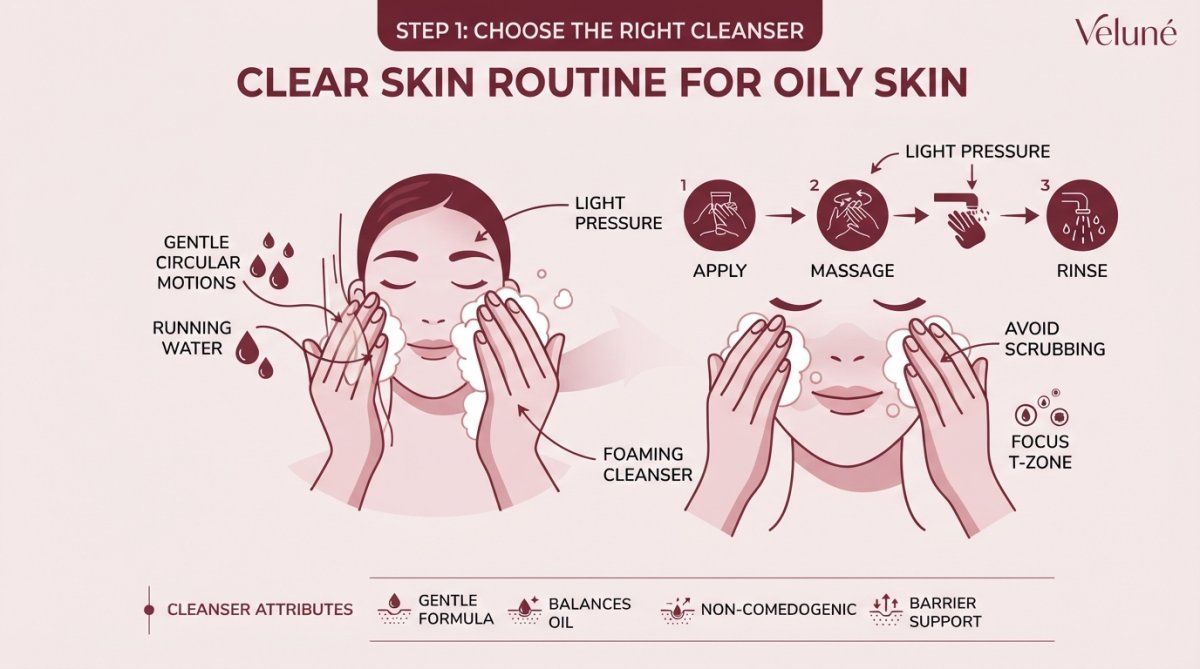
Step 1: Choose the Right Cleanser for Your Clear Skin Routine
Your cleanser is the foundation. For oily skin, you need a formula that removes excess oil and impurities without stripping your skin or disrupting pH balance. A foaming cleanser or gel-based formula typically works best because it cuts through sebum effectively. Look for non-comedogenic options that won't clog pores further.
Key ingredients include salicylic acid (a beta hydroxy acid that penetrates oil-filled pores) and glycolic acid (an alpha hydroxy acid that exfoliates the surface). Avoid heavy creamy cleansers or oil-based formulas; they'll leave residue on oily skin.
Double Cleansing for Oily Skin
Double cleansing removes surface oil, makeup, and sunscreen in the first step, then treats the skin itself in the second, allowing active ingredients to penetrate properly. Start with a lightweight oil-free micellar water or gentle cleansing balm, then follow with your foaming cleanser. This ensures thorough removal without over-cleansing.
Step 2: Exfoliate to Remove Dead Skin and Unclog Pores
Exfoliation is essential for oily, acne-prone skin. Dead skin cells mix with sebum to form plugs inside pores, creating blackheads and inflammatory acne. Regular exfoliation keeps pores clear and allows your other products to absorb properly.
For oily skin, chemical exfoliants (acids) are generally superior to physical scrubs because they dissolve the bonds between dead skin cells without irritation. Salicylic acid is the gold standard because it's lipophilic, it dissolves in oil and penetrates deep into pores. Glycolic acid and lactic acid work on the surface, removing dead cells and improving texture.
Start with 2-3 times per week and observe how your skin responds. If you experience redness, sensitivity, or excessive dryness, scale back to once weekly.
Step 3: Balance pH with a Lightweight Toner
Toners restore your skin's pH balance after cleansing, prep the skin to absorb serums and treatments, and deliver hydrating or oil-controlling ingredients. For oily skin, skip creamy, heavy toners and choose a hydrating toner with hyaluronic acid, which draws moisture into the skin without adding weight or shine. Some toners also contain niacinamide, which regulates sebum production and minimizes pore appearance.
Apply your toner with a cotton pad or by patting gently with your hands to increase absorption. Apply while your skin is still slightly damp to maximize hydration absorption.
Step 4: Apply Targeted Treatments for Acne-Prone Oily Skin
After cleansing, exfoliating, and toning, your skin is primed for active treatments. For acne-prone oily skin, niacinamide is a powerhouse ingredient that reduces sebum production, strengthens the skin barrier, and has anti-inflammatory properties. Salicylic acid serums provide additional pore-clearing action, and azelaic acid is excellent for acne-prone skin because it's antibacterial, reduces inflammation, and helps with post-acne marks.
Serums with Active Ingredients
Choose lightweight, water-based serums rather than oil serums. Apply serums to clean, damp skin before your moisturizer. If you're using multiple serums, apply the thinnest consistency first, then layer heavier textures. Wait 1-2 minutes between applications so each product absorbs properly.
Patch test any new active ingredient on a discreet area for 3-5 days before committing to full-face use.
Step 5: Moisturize Without the Weight, Restoring Skin Barrier
Most people with oily skin skip moisturizer, assuming it will make their skin greasier. This is a mistake. A damaged skin barrier, whether from over-exfoliation, harsh cleansing, or dehydration, triggers increased sebum production as your skin tries to compensate.
Recognizing a Compromised Barrier
Signs include persistent tightness after cleansing, increased sensitivity to products you've used before, a sandpaper-like texture despite oiliness, redness or inflammation that won't subside, or increased breakouts and shine even after stricter routines. When your barrier is damaged, your skin's natural protective lipid layer is depleted, causing cellular dehydration. Your sebaceous glands then overproduce oil to compensate, a vicious cycle.
The Barrier-Repair Moisturizer Strategy
The solution is a lightweight, oil-free moisturizer that actively repairs rather than just hydrates. Look for formulas containing:
- Ceramides (especially ceramide NP, AP, and EOP): These are the exact lipids your barrier is missing. They fill gaps and restore protective function.
- Hyaluronic acid: Draws moisture into the skin without adding occlusive weight.
- Glycerin: A humectant that binds water to the skin and supports barrier function.
- Niacinamide (vitamin B3): Reduces sebum production while strengthening the barrier and reducing inflammation.
- Centella asiatica (cica): Soothes irritation and supports barrier repair without heaviness.
Avoid heavy occlusive ingredients like petrolatum, lanolin, or thick plant oils. Instead, choose gel moisturizers, water-based creams, or lightweight lotions that absorb quickly.
Application Timing for Maximum Absorption
Apply your moisturizer to damp skin immediately after your serums. Damp skin allows hydrating ingredients to penetrate deeper and lock in moisture more effectively than applying to completely dry skin. Use your lightweight moisturizer twice daily for at least 2-4 weeks before expecting noticeable improvement. Many people see reduced oil production, fewer breakouts, and better skin texture within this timeframe once the barrier begins to heal.
Step 6: Protect with Broad-Spectrum SPF Daily
Sun protection is non-negotiable. UV exposure damages your skin barrier, increases inflammation, worsens acne, and causes hyperpigmentation. Choose a lightweight, oil-free, broad-spectrum SPF 30 or higher. Mineral sunscreens can sometimes feel heavy on oily skin, so look for hybrid formulas or chemical sunscreens designed for acne-prone skin.
Apply sunscreen as the final step of your morning routine, at least 15 minutes before sun exposure. Reapply every 2 hours if you're outdoors, or after swimming or sweating.
Best Skincare Products and Ingredients for Oily Skin in Latvia
When building a clear skin routine for oily skin in Latvia's climate, you're navigating unique seasonal challenges. Latvia's humid summers and dry winters create dramatically different skin conditions, and your routine must adapt accordingly.
Seasonal Adjustments for Latvia's Climate
Summer (June-August): Latvia's summer humidity spikes, especially near the Baltic coast and in Riga. Increased moisture triggers higher sebum production and creates an ideal environment for acne bacteria. Prioritize pore-clearing ingredients like salicylic acid, reduce moisturizer richness, and increase exfoliation frequency to 3 times weekly. Choose mattifying sunscreens and consider a lightweight hydrating toner as your primary moisturizer layer. Some people benefit from a clay or charcoal mask once weekly during peak humidity.
Winter (December-February): Despite oily skin, Latvia's cold, dry winters can trigger barrier damage and dehydration. Heating systems indoors and cold outdoor air strip moisture from your skin. Reduce exfoliation frequency to 1-2 times weekly, increase moisturizer richness slightly (switch to a water-based cream instead of a gel), and add a hydrating essence or toner layer. Your skin may appear less oily but feel more uncomfortable; this is dehydration, not balance.
Transition Seasons (April-May, September-October): Spring and autumn are unpredictable. Keep your core steps consistent but adjust product richness based on how your skin feels week-to-week.
Lifestyle and Dietary Triggers
Most skincare guides focus entirely on topical products and ignore internal factors that drive sebum production:
Hydration: Dehydrated skin produces more oil to compensate. Aim for 2-3 liters of water daily. Many people see noticeable improvement in oil control within 2-3 weeks of increasing water intake.
Diet and Gut Health: High-glycemic foods (white bread, sugary drinks, pastries) and dairy products trigger insulin spikes, which increase sebum production. Foods rich in omega-3 fatty acids (fatty fish, flaxseeds, walnuts), zinc (pumpkin seeds, chickpeas, beef), and antioxidants (berries, leafy greens) support skin barrier health. If you notice breakouts correlate with specific foods, keep a food diary for 2-3 weeks to identify patterns.
Stress and Sleep: Cortisol (the stress hormone) increases sebum production and inflammation. Chronic stress or poor sleep (less than 7 hours nightly) will worsen oily skin and acne regardless of your skincare routine. Prioritize 7-9 hours of sleep and incorporate stress-reduction practices into your routine.
Exercise and Sweat Management: Always shower within 30 minutes of exercise and cleanse your face with a gentle cleanser. If you exercise regularly, consider a lightweight, non-comedogenic moisturizer that won't interfere with sweat evaporation.
Hormonal Cycles: If you menstruate, track when breakouts occur relative to your cycle. Many people experience increased oil production and breakouts in the luteal phase. You may benefit from adjusting your routine intensity during this phase, slightly richer moisturizer, gentler exfoliation, or targeted acne treatments.
Core Ingredients for Oily Skin
The most effective ingredients include:
- Salicylic acid (2%): Beta hydroxy acid that dissolves in oil and penetrates pores. Use in cleansers or as a targeted treatment 2-3 times weekly.
- Niacinamide (4-5%): Regulates sebum production, strengthens barrier, reduces pore size, and has anti-inflammatory properties. Safe to use daily.
- Hyaluronic acid: Lightweight humectant that hydrates without heaviness. Essential for barrier repair.
- Azelaic acid (10-20%): Antibacterial, anti-inflammatory, and addresses post-acne hyperpigmentation.
- Glycolic acid (5-10%): Alpha hydroxy acid that exfoliates the surface. Use 2-3 times weekly.
- Centella asiatica (cica): Soothes irritation and supports barrier repair without triggering oil production.
| Step | Best Ingredient | Why It Works | How Often | Summer Adjustment |
|---|---|---|---|---|
| Cleanse | Salicylic acid or gentle surfactants | Cuts through oil and exfoliates pores | Twice daily | No change |
| Exfoliate | Glycolic or lactic acid | Removes dead skin without physical scrubbing | 2-3x weekly | Increase to 3x weekly if humidity is high |
| Tone | Hyaluronic acid + niacinamide | Balances pH and regulates oil | Daily | No change |
| Treat | Niacinamide or azelaic acid serum | Targets acne and sebum production | Daily | No change |
| Moisturize | Lightweight gel or water-based cream | Hydrates without heaviness | Daily | Reduce richness; use gel instead of cream |
| Protect | Oil-free broad-spectrum SPF | Prevents UV damage and barrier breakdown | Daily | Reapply every 2 hours if outdoors |
Product Selection Strategy: Save vs. Splurge
You don't need expensive products to manage oily skin effectively. The most important factor is ingredient quality and consistency, not price.
Where to splurge: Serums with active ingredients (niacinamide, azelaic acid, salicylic acid) because concentration and stability matter.
Where to save: Cleansers and toners. A simple, effective salicylic acid cleanser or hydrating toner doesn't need to be expensive.
Non-negotiable: Broad-spectrum SPF 30+. Sun protection is essential and doesn't need to be expensive; many budget options are effective and won't clog pores.
Consistency and correct application matter far more than product cost. A €10 routine used correctly will deliver better results than a €100 routine used haphazardly.
Frequently Asked Questions
What is the best daily routine for a clear skin routine with oily skin?
A balanced clear skin routine for oily skin includes: morning cleanse with a gentle, non-comedogenic cleanser, lightweight toner, targeted serum (such as salicylic acid or hyaluronic acid), oil-free moisturizer, and broad-spectrum SPF. Evening routine adds exfoliation 2-3 times weekly and a slightly richer moisturizer. Consistency matters more than complexity, most dermatologist-tested routines follow this foundation without excess steps that can disrupt your skin barrier.
Which ingredients should I look for in skincare products for oily skin in Latvia?
Seek non-comedogenic, water-based products containing salicylic acid or glycolic acid for exfoliation, hyaluronic acid for hydration without heaviness, and niacinamide for sebum regulation. Look for oil-free formulations and avoid pore-clogging ingredients. Mattifying or shine-control products help manage excess oil. Always patch test new active ingredients, especially if your skin barrier is compromised. Veluné's formulas prioritize deep hydration without heaviness, ideal for restoring balance in oily, acne-prone skin.
Can diet affect oily skin, and what foods should I avoid in Latvia?
Yes, diet influences sebum production and skin texture. High-glycemic foods, excess dairy, and omega-6-heavy oils may worsen oiliness and acne. Prioritize whole grains, fatty fish rich in omega-3s, leafy greens, and antioxidant-rich berries available in Latvian markets. Hydration is critical, aim for 2-3 liters of water daily. While diet alone won't clear oily skin, combined with a solid skincare routine, lifestyle adjustments support long-term skin health and reduce inflammation.
How long does it take to see results from a new clear skin routine for oily skin?
Most people notice improvements in shine control and texture within 2-4 weeks of consistent use. However, acne-prone skin and barrier repair typically require 6-8 weeks to show meaningful results. Patience is essential, skin cell turnover takes time. Avoid switching products too frequently, as this disrupts your skin barrier and delays healing. If you experience irritation within the first 2 weeks, reduce active ingredient frequency and focus on gentle renewal and hydration first.
Building a clear skin routine for oily skin requires patience and the right products, ones that address excess oil without compromising your skin barrier. The Veluné approach combines deep hydration with targeted acne care, restoring balance for long-term skin health. Start with a gentle cleanser, add exfoliation and lightweight hydration, and commit to consistency. Your clearest skin is ahead, shop all Veluné products and discover the difference intentional, barrier-focused skincare makes.
This article was written using GrandRanker