
Table of Contents
- What Is Deep Hydration and Why It Matters for Your Skin
- Hyaluronic Acid Benefits for Skin and Beyond
- Skin Barrier Repair Products: Choosing What Actually Works
- Building a Hydrating Skincare Routine Latvia Residents Can Trust
- E-Commerce Strategies for Deep Hydration Product Selection
- Common Mistakes That Undermine Deep Hydration Results
- Conclusion: Committing to Long-Term Skin Health
Last Updated: July 31, 2026
What Is Deep Hydration and Why It Matters for Your Skin
Deep hydration restores moisture to dermal layers, preventing aging, strengthening the skin barrier, and creating plumpness that makes skin look radiant. Unlike surface moisturizing, which only adds water to the outermost layer, true deep hydration works at the cellular level by delivering water to multiple layers, then locking it in place to prevent transepidermal water loss.
Your skin barrier is made of lipids, proteins, and water arranged in a lipid bilayer. When compromised by over-exfoliation, environmental stress, or aging, water escapes and skin becomes tight, flaky, and vulnerable to irritation. Deep hydration is repair, not vanity.
Deep Hydration vs. Surface Moisture: Understanding the Difference
Surface moisture sits on your skin like a coat of paint and evaporates within hours. Deep hydration penetrates and stays because it combines water with ingredients that hold it there, humectants to draw water into the skin, emollients to soften the outer layer, and occlusives to seal everything in.
This distinction matters most for people with compromised skin barriers. If you've been over-exfoliating or dealing with sensitivity, surface moisture will irritate you further. Your skin needs deep repair.
| Hydration Type | How It Works | Duration | Best For |
|---|---|---|---|
| Surface Moisture | Adds water to stratum corneum | 2-4 hours | Quick refreshment, layering |
| Deep Hydration | Restores water to dermal layers + seals barrier | 12-24 hours | Barrier repair, long-term health |
The Science Behind Skin Barrier Strength and Hydration Levels
Your skin barrier is a complex structure. The stratum corneum contains dead skin cells held together by lipids. Below sits the epidermis, then the dermis, where collagen and elastin live. All layers need adequate water content for health.
When hydration drops, elasticity is lost first and skin looks less plump. A dehydrated barrier becomes permeable, allowing irritants in and bacteria to colonize more easily. Many people with "sensitive" skin actually have dehydrated skin with a compromised barrier.
Hyaluronic acid and polyglutamic acid are humectants that pull water into the stratum corneum. Without an occlusive layer on top (ceramides, squalane, peptides), that water escapes. You need both for effective hydration.
Hyaluronic Acid Benefits for Skin and Beyond
Hyaluronic acid is the most researched humectant in skincare. A single molecule can hold up to 1,000 times its weight in water, drawing moisture into skin and helping the stratum corneum retain it. Results include visible plumping within minutes and sustained hydration with consistent use.
Molecular weight matters enormously. High-molecular-weight hyaluronic acid (over 1 million Daltons) sits on the skin surface and provides immediate plumping. Low-molecular-weight hyaluronic acid (under 10,000 Daltons) penetrates deeper for longer-lasting hydration. The best formulas use both, layered strategically.
Hyaluronic acid also supports skin elasticity by maintaining hydration in dermal layers where collagen lives. The ingredient works for all skin types, including acne-prone and oily skin, since it adds water, not oil. Many people with oily skin are actually dehydrated and produce excess sebum to compensate. Add hydration, and oil production often normalizes.
How Humectants and Occlusives Work Together
Humectants alone aren't enough. Without an occlusive barrier on top, water escapes through transepidermal water loss. Humectants (hyaluronic acid, glycerin, polyglutamic acid, panthenol) draw water into the skin. Occlusives (ceramides, squalane, shea butter, peptides) seal that water in. Emollients (oils, butters, silicones) soften and smooth the outer layer.
Apply your humectant-rich product to damp skin from your cleanser or hydrating toner. Then layer an occlusive on top while skin is still slightly damp. This traps moisture and creates hydration that lasts. Many people use heavy creams alone and wonder why their skin feels tight by afternoon, the cream isn't delivering water, just sitting on top. Add a hydrating serum underneath, and suddenly the cream becomes effective.
Polyglutamic Acid and Emerging Hydrating Ingredients
Polyglutamic acid is a newer humectant gaining attention in deep hydration. It's a polymer of amino acids that can hold up to 5,000 times its weight in water, five times more than hyaluronic acid. For severely compromised or dehydrated skin barriers, polyglutamic acid often delivers faster, more visible results and is gentler for sensitive skin.
Other effective ingredients include sodium PCA, a natural moisturizing factor your skin already produces; panthenol, which penetrates quickly and provides both immediate hydration and long-term barrier support; and trehalose, a sugar that stabilizes skin cells and helps them retain water. The trend in intentional skincare is ingredient stacking, using multiple hydrating ingredients in one formula rather than relying on a single hero ingredient.
Skin Barrier Repair Products: Choosing What Actually Works
Not all moisturizers repair a damaged barrier. The ones that work contain ceramides, cholesterol, fatty acids, peptides, and niacinamide. Ceramides are lipids making up roughly 50% of your skin barrier. When damaged, ceramides are depleted. Topical ceramides replace them, but you need the right ceramides in the right ratio, your skin barrier contains ceramides 1, 3, and 6-II in specific proportions.
Cholesterol and fatty acids (especially linoleic acid) are the other two barrier components. The best barrier repair products include all three. Peptides signal your skin to produce more collagen and support barrier function. Niacinamide (vitamin B3) reduces inflammation, supports ceramide production, and improves elasticity. Give your skin exactly what it's missing, and repair happens within 2-4 weeks of consistent use.
Ingredient Compatibility and Avoiding Irritation
Most people go wrong with deep hydration by layering too many active ingredients or using products that chemically interfere with each other. Humectants and occlusives play well with almost everything. The problem comes when combining hydrating products with exfoliants, vitamin C, retinol, or other actives without spacing them properly.
If using an exfoliant or retinoid, your skin barrier is already stressed. Adding heavy hydration immediately afterward can cause irritation. Solution: use actives on one night, then do a "hydration night" the next evening with just hydrating serums and a rich occlusive. If using vitamin C (which is acidic and irritating), don't follow it with a humectant-heavy product immediately. Niacinamide is compatible with almost everything, including actives, and actually reduces irritation while supporting barrier function.
Building a Hydrating Skincare Routine Latvia Residents Can Trust
A solid hydration routine has a simple structure: cleanse, hydrate, seal, protect. Start with a gentle cleanser that doesn't strip your skin. Look for cleansers with a pH close to your skin's natural pH (around 5.5) and avoid sulfates, which are drying.
After cleansing, while skin is still damp, apply a hydrating toner or essence with humectants like hyaluronic acid, glycerin, or polyglutamic acid. Next, apply your active serum if using one (vitamin C, niacinamide, peptides). Then comes the occlusive, your moisturizer, a cream, gel-cream, or balm that seals in hydration. For people with compromised barriers or severe dehydration, this step is crucial. Finally, apply SPF if going outside.
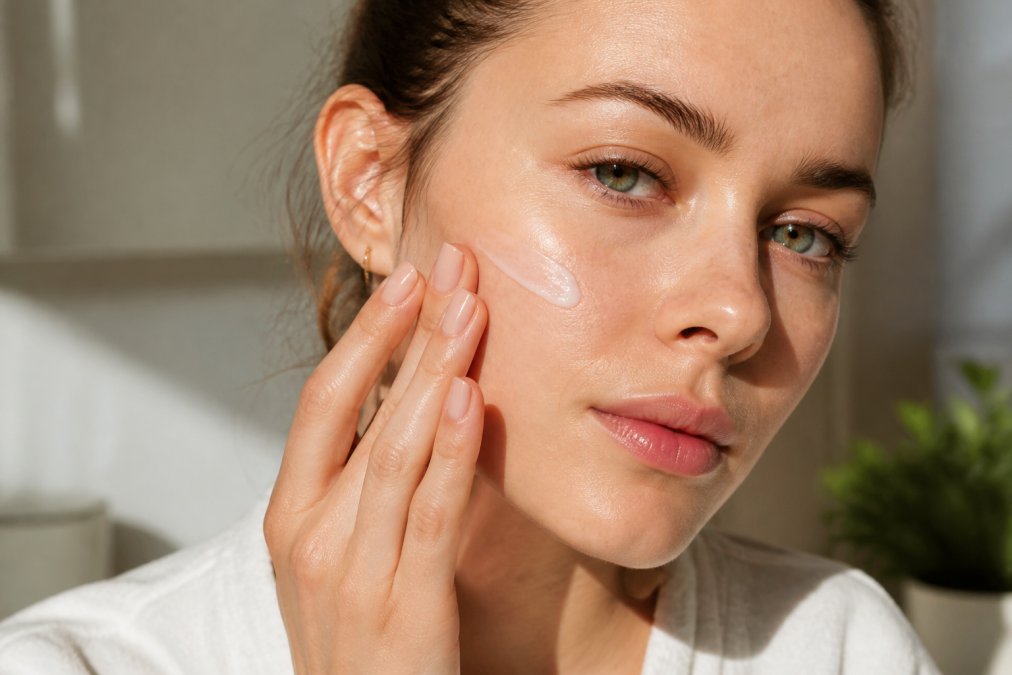
At night, use the same routine with richer products. Many people use lighter moisturizer in the morning and heavier cream at night. The routine should take 3-5 minutes total. Simplicity beats complexity. Consistency beats perfection.
Internal vs. External Hydration: A Holistic Approach
Topical hydration is only half the equation. Your skin's hydration also depends on internal water intake, diet, sleep, and stress management. Drink enough water that you're not chronically dehydrated, for most people, that's 2-3 liters daily, adjusted for activity and climate. In dry climates like Latvia's winters, you may need more.
Diet affects hydration through electrolytes and nutrients. Sodium, potassium, and magnesium help cells retain water. Antioxidants from fruits and vegetables protect skin cells from oxidative stress. Omega-3 fatty acids support barrier lipid production. Sleep is when your skin repairs itself, during deep sleep, blood flow to skin increases and repair processes activate. Chronic sleep deprivation compromises barrier function and increases water loss. Stress elevates cortisol, impairing barrier function and increasing inflammation.
Environmental Stressors and Climate-Specific Challenges
Latvia's climate presents specific hydration challenges. Winter air is dry, heating systems reduce humidity, and temperature fluctuations stress the barrier. In winter, increase occlusive products, use richer creams, consider facial oil over moisturizer, and add a humidifier to your bedroom.
Summer brings different challenges. Higher humidity means less water loss, but UV exposure damages the barrier and creates oxidative stress. Sunscreen is essential, along with antioxidant support like vitamin C, vitamin E, and niacinamide. Pollution is another stressor, particulate matter can lodge in pores and trigger inflammation. A good cleanser removes these particles. For people in Latvia with hard water, mineral deposits can irritate skin and interfere with hydration. Consider using filtered water for skincare or look for products with chelating agents.
E-Commerce Strategies for Deep Hydration Product Selection
When shopping for deep hydration products online, read ingredient lists, not marketing claims. A truly hydrating formula has multiple layers: humectants (hyaluronic acid, glycerin), emollients (oils, butters), and occlusives (ceramides, peptides) in the first five ingredients.
Understand your skin type and what it needs. Acne-prone skin needs hydration but often not heavy occlusion, a lightweight gel-cream with hyaluronic acid and niacinamide works better than a rich cream. Sensitive skin needs barrier support, so ceramides and peptides matter more than trendy ingredients. Oily skin can use deep hydration; just skip the heaviest occlusives and focus on water-based humectants.
Look for third-party testing or dermatologist recommendations. Read reviews from people with your skin type and concerns, looking for specific results. Be willing to test products, many e-commerce brands offer samples or small sizes. At Veluné, we design for deep hydration without heaviness. Our products restore balance and barrier strength with transparent ingredient information.
Reading Labels and Verifying Dermatologist-Tested Claims
"Dermatologist-tested" simply means a dermatologist applied the product to skin and observed for irritation, a basic safety test. Dermatologist-recommended is stronger, meaning dermatologists actually prescribe or recommend the product to patients, typically when there's clinical evidence supporting efficacy.
Clinical efficacy studies are the gold standard. These are peer-reviewed, often published in dermatology journals, and measure specific outcomes like "Reduced fine lines by 12% after 8 weeks." Certifications like INCI declarations, cruelty-free certifications, and clean beauty certifications also matter. Transparency is a sign of confidence.
Sustainability and Clean Beauty Metrics That Matter
"Clean beauty" and "sustainable" are marketing terms, not regulated claims. Sustainable skincare considers the full lifecycle: sourcing, manufacturing, packaging, and disposal. Clean beauty typically means avoiding certain ingredients like synthetic fragrances, parabens, phthalates, and sulfates. Some are genuinely problematic; others are safe and effective.
Look for brands transparent about their choices and able to explain why they've made them. For deep hydration products specifically, efficacy matters more than sustainability. A product that actually repairs your barrier is more valuable than a perfectly sustainable product that doesn't work. Veluné approaches both: our formulas deliver results, and we're transparent about sourcing and manufacturing.
Common Mistakes That Undermine Deep Hydration Results
Most people fail at deep hydration not because of bad products, but because of fundamental application mistakes. Apply moisturizer to damp skin, not completely dry skin. Use the same routine year-round, winter requires heavier occlusion, summer requires lighter hydration with more sun protection. Expect results in 2-4 weeks, not overnight. Space out actives or use them on different days if using retinol, vitamin C, and an exfoliant. Skip sunscreen and UV damage accelerates barrier damage. Confuse hydration (water content) with moisture (oil content), you need both from different products. Commit to a routine for at least three weeks before deciding if it works.
Deep hydration isn't complicated once you understand the fundamentals. Your skin barrier needs water, lipids, and protection. Give it those three things consistently, and it will respond.
Veluné's approach centers on providing deep hydration without heaviness. Our formulas combine humectants, emollients, and occlusives in proportions that work across multiple skin types. Start with a hydrating serum and lightweight moisturizer, adjust seasonally, and give your skin four weeks to respond.
Dermatology research on skin barrier function and transepidermal water loss
Clinical studies on hyaluronic acid efficacy in skincare
Environmental effects on skin hydration and barrier integrity
Frequently Asked Questions
What are the best ingredients for deep hydration in skincare products?
Hyaluronic acid is a gold-standard humectant that draws moisture into the skin, while polyglutamic acid offers similar benefits with enhanced stability. Ceramides and lipid complexes strengthen the skin barrier and prevent transepidermal water loss. Glycerin and panthenol add additional moisture-binding capacity. The most effective deep hydration products combine humectants (water-attracting) with occlusives (water-sealing) and emollients (skin-softening) to create lasting results without heaviness.
How can I tell if my skin is truly deeply hydrated versus just feeling temporarily moisturized?
Deeply hydrated skin shows reduced dehydration lines, improved skin elasticity, and a plump, radiant complexion that persists for hours after application. True deep hydration strengthens your skin barrier, reducing sensitivity and inflammation. Look for sustained improvements in skin texture and diminished tightness throughout the day. Temporary surface moisture fades quickly, but deep hydration maintains skin vitality and resilience even when exposed to environmental stressors like cold or low humidity.
Are there specific deep hydration products recommended for sensitive skin and compromised skin barriers?
For sensitive skin and damaged barriers, prioritize non-comedogenic, pH-balanced formulas with dermatologist-tested ingredients. Gel-creams and lightweight serums with hyaluronic acid and ceramides are ideal because they deliver intensive moisture without occlusive heaviness that can trap irritants. Avoid products with fragrance, alcohol, or active ingredients like retinoids until your barrier is restored. Soothing ingredients like centella asiatica and allantoin support cell renewal while minimizing irritation. Always patch-test new products before full application.
How long does it typically take to see results from a deep hydration skincare routine?
Initial improvements in skin plumpness and radiance often appear within 1-2 weeks of consistent use. However, meaningful barrier repair and sustained hydration improvements typically require 4-8 weeks of daily application. Results depend on baseline skin condition, climate, and product formulation. For severely compromised barriers, patience is essential, rushing to add actives before hydration is restored can delay healing. Consistency matters more than speed; daily use yields better long-term outcomes than sporadic application.
This article was written using GrandRanker