
Table of Contents
- How Harsh Products Damage the Skin Barrier and Worsen Acne
- Understanding Skin Barrier Repair for Acne
- Common Acne Triggers in Skincare and How to Avoid Them
- Non-Comedogenic Skincare Products: What They Are and Why They Matter
- Building a Gentle Skincare Routine for Acne-Prone Skin
- Why Hydration and Moisture Retention Are Critical for Acne Recovery
- Gentle Skincare vs. Over-Exfoliation: The Long-Term Impact on Breakouts
- Conclusion
Last Updated: August 9, 2026
How Harsh Products Damage the Skin Barrier and Worsen Acne
The biggest mistake most people make with acne-prone skin is treating it aggressively. They reach for the strongest actives, the most stripping cleansers, and the harshest exfoliants available. But this approach almost always backfires.
When you use harsh products on acne-prone skin, you're dismantling the protective layer that prevents breakouts in the first place. The skin barrier, also called the lipid barrier, is your skin's first line of defense against bacteria, irritants, and inflammation. Damage it, and acne multiplies.
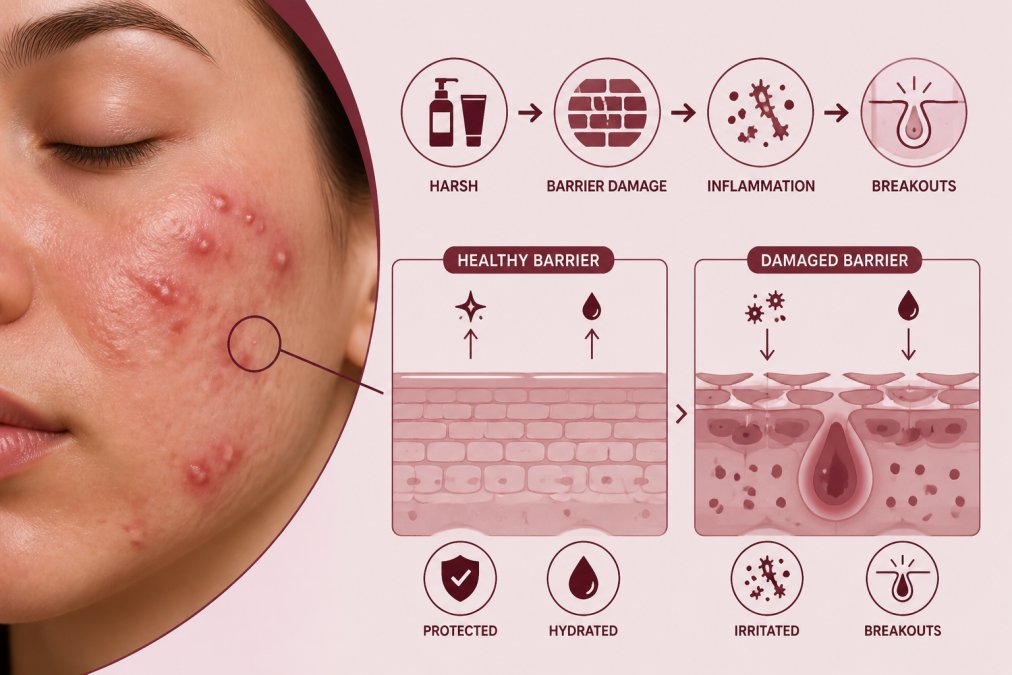
Strong actives like high-concentration benzoyl peroxide, aggressive physical exfoliants, and alcohol-based toners strip away ceramides and natural oils that hold the barrier together. Your skin responds by producing even more sebum to compensate, which clogs pores and feeds acne-causing bacteria. A compromised barrier also triggers inflammatory responses, your skin perceives the damage as a threat and launches an immune response, increasing redness, swelling, and sensitivity.
Research consistently shows that people who shift from harsh routines to gentle ones see their acne improve within 4-8 weeks. The most dramatic improvements come from clients who stop fighting their skin and start supporting it instead.
Understanding Skin Barrier Repair for Acne
Skin barrier repair is the foundation of clearing acne long-term. Without it, no amount of targeted acne treatment will deliver lasting results.
The skin barrier consists of three key components: ceramides, cholesterol, and fatty acids. These lipids work together to create a protective seal that keeps moisture in and irritants out. When the barrier is intact, your skin can regulate sebum production, fight bacteria efficiently, and minimize inflammation.
Repairing the barrier requires two things: stopping the damage and actively supporting recovery. This means cutting out harsh ingredients and using products with soothing agents and barrier-repair ingredients. Ceramides are the most critical component to replenish, they make up about 50% of the lipid barrier. Hyaluronic acid plays a supporting role by drawing moisture into the skin and helping ceramides work more effectively.
Your skin's barrier can show measurable improvement within 2-3 weeks of consistent support, with full restoration typically taking 6-8 weeks. When people stop seeing their acne as something to attack and start seeing it as something to heal, their entire approach shifts. This mindset change, paired with the right products, is often what separates success from failure.
Common Acne Triggers in Skincare and How to Avoid Them
Not all acne comes from bacteria or excess oil. A significant portion is triggered by the products people use to treat it.
Comedogenic ingredients are the first culprit. These are substances that clog pores and trigger breakouts. Common offenders include certain oils, silicones, and thickening agents. Many appear in products marketed as "moisturizing" or "nourishing," but they trap bacteria and sebum inside pores.
Fragrance and essential oils are another major trigger. Both natural and synthetic fragrances can irritate acne-prone skin and trigger inflammatory responses. Lavender, tea tree, and eucalyptus oils are popular in skincare, but they can destabilize the skin barrier and increase sensitivity.
High concentrations of active ingredients without proper introduction cause inflammation spikes. The correct approach is to start low and build tolerance slowly, giving your barrier time to adjust.
Over-exfoliation is counterproductive. Using physical or chemical exfoliants more than 2-3 times per week on acne-prone skin constantly re-wounds the barrier, preventing it from ever fully healing.
Sulfates in cleansers strip natural oils aggressively. Sodium lauryl sulfate and sodium laureth sulfate are incredibly drying and trigger the cycle of barrier damage and excess oil production.
If a product makes your skin feel tight, squeaky clean, or noticeably dry, it's likely damaging your barrier. Your skin should feel clean but comfortable, never stripped or stressed.
Non-Comedogenic Skincare Products: What They Are and Why They Matter
Non-comedogenic means a product won't clog pores or trigger breakouts. Understanding what this actually means separates smart shoppers from people who waste money on products that claim this label without delivering results.
A product is non-comedogenic if it doesn't contain ingredients that commonly clog pores. The ingredient list is what matters, not the marketing claim. Some products labeled non-comedogenic still contain problematic oils or silicones. Others genuinely avoid these ingredients but use irritating actives that trigger breakouts through inflammation.
The most reliable non-comedogenic products use lightweight hydrators like hyaluronic acid instead of heavy oils, include soothing agents like centella asiatica or allantoin, avoid fragrance and essential oils, and don't rely on high concentrations of actives that destabilize the barrier.
When evaluating whether a product is truly non-comedogenic, look at the full ingredient list. Check for ceramides, hyaluronic acid, and soothing agents. Avoid anything with mineral oil, coconut oil, or silicones unless you know your skin tolerates them. Test new products on a small area first, even if they're labeled non-comedogenic.
Building a Gentle Skincare Routine for Acne-Prone Skin
A gentle skincare routine for acne-prone skin doesn't mean doing nothing. It means doing the right things in the right order, with the right products.
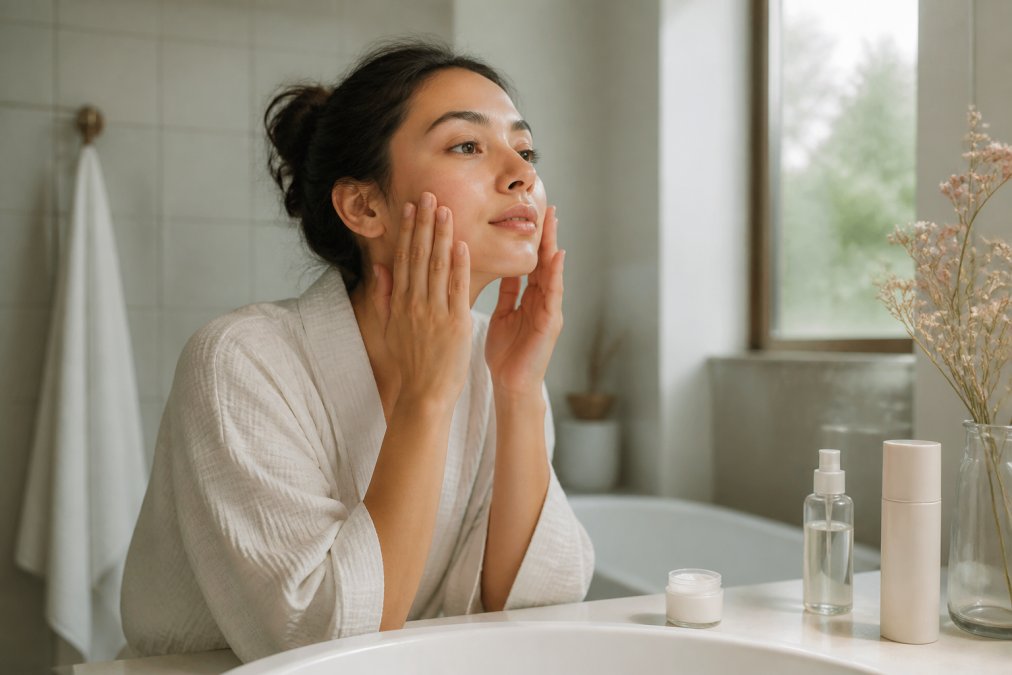
The foundation is a three-step routine: cleanse, hydrate, support barrier repair.
Step 1: Cleanse with a pH-Balanced, Non-Stripping Cleanser
Your cleanser sets the tone for everything that follows. A pH-balanced cleanser removes dirt and excess oil without stripping the barrier. Your skin's natural pH is around 4.5 to 5.5 (slightly acidic). Most traditional soaps are alkaline (pH 9-10), which disrupts this balance and triggers irritation and excess oil production.
Look for cleansers labeled "pH-balanced" or with a pH listed between 4.5 and 7. Cream cleansers, micellar water, and gentle gel cleansers work well for acne-prone skin. Avoid foaming cleansers, which typically contain sulfates.
Use lukewarm water, not hot. Apply the cleanser gently with your fingertips using circular motions for about 30-45 seconds. Pat dry with a clean towel. Cleanse twice daily: morning and evening. If you wear makeup or sunscreen, a double cleanse (oil cleanser followed by water-based cleanser) ensures complete removal.
Step 2: Apply Hydration Without Clogging Pores
Most people either skip hydration because they think moisture will worsen acne, or they use heavy moisturizers that trap bacteria and oil.
The solution is lightweight hydration that supports the barrier without congestion. Hyaluronic acid serums are ideal because they draw moisture into the skin without adding weight. Apply the serum to damp skin immediately after cleansing.
If your skin is very oily, a serum alone might be enough. If it's combination or normal, follow with a lightweight, non-comedogenic moisturizer. The moisturizer should feel like it's sinking into your skin, not sitting on top of it. Apply to damp skin to help lock in hydration.
Step 3: Support Barrier Repair with Soothing Ingredients
A barrier-repair cream or serum containing ceramides should be applied last in your routine. These products are thicker and more occlusive, sealing in hydration and providing the lipids your barrier needs to rebuild.
Soothing ingredients like centella asiatica, allantoin, and niacinamide reduce inflammation and support healing. If you're using any actives (like low-concentration benzoyl peroxide or salicylic acid), apply them after cleansing but before hydration. Use actives no more than 3-4 times per week initially, gradually increasing frequency as your barrier strengthens.
Why Hydration and Moisture Retention Are Critical for Acne Recovery
Hydration is not the enemy of acne. It's the foundation of acne recovery.
Most acne-prone skin is actually dehydrated. Dehydrated skin lacks water content, even if it produces excess sebum. When skin is dehydrated, it compensates by producing more oil, which clogs pores and feeds acne bacteria. Hydrated skin can regulate sebum production efficiently and keep pores clearer.
Moisture retention is the ability of the skin barrier to hold onto water. Without it, even if you apply hydrating products, your skin loses that moisture quickly. The barrier's ceramides and lipids enable moisture retention, which is why barrier repair and hydration must happen together.
When you hydrate acne-prone skin properly, you typically see improvements in texture, redness, and active breakouts within 3-4 weeks. If your skin feels tight after cleansing, it's dehydrated. If it feels comfortable and supple, hydration is working.
Gentle Skincare vs. Over-Exfoliation: The Long-Term Impact on Breakouts
Over-exfoliation is one of the most common causes of persistent acne in people who are otherwise doing everything right.
Each exfoliation is a controlled wound to the skin. When you exfoliate more than 2-3 times per week, you're constantly re-wounding the barrier before it can fully heal. Your skin never reaches a state of stability, existing in perpetual damage and repair, which triggers chronic inflammation and makes acne worse.
The correct approach is to exfoliate gently and infrequently. Start with once per week. Never combine physical and chemical exfoliation on the same day. Give your skin at least 48 hours between exfoliating sessions.
As your barrier strengthens over 6-8 weeks, you can gradually increase frequency to 2-3 times per week if your skin tolerates it. But many people with acne-prone skin do best with once-weekly exfoliation indefinitely. If your skin feels irritated, sensitive, or more congested after exfoliating, reduce frequency. Less is more for acne-prone skin.
Building a sustainable skincare routine for acne-prone skin requires a fundamental shift in mindset. Instead of attacking acne aggressively, you're supporting your skin's natural healing capacity. This means using pH-balanced cleansers, lightweight hydration, and barrier-repair ingredients consistently. Veluné's formulations are specifically designed to provide deep hydration without heaviness while restoring balance and barrier strength, making them ideal for this approach. With the right gentle skincare routine, most people see measurable improvement within 4-8 weeks and long-term clarity within 3-4 months. Get started with Veluné and experience how intentional, gentle skincare transforms acne-prone skin from the inside out.
Frequently Asked Questions
Is gentle skincare actually better for preventing breakouts?
Yes. Gentle skincare reduces inflammation and prevents the inflammatory cycle that harsh products trigger. When you avoid stripping the skin barrier with strong actives, your skin produces less excess sebum and experiences fewer flare-ups. A stable, hydrated barrier heals faster and is less prone to pore congestion and secondary infections.
Can harsh acne products damage the skin barrier?
Absolutely. Over-exfoliation and high-strength actives strip ceramides and lipids from your skin, increasing transepidermal water loss and weakening the barrier. Once compromised, the barrier becomes more vulnerable to irritation, bacteria colonization, and prolonged redness. Recovery takes weeks or months, during which breakouts often worsen before improving.
What makes non-comedogenic skincare products better for acne-prone skin?
Non-comedogenic products are formulated to avoid pore congestion by excluding heavy oils and waxes that trap bacteria and sebum. They allow the skin to breathe while still delivering hydration, which is essential for barrier repair. For acne-prone skin, non-comedogenic options prevent the secondary irritation that comes from clogged pores becoming inflamed.
How long does it take to see results with a gentle skincare routine?
Most people notice reduced redness and fewer active breakouts within 2-4 weeks of consistent gentle care. Barrier repair and skin texture improvement typically become visible after 6-8 weeks. Long-term benefits, including fewer flare-ups and improved skin resilience, develop over 3-6 months as the microbiome stabilizes and inflammation decreases.
This article was written using GrandRanker