
Table of Contents
- Understanding Toddler Sensitive Skin and the Skin Barrier
- Key Ingredients to Avoid in Toddler Skincare Products
- Building a Daily Gentle Skincare Routine for Sensitive Skin
- Toddler Eczema Treatment and Management in Norway
- Fragrance-Free Baby Products and Natural Skincare for Toddlers in Norway
- Baby Atopic Skin Care and Environmental Triggers Beyond Products
- Common Mistakes to Avoid in Toddler Skincare
- When to Consult a Pediatric Dermatologist
Gentle Skincare for Toddler Sensitive Skin: A Complete Guide
Last Updated: July 23, 2026
When your toddler's skin flares up, every product decision feels critical. Gentle skincare for toddler sensitive skin requires a fundamentally different approach than adult skincare, rooted in barrier repair and ingredient clarity. At Veluné, we understand that sensitivity in young children often stems from an underdeveloped skin barrier that needs restoration, not just soothing. Below, we'll show you how to build a skincare routine that works for reactive skin, what ingredients to avoid entirely, and when professional guidance becomes essential.
Understanding Toddler Sensitive Skin and the Skin Barrier
Your toddler's skin is fundamentally different from yours. The stratum corneum, the outermost protective layer, is thinner and less developed than an adult's, making it more vulnerable to irritants, allergens, and water loss. The skin barrier hasn't yet developed the full lipid matrix and natural moisturizing factors that adult skin relies on for protection.
The skin barrier functions as a selective gatekeeper. When intact, it keeps harmful substances out and moisture in. When compromised, everything penetrates more easily, which is why a toddler with a damaged barrier might react to products their siblings tolerate without issue. Many parents mistakenly assume their child has allergies when the real problem is a weakened barrier that needs repair.
Key Ingredients to Avoid in Toddler Skincare Products
Fragrance is the single most common irritant in children's skincare, yet it appears in products marketed as "gentle" and "baby-safe." Even fragrance labeled as "natural" can trigger reactions in sensitive skin because fragrant molecules are small enough to penetrate young skin and activate inflammatory responses.
Parabens and sulfates can compromise the skin barrier. Parabens (methylparaben, propylparaben, butylparaben) are preservatives that prevent bacterial growth. Sulfates like sodium lauryl sulfate strip natural oils from skin, leaving it vulnerable. Both can irritate toddler skin more readily than adult skin tolerates them.
Other common irritants include:
- Alcohol denat (denatured alcohol), which dries skin rapidly
- Synthetic dyes and colorants, unnecessary and often triggering
- Phenoxyethanol, a preservative that can cause contact dermatitis
- Phthalates, plasticizers sometimes hidden under "fragrance" labels
- Lanolin, a common moisturizer that causes reactions in some children
Patch testing before full application is non-negotiable when trying any new product. Apply a small amount to the inside of the wrist or behind the ear, wait 24 hours, and watch for redness, swelling, or itching. This simple step prevents full-body reactions.
Building a Daily Gentle Skincare Routine for Sensitive Skin
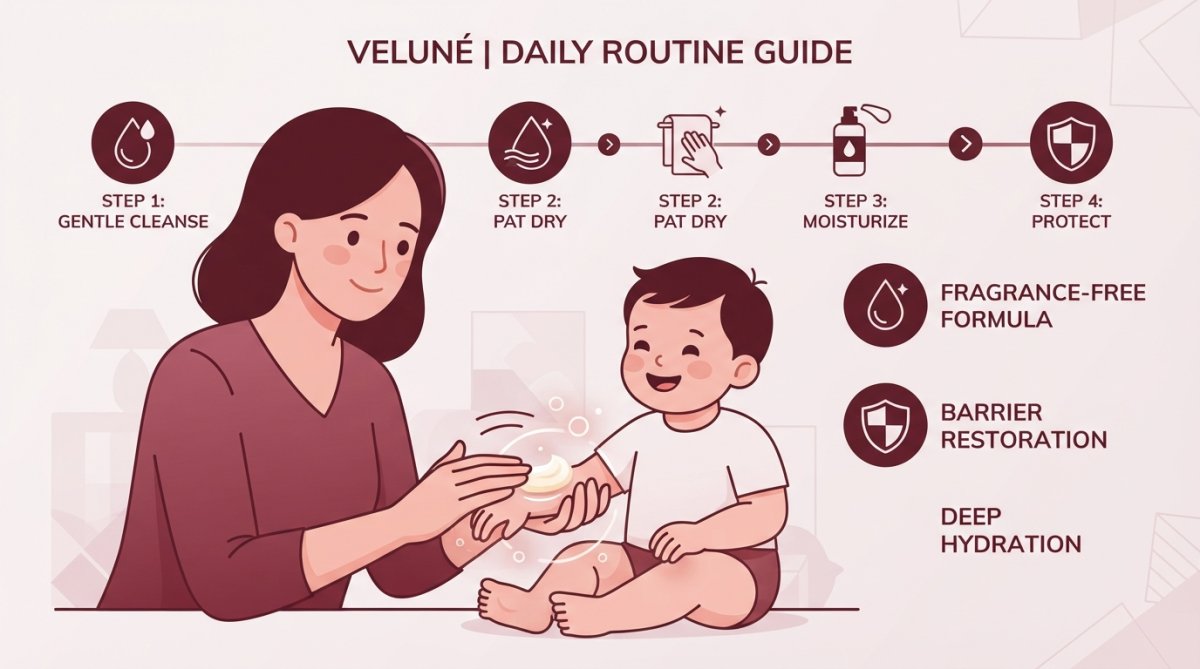
A toddler's skincare routine should be ruthlessly simple. The goal is to cleanse without stripping, hydrate without heaviness, and protect without irritation. Most children with sensitive skin need only three steps, performed twice daily.
Step 1: Gentle cleansing without stripping
Cleansing removes dirt, sweat, and environmental irritants without stripping natural oils. Look for fragrance-free cleansers with a pH between 5.5 and 7, which matches the skin's natural pH and prevents disruption of the acid mantle that protects against bacteria.
Cream cleansers or milk cleansers work better than foaming products for sensitive skin. Foaming cleansers typically contain surfactants that strip oils too aggressively. Apply the cleanser with your hands or a soft washcloth, massage gently in circular motions for 20-30 seconds, then rinse thoroughly with lukewarm water. Pat dry gently and move immediately to hydration while the skin is still slightly damp, as damp skin absorbs moisturizer more effectively.
Step 2: Hydration and moisturizing
Hydration means adding water to the skin; moisturizing means sealing that water in with oils and emollients. Both are essential for toddler sensitive skin.
A lightweight hydrating toner or essence applied to damp skin helps deliver water into the stratum corneum. This should be fragrance-free and contain minimal ingredients, ideally just water, glycerin, and perhaps ceramides. Follow immediately with a moisturizer that contains ceramides, which are lipid molecules that naturally occur in healthy skin and restore the barrier's ability to retain moisture. Look for products listing ceramides 1, 3, or 6 in the ingredient list.
Veluné's formulations focus on this balance: deep hydration without the heaviness that can trap bacteria or cause congestion in young skin. The philosophy centers on restoring barrier strength through ceramides and gentle hydrators rather than occlusive oils.
Step 3: Sun protection with broad-spectrum sunscreen
Chemical sunscreens (those containing oxybenzone or avobenzone) absorb into skin and can trigger reactions in sensitive children. Physical sunscreens containing zinc oxide or titanium dioxide sit on the surface and reflect UV rays, making them safer for reactive skin.
Apply sunscreen generously about 15 minutes before sun exposure, and reapply every two hours or immediately after swimming or sweating. Choose fragrance-free, mineral-based sunscreens specifically formulated for sensitive skin with a broad-spectrum SPF 30 minimum.
Toddler Eczema Treatment and Management in Norway
Eczema-prone skin in toddlers requires recognition and intervention before it becomes severe. Atopic dermatitis, the most common form of eczema in children, typically appears before age five and often runs in families with histories of allergies or asthma.
Recognizing eczema-prone skin means understanding that eczema isn't just dry skin, it's an inflammatory condition where the skin barrier is compromised at a genetic level. Early signs include intense itching (often worse at night), red or inflamed patches, small raised bumps, and skin that becomes cracked or bleeding when scratched.
The itch-scratch cycle is the real enemy. A toddler scratches itchy skin, which damages the barrier further, allowing irritants to penetrate deeper, which causes more itching. Breaking this cycle requires aggressive moisturizing combined with strategies to reduce scratching: keeping nails short, using soft bedding, and maintaining cool room temperatures.
Moisturizing strategies and soothing ingredients form the foundation of eczema management. Moisturize immediately after bathing while skin is still damp, and consider moisturizing twice daily during flare-ups. Ingredients that specifically soothe eczema-prone skin include colloidal oatmeal (which reduces inflammation without irritation), aloe vera (though some children react to it, so patch test first), and centella asiatica, also called cica or tiger grass, which strengthens the barrier and calms inflammation.
According to research from the Norwegian Dermatological Society, eczema affects approximately 15-20% of Norwegian children, with prevalence highest in urban areas. Keep baths brief, 5-10 minutes maximum, and use lukewarm rather than hot water. Avoid bubble baths and heavily scented soaps entirely. Many families find that switching to a gentle, fragrance-free cleanser reduces flare-up frequency by 40-50% within two weeks.
Fragrance-Free Baby Products and Natural Skincare for Toddlers in Norway
The market for "natural" and "organic" baby products has exploded, but natural doesn't automatically mean safe for sensitive skin. Plant-based ingredients can be just as irritating as synthetic ones; chamomile, lavender, and tea tree oil are natural but frequently trigger reactions in reactive skin.
Natural ingredients like aloe vera and goat's milk have genuine benefits for some children but require the same patch-testing approach as any other product. Aloe vera contains compounds that reduce inflammation and promote healing, though some children react to aloe's latex content. Goat's milk has a pH closer to skin's natural pH than cow's milk and contains fatty acids and proteins that support barrier function.
The distinction between budget-friendly and premium natural options often comes down to processing and ingredient quality rather than ingredient sourcing. For sensitive skin, a simpler, less-expensive fragrance-free moisturizer often outperforms an expensive "natural" product loaded with botanical extracts.
Norwegian families have access to excellent pharmacy-grade skincare through Apotek 1 and Vitusapotek chains, which stock dermatologist-recommended fragrance-free lines at reasonable cost.
Baby Atopic Skin Care and Environmental Triggers Beyond Products
Product selection matters, but environmental factors often drive eczema flare-ups more than the products themselves. Many parents focus obsessively on finding the "right" moisturizer while ignoring humidity levels, water quality, and seasonal triggers that may be causing most of their child's reactions.
Understanding atopic dermatitis in toddlers requires recognizing that the condition is triggered by a combination of genetics, immune dysfunction, and environmental factors. A child with the genetic predisposition may never develop symptoms if environmental triggers are minimized.
Environmental factors: humidity, temperature, and water quality play outsized roles in Norwegian toddler eczema. Winter heating systems dry indoor air to 20-30% humidity, far below the 40-60% range that skin prefers. A simple humidifier in the bedroom costs under 500 NOK and often reduces winter flare-ups by 30-40%.
Hard water, common in many Norwegian regions, contains minerals that can irritate sensitive skin. Installing a water softener or using a filtered showerhead reduces mineral exposure. Temperature swings trigger flares in many children; dressing in layers and allowing gradual temperature adjustment reduces this stress. Overheating during sleep, common when toddlers are bundled in heavy blankets, increases sweating and irritation.
Laundry practices affect skin more than many parents expect. Detergent residue left on clothing and bedding can irritate sensitive skin throughout the day and night. Switching to fragrance-free, hypoallergenic detergent and running an extra rinse cycle often yields dramatic improvements.
Common Mistakes to Avoid in Toddler Skincare
The most damaging mistake is over-treating. Parents see a flare-up and immediately add more products. The correct response to a flare is to simplify further: use only a gentle cleanser and a good moisturizer until the flare resolves, then reintroduce other products one at a time.
Switching products too frequently prevents you from identifying which products actually work. Give any new skincare routine at least two weeks before evaluating results. Skin barrier repair takes time, and judging effectiveness based on a few days of use leads to constant switching that prevents any routine from working.
Hot water feels soothing but severely damages the barrier. Lukewarm water is more effective long-term because it doesn't strip oils as aggressively.
Ignoring environmental factors while obsessing over product ingredients wastes money and effort. A child bathing in hard water and sleeping in a 20% humidity environment won't improve significantly no matter which moisturizer you use. Address the environment first, then optimize products.
Assuming all "baby" or "gentle" products are safe is perhaps the most expensive mistake. Marketing terms have no regulatory meaning. Read ingredient lists carefully, patch test everything, and trust your observations of your child's skin more than product packaging claims.
When to Consult a Pediatric Dermatologist
Most toddler skin sensitivity improves dramatically with a simplified routine, barrier-focused moisturizing, and environmental optimization. However, some situations warrant professional evaluation.
Consult a pediatric dermatologist if flare-ups persist despite consistent barrier care for four weeks, if the child shows signs of infection (oozing, crusting, warmth, or fever), if the rash spreads rapidly or appears in unusual locations, or if itching severely disrupts sleep and quality of life.
In Norway, pediatric dermatology services are available through regional hospitals and private dermatology clinics. Your child's pediatrician can refer you to a specialist, or you can contact the Norwegian Dermatological Society for recommended practitioners in your region. According to guidelines from the Norwegian Health Directorate, children with moderate to severe atopic dermatitis should be evaluated by a dermatologist to rule out secondary infections and to develop a long-term management plan.
A dermatologist can prescribe topical corticosteroids or calcineurin inhibitors for flare-ups, perform allergy testing if contact dermatitis is suspected, and provide guidance on when phototherapy might help.
Building a skincare routine for toddler sensitive skin doesn't require expensive products or complicated regimens. It requires understanding your child's barrier, eliminating irritants, and addressing environmental factors that drive flares. Veluné's approach focuses on restoring barrier strength through ceramides and gentle hydration, the exact foundation that sensitive toddler skin needs to heal. Start with a simple cleanser, a ceramide-rich moisturizer, and consistent application, then let the results guide your next decisions. Most families see significant improvement within two weeks of implementing these fundamentals. Shop all Veluné products designed for sensitive skin restoration and experience the difference that barrier-focused formulation makes.
| Skincare Step | Key Function | Best Ingredient | Frequency |
|---|---|---|---|
| Cleansing | Remove irritants without stripping | Fragrance-free cream cleanser | Twice daily |
| Hydration | Add water to skin | Glycerin or hyaluronic acid | Twice daily |
| Moisturizing | Seal water in and repair barrier | Ceramides (types 1, 3, or 6) | Twice daily, immediately after cleansing |
| Sun Protection | Block UV damage | Physical sunscreen (zinc oxide or titanium dioxide) | Daily, reapply every 2 hours in sun |
| Environmental Control | Prevent barrier stress | Humidifier (40-60% humidity) | Continuous during heating season |
Frequently Asked Questions
What causes sensitive skin in toddlers?
Toddlers' skin is naturally thinner and more permeable than adult skin, making their skin barrier more vulnerable to irritation and moisture loss. Factors like harsh soaps, frequent bathing, dry air, and exposure to fragrances or synthetic chemicals can trigger inflammation. In Norway's climate, low humidity during winter months can exacerbate dryness. Conditions like atopic dermatitis (eczema) are also common in toddlers and require specialized gentle skincare approaches.
Which ingredients should I avoid in fragrance-free baby products for my toddler?
Avoid synthetic fragrances, parabens, sulfates, and alcohol-based ingredients that can disrupt the skin barrier and cause irritation. Skip products with essential oils unless specifically recommended by a pediatric dermatologist, as some can sensitize young skin. Look for hypoallergenic, paraben-free, and sulfate-free formulations. Natural doesn't always mean safe for toddlers, verify ingredients are dermatologist-approved for sensitive, eczema-prone skin before use.
How can I manage baby atopic skin care and prevent flare-ups?
Maintain consistent hydration using ceramide-rich moisturizers to restore the skin barrier. Apply moisturizer immediately after bathing while skin is still slightly damp. Keep baths short (5-10 minutes) with lukewarm water and a gentle cleanser. Avoid common triggers like harsh detergents, overheating, and low humidity. In Norway, use a humidifier during winter months. Patch test all new products. If flare-ups persist, consult a pediatric dermatologist for targeted eczema treatment recommendations.
What's the difference between natural skincare and synthetic ingredients for toddler sensitive skin?
Natural ingredients like aloe vera and goat's milk soap can be gentler and less likely to cause irritation, but 'natural' doesn't guarantee safety for sensitive toddler skin. Some natural oils and plant extracts may still trigger reactions. Synthetic ingredients are laboratory-controlled and tested for purity and safety. The key is choosing dermatologist-approved formulations, whether natural or synthetic, that are fragrance-free, hypoallergenic, and designed specifically for sensitive skin. Quality and testing matter more than origin.
This article was written using GrandRanker