
Table of Contents
- Understanding Acne and Sensitive Skin
- Best Gentle Acne Cleansers for Sensitive Skin
- How to Repair Skin Barrier With Acne
- Ingredients to Use and Ingredients to Avoid
- Signs of Over-Exfoliated Skin and How to Stop
- How Long Does It Take to Clear Acne Gently
- Your Step-by-Step Routine for Acne-Prone, Sensitive Skin
- When to See a Dermatologist
Last Updated: August 6, 2026
Understanding Acne and Sensitive Skin
Acne and sensitive skin often coexist, creating a frustrating cycle where treating one condition aggravates the other. When your skin barrier is compromised, standard acne treatments can trigger redness, irritation, and peeling that worsen breakouts. Your skin barrier functions as a protective wall, regulating moisture and defending against irritants. When weakened by harsh actives, over-exfoliation, or inflammatory acne itself, even gentle-sounding products can trigger a defensive reaction that manifests as more breakouts, tightness, and discomfort.
At Veluné, we recognize that sustainable acne management for sensitive skin centers on restoring balance rather than aggressive intervention. The goal is to create an environment where healing happens naturally while actively treating acne.
Best Gentle Acne Cleansers for Sensitive Skin
The foundation of any acne routine for sensitive skin starts with cleansing that removes excess oil and bacteria without stripping your skin or triggering inflammation. A gentle cleanser should be non-comedogenic, fragrance-free, and free from harsh sulfates that disrupt your skin's natural pH balance.
Look for cleansers with a slightly acidic pH (around 4.5-5.5). Ingredients like niacinamide help regulate sebum production while calming inflammation. Gentle surfactants are preferable to harsh detergents; your cleanser should feel creamy rather than stripping, and your skin should feel hydrated rather than tight after cleansing.
Many people use astringent cleansers or physical scrubs, thinking they'll clear acne faster. This backfires consistently. Over-cleansing or using irritating formulas damages your skin barrier, triggering more sebum production and inflammation. Instead, cleanse twice daily with a product that removes impurities without aggression.
How to Repair Skin Barrier With Acne
Your skin barrier consists of lipids, proteins, and water that maintain hydration and protection. When you have acne, inflammation damages this barrier. When you treat acne aggressively, you damage it further. Repairing this barrier while actively treating acne requires intentional product selection.
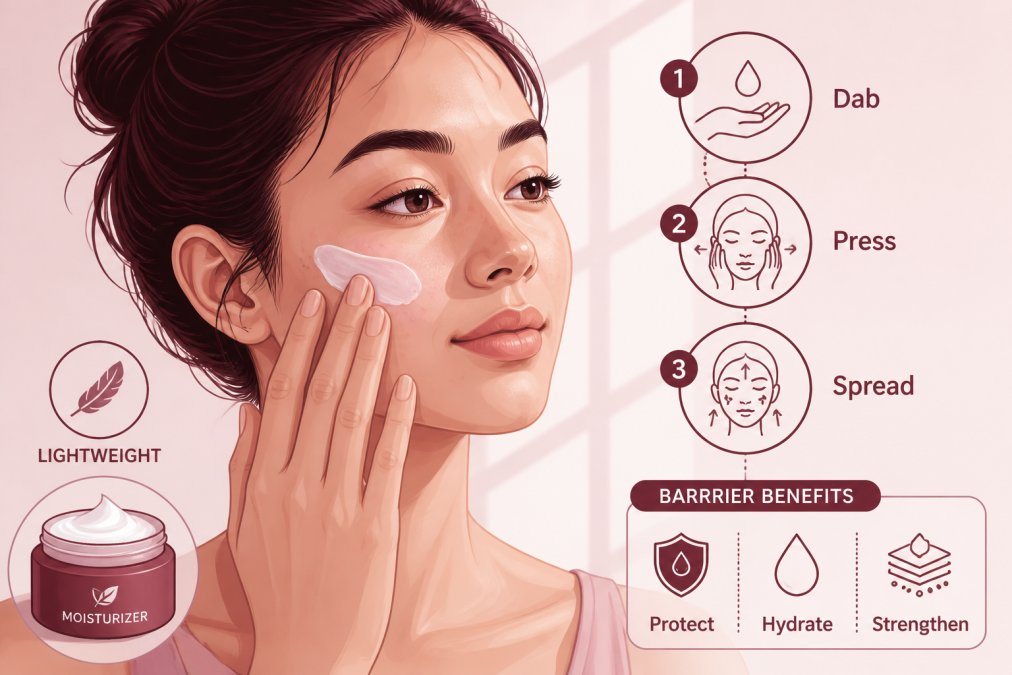
The key is adding ceramides and hyaluronic acid to your routine. Ceramides are lipids that fill gaps in your barrier and lock in hydration. Hyaluronic acid is a humectant that draws moisture into the skin, plumping it and reducing the appearance of irritation.
Apply moisturizer while your skin is still slightly damp from cleansing. This technique, called hydration layering, helps your skin absorb hydration more effectively. A lightweight, oil-free moisturizer is essential; heavy creams will feel suffocating on acne-prone skin and may worsen breakouts. Veluné's approach to barrier repair focuses on deep hydration without heaviness, ensuring your skin feels calm and balanced.
Avoid products containing alcohol or fragrance during your barrier-repair phase. These ingredients accelerate water loss from your skin, making irritation worse. Your barrier needs consistency and calm, not stimulation.
Ingredients to Use and Ingredients to Avoid
Gentle Active Ingredients That Work
Salicylic acid is a beta-hydroxy acid that dissolves within pores, making it excellent for acne-prone skin. Start with a low concentration (0.5-1%) and use it only 2-3 times weekly initially. As your skin adapts, you can increase frequency gradually.
Niacinamide is perhaps the gentlest active for sensitive, acne-prone skin. It regulates sebum production, reduces redness, and strengthens your skin barrier simultaneously. Concentrations of 4-5% are effective without being overwhelming.
Azelaic acid is underrated for sensitive skin with acne. It's anti-inflammatory, gently exfoliating, and antimicrobial, addressing acne from multiple angles without the harshness of benzoyl peroxide.
Ingredients to Avoid When Skin Is Compromised
Benzoyl peroxide is highly effective for acne but extremely harsh on sensitive skin. It kills bacteria effectively but causes dryness, peeling, and irritation that can damage your barrier further. Avoid it until your skin barrier is fully restored.
Fragrance and essential oils are irritants on sensitive skin, even "natural" fragrances trigger inflammation and compromise your barrier.
Alcohol accelerates water loss from your skin and disrupts your barrier. Products with high alcohol content feel refreshing temporarily but leave your skin more dehydrated and irritated long-term.
Retinoids and retinol are powerful anti-aging and acne-fighting ingredients, but they're not appropriate for actively inflamed, sensitive skin. Wait until your skin is calm and your barrier is restored before introducing them.
Physical scrubs and exfoliating brushes should be avoided entirely. The mechanical friction damages your barrier and triggers inflammation. Use a gentle chemical exfoliant instead.
Signs of Over-Exfoliated Skin and How to Stop
Over-exfoliated skin shows persistent redness, visible sensitivity to any product, a tight or uncomfortable feeling, increased breakouts despite treatment, and a shiny or reflective appearance.
If you recognize these signs, stop all active treatments immediately. Continue cleansing gently and moisturizing consistently, but focus exclusively on barrier repair for 1-2 weeks.
During this recovery phase, your routine should include only a gentle cleanser, a hydrating toner or essence if desired, and a barrier-repair moisturizer with ceramides and hyaluronic acid. Some people benefit from adding a facial oil (like jojoba or squalane) as the final step to lock in hydration.
Over-exfoliated skin gets worse with continued treatment. Healing requires patience and gentleness. Most people see significant improvement within 2-3 weeks of pausing actives and focusing on barrier repair.
How Long Does It Take to Clear Acne Gently
For mild acne with a healthy barrier, expect visible improvement within 4-6 weeks of consistent gentle treatment. For moderate acne or acne on a compromised barrier, plan for 8-12 weeks. Severe acne may require professional dermatological treatment.
The first 2-3 weeks often feel discouraging because you might not see dramatic changes. This is normal. You're allowing your barrier to heal while gently treating acne. By week 4, most people notice their skin feels calmer, less reactive, and more hydrated.
Consistency matters more than intensity. Using the same gentle routine daily for 12 weeks delivers better results than switching products frequently or increasing concentrations aggressively.
Your Step-by-Step Routine for Acne-Prone, Sensitive Skin
Building a routine for acne-prone, sensitive skin requires intentional layering of products that work together without overwhelming your barrier. Fewer products used correctly beats a complicated routine used inconsistently.
Morning Routine
Step 1: Cleanse (1-2 minutes) Wet your face with lukewarm water, apply cleanser to damp skin, and massage gently for 30-45 seconds. Rinse thoroughly with cool water and pat dry gently.
Step 2: Apply Active (if using) (1 minute) If you're using a gentle active like niacinamide or azelaic acid, apply it to completely dry skin. Wait 1-2 minutes before moving to the next step. If your skin is in barrier-repair mode, skip this step.
Step 3: Hydrate (1 minute) Apply a hydrating toner or essence if you use one. This adds an extra layer of hydration and helps subsequent products absorb better.
Step 4: Moisturize (1-2 minutes) Apply a lightweight, oil-free moisturizer while your skin is still slightly damp. Use your fingertips to gently press the product into your skin.
Step 5: Protect (optional, 1 minute) If you're going outside, apply a non-comedogenic sunscreen. UV exposure worsens inflammation and can trigger post-acne marks.
Evening Routine
Step 1: Cleanse (1-2 minutes) Use the same gentle cleanser as your morning routine. Evening cleansing removes oil, bacteria, and environmental irritants accumulated throughout the day.
Step 2: Apply Active (if using) (1 minute) Evening is often the better time for actives because your skin won't be exposed to sun. Apply your chosen active to completely dry skin and wait 1-2 minutes.
Step 3: Hydrate (1 minute) Apply a hydrating toner or essence if you use one. This step is especially important in the evening because your skin repairs itself during sleep.
Step 4: Moisturize (2 minutes) Apply your barrier-repair moisturizer. Evening is the time to be slightly more generous with moisturizer since your skin doesn't need to interact with makeup or sunscreen.
Step 5: Optional Barrier Boost (1 minute) If your skin is still in recovery mode, add a facial oil as the final step. Use only 2-3 drops and press gently into your skin.
Weekly Care and Patch Testing
Once weekly, perform a gentle exfoliation if your skin tolerates it. Skip this step entirely if your skin is reactive or in barrier-repair mode.
Patch testing is essential when introducing any new product. Apply a small amount to your inner arm or behind your ear, wait 24-48 hours, and watch for redness, itching, or burning. If no reaction occurs, introduce it to your face gradually.
| Step | Duration | Frequency | Key Focus |
|---|---|---|---|
| Cleanse | 1-2 min | Twice daily | Gentle, non-stripping |
| Apply active | 1 min | 2-3x weekly initially | Low concentration, gradual increase |
| Hydrate | 1 min | Twice daily | Support barrier repair |
| Moisturize | 1-2 min | Twice daily | Lightweight, oil-free |
| Patch test | 24-48 hours | Before new products | Prevent reactions |
When to See a Dermatologist
Gentle acne treatment works for many people, but some situations require professional help. If your acne is severe, covers large areas, or doesn't improve after 12 weeks of consistent gentle treatment, schedule an appointment with a dermatologist.
If your acne causes significant pain, produces cysts or nodules, or is accompanied by hormonal symptoms (irregular periods, unusual hair growth), see a dermatologist. These signs suggest hormonal or inflammatory acne that may benefit from prescription treatments.
If you have a history of severe acne scarring or post-inflammatory hyperpigmentation, dermatological treatment can prevent permanent damage. Additionally, if you're experiencing severe skin barrier damage, persistent sensitivity, or signs of a skin condition like rosacea or eczema alongside acne, a dermatologist can rule out underlying conditions.
According to guidance from dermatological associations on acne management, professional assessment is particularly important when over-the-counter approaches have been ineffective for more than 8-12 weeks.
Treating acne gently for sensitive skin requires patience and intentionality, but the payoff is sustainable clear skin without the damage caused by aggressive treatments. Your skin barrier is your foundation; protect it, repair it, and your acne will improve as a natural consequence. Veluné's philosophy of deep hydration without heaviness aligns directly with this approach. Start with the fundamentals: a gentle cleanser, a barrier-repair moisturizer, and one low-concentration active. Give your skin 8-12 weeks to respond. Track your progress with photos. The gentlest approach is often the most effective one.
Frequently Asked Questions
Can I use salicylic acid if I have sensitive skin?
Yes, but with caution. Salicylic acid can help treat acne by unclogging pores, but it can irritate sensitive skin if used too frequently or at high concentrations. Start with a low concentration (0.5-1%) once or twice per week, and always follow with a hydrating moisturizer. If you experience redness, dryness, or burning, reduce frequency or stop use. Patch test on a small area first. Non-prescription options like niacinamide or azelaic acid may be gentler alternatives for very reactive skin.
How long does it take to see results when treating acne gently for sensitive skin?
Gentle acne treatment takes longer than aggressive approaches. Most people see initial improvement in redness and irritation within 2-3 weeks. Actual acne reduction typically appears after 6-8 weeks of consistent, gentle care. Deep cystic acne may require 12 weeks or longer. The timeline depends on acne severity, skin barrier condition, and product consistency. Patience is essential; rushing the process or switching products too frequently can reset your skin's healing timeline and worsen sensitivity.
What should I do if my skin feels tight and dry after treating acne?
Tight, dry skin signals barrier damage or over-treatment. Stop using any active ingredients immediately and focus on hydration. Use a gentle, fragrance-free cleanser, apply hydrating serums with hyaluronic acid, and layer with a non-comedogenic moisturizer. Avoid hot water, harsh towels, and any exfoliants. If dryness persists beyond one week or worsens, consult a dermatologist. This is often a sign of over-exfoliation or sensitivity to an ingredient. Restoring barrier health takes 2-4 weeks of consistent gentle care.
Are non-prescription treatments effective for acne on sensitive skin?
Non-prescription treatments can be very effective, especially for mild to moderate acne on sensitive skin. Ingredients like azelaic acid, niacinamide, and salicylic acid (at low concentrations) work well without the irritation of stronger prescription actives. Benzoyl peroxide can also be effective but requires careful use and hydration support. For moderate to severe acne, or if non-prescription options fail after 8-12 weeks, consult a dermatologist about prescription-strength treatments like topical antibiotics or retinoids formulated for sensitive skin.
This article was written using GrandRanker