
Table of Contents
- What Happens When Your Skin Barrier Is Compromised
- Signs of Over-Exfoliated Skin and Barrier Damage
- How to Repair Damaged Skin Barrier: The Role of Cleansing
- Best Ingredients for Skin Barrier Repair in Gentle Cleansers
-
Top Gentle Cleansers for Compromised Skin
- CeraVe Hydrating Cleanser: Ceramide-Rich Barrier Support
- Bioderma Sensibio H2O: Micellar Gentleness for Reactive Skin
- La Roche-Posay Toleriane Dermo-Cleanser: Minimalist Formula
- Avène Tolérance Extremely Gentle Cleanser: Postbiotic Soothing
- Eucerin pH5 Washlotion: Budget-Friendly pH Balance
- Cetaphil Gentle Skin Cleanser: Multi-Benefit Hydration
- GMT BEAUTY Soft Moisturising Cleanser: Local Latvian Option
- Proper Cleansing Technique for Compromised Skin
- Common Mistakes When Cleansing Damaged Skin
- Conclusion
Last Updated: August 10, 2026
What Happens When Your Skin Barrier Is Compromised
Your skin barrier is a protective layer of lipids, proteins, and water that keeps irritants out and moisture in. When it breaks down, your skin loses hydration and defense against environmental stressors, resulting in increased sensitivity, redness, inflammation, and vulnerability to further damage.
A compromised barrier usually results from repeated harsh treatments, over-exfoliation, or stripping cleansers. Many people don't recognize the damage until they notice persistent tightness, burning, or reactions to previously tolerated products. At that point, the lipid barrier, composed of ceramides, cholesterol, and fatty acids, has already depleted significantly.
Most people assume "clean" skin requires aggressive scrubbing or foaming products. In reality, that accelerates barrier damage. The right gentle cleanser removes impurities without disrupting pH or stripping ceramides and lipids your barrier needs to repair itself. Understanding this distinction is critical to recovery.
Signs of Over-Exfoliated Skin and Barrier Damage
Over-exfoliation is one of the most common causes of barrier compromise, yet many people miss the warning signs.
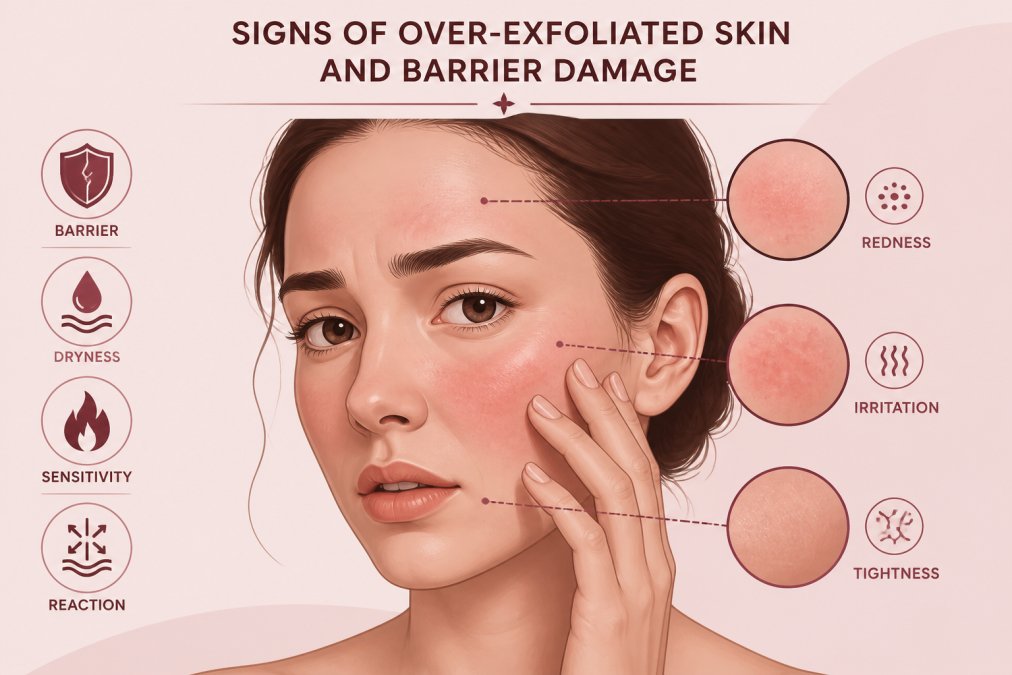
Persistent redness and inflammation are the first red flags. Your skin may feel hot, tight, or raw even without product application. Tightness is particularly telling, when your barrier is compromised, it loses water retention, so skin feels perpetually dehydrated regardless of moisturizer use. This worsens after cleansing, signaling your cleanser is too harsh.
Increased reactivity to products is another major sign. If previously tolerated products now sting or burn, your barrier has weakened and your skin's protective microbiota has become imbalanced. You might also react to temperature changes, wind, or towel friction.
Sensitivity to water itself indicates significant barrier damage. If lukewarm water causes stinging or discomfort after cleansing, your barrier has lost integrity. Some people experience visible peeling, flaking, or dull texture that hydration alone won't resolve.
The key distinction is consistency. Occasional sensitivity is normal; persistent symptoms lasting weeks signal barrier damage requiring a gentle cleanser specifically formulated for compromised skin.
How to Repair Damaged Skin Barrier: The Role of Cleansing
Repairing a damaged barrier requires shifting how you cleanse. Most people focus on moisturizers and serums but overlook the foundation: if you're still using a stripping cleanser, you're fighting against yourself.
Start with a gentle cleanser formulated with barrier-supporting ingredients like ceramides, hyaluronic acid, and niacinamide. These actively restore the lipid barrier while cleansing.
Technique matters equally. Scrubbing hard, using hot water, or rubbing with rough towels causes mechanical irritation that accelerates damage. Use lukewarm water, light fingertip pressure, and pat dry rather than rub.
pH balance is critical and often overlooked. Your skin's natural pH is slightly acidic (around 5.5), supporting microbiota and barrier function. Many conventional cleansers are alkaline, disrupting this balance and triggering inflammation. pH-balanced cleansers maintain your skin's natural acidity, allowing recovery.
Cleansing frequency also impacts repair. When your barrier is compromised, twice-daily cleansing may be excessive. Many dermatologists recommend once-daily gentle cleansing with micellar water or no-rinse cleansers at other times, reducing mechanical irritation while removing impurities.
Most people see noticeable improvement within 2-4 weeks using the right gentle cleanser consistently. Your skin will feel less tight, redness will diminish, and reactivity will decrease. Switching back to harsh cleansers will undo progress.
Best Ingredients for Skin Barrier Repair in Gentle Cleansers
Understanding key ingredients helps you identify formulas that support recovery.
Ceramides are essential for barrier repair. These lipids are core barrier components that drop dramatically when damaged. Cleansers with ceramides (particularly 1, 3, and 6-II) replenish this loss while cleansing, delivering barrier-supporting lipids directly to the skin surface.
Hyaluronic acid holds up to 1000 times its weight in water. In gentle cleansers, it maintains hydration during and after cleansing, counteracting the rapid moisture loss that accompanies barrier compromise.
Niacinamide (Vitamin B3) reduces inflammation and supports barrier function. It calms irritation and redness while regulating sebum production, making it useful even for acne-prone individuals with barrier damage.
Glycerin is a gentle humectant that hydrates without heaviness, well-tolerated by reactive skin and working synergistically with other barrier-supporting ingredients.
Soothing botanical extracts like thermal spring water, allantoin, or centella asiatica calm inflammation and support healing without irritating reactive skin.
Avoid: strong surfactants like sodium lauryl sulfate (SLS), fragrance, essential oils, alcohol, and exfoliating acids. These further damage your barrier and extend recovery. Focus on fragrance-free, SLS-free formulas without active exfoliants.
The best gentle cleansers combine multiple barrier-supporting ingredients. Look for products labeled "barrier repair," "sensitive skin," or "post-procedure", these are specifically formulated for compromised barriers.
Top Gentle Cleansers for Compromised Skin
CeraVe Hydrating Cleanser: Ceramide-Rich Barrier Support
CeraVe Hydrating Cleanser contains three essential ceramides (1, 3, and 6-II) that directly support barrier repair. This non-foaming formula removes dirt, oil, and makeup without stripping. Hyaluronic acid ensures hydration throughout cleansing. The fragrance-free, hypoallergenic formula suits sensitive skin and works on face and body. Available at approximately €13.00 for 236ml.
Bioderma Sensibio H2O: Micellar Gentleness for Reactive Skin
Bioderma Sensibio H2O uses micellar technology designed for reactive skin. This no-rinse formula eliminates mechanical irritation from water and rubbing. The physiological pH of approximately 5.5 respects your skin's natural balance, supporting microbiota health. At approximately €15.45 for 500ml, you get excellent value through extended use.
La Roche-Posay Toleriane Dermo-Cleanser: Minimalist Formula
La Roche-Posay Toleriane Dermo-Cleanser embodies the principle that less is more when your barrier is compromised. This milky cleanser has an intentionally minimal ingredient list to reduce allergy risk. The La Roche-Posay Thermal Spring Water provides soothing benefits. Fragrance-free and preservative-free, it can be used with or without water. Priced at approximately €25.99 for 200ml.
Avène Tolérance Extremely Gentle Cleanser: Postbiotic Soothing
Avène Tolérance Extremely Gentle Cleanser includes D-Sensinose™, a postbiotic active ingredient that calms and supports microbiota health, particularly valuable since barrier compromise often involves microbiota imbalance. The no-rinse gel format minimizes mechanical irritation. At approximately €28.00 for 200ml, the postbiotic technology justifies the price for those with persistent reactivity.
Eucerin pH5 Washlotion: Budget-Friendly pH Balance
Eucerin pH5 Washlotion is a body wash that works well for facial cleansing when your barrier is compromised. The pH5 Citrate Buffer system actively stabilizes your skin's natural pH, supporting barrier function. At approximately €7.67 for 200ml, this is the most accessible option without sacrificing efficacy. The formula is suitable for daily use on sensitive skin and works for face and body.
Cetaphil Gentle Skin Cleanser: Multi-Benefit Hydration
Cetaphil Gentle Skin Cleanser combines hydrating glycerin, niacinamide, and panthenol in a soap-free, fragrance-free formula clinically proven to defend against five signs of sensitive skin: dryness, irritation, roughness, tightness, and weakened barrier function. Available at approximately €20.93 for 236ml, it can be used with or without water on face and body.
GMT BEAUTY Soft Moisturising Cleanser: Local Latvian Option
GMT BEAUTY Soft Moisturising Cleanser is locally produced in Latvia. This gel cleanser provides long-lasting hydration while gently removing impurities. The formula contains lactic acid, Quillaja Saponaria Extract, and Saccharide Isomerate for hydration and barrier support. At approximately €28.70 for 500ml, this represents strong value through extended use.
| Cleanser | Type | Key Ingredient | Best For | Approximate Price |
|---|---|---|---|---|
| CeraVe Hydrating | Rinse-off lotion | Ceramides 1, 3, 6-II | Ceramide-focused barrier repair | €13.00 |
| Bioderma Sensibio H2O | Micellar water | Biomimetic sugars | Minimal friction, reactive skin | €15.45 |
| La Roche-Posay Toleriane | Rinse-off lotion | Thermal spring water | Minimalist formula, all ages | €25.99 |
| Avène Tolérance | No-rinse gel | D-Sensinose™ postbiotic | Microbiota support, soothing | €28.00 |
| Eucerin pH5 | Body wash | pH5 Citrate Buffer | Budget-friendly, pH balance | €7.67 |
| Cetaphil Gentle | Rinse-off lotion | Niacinamide, panthenol | Multi-benefit hydration | €20.93 |
| GMT BEAUTY Soft | Gel cleanser | Saccharide Isomerate | Local option, moisturizing | €28.70 |
Proper Cleansing Technique for Compromised Skin
Choosing the right gentle cleanser is half the equation. How you use it matters equally, poor technique can damage your barrier even with the gentlest formula.
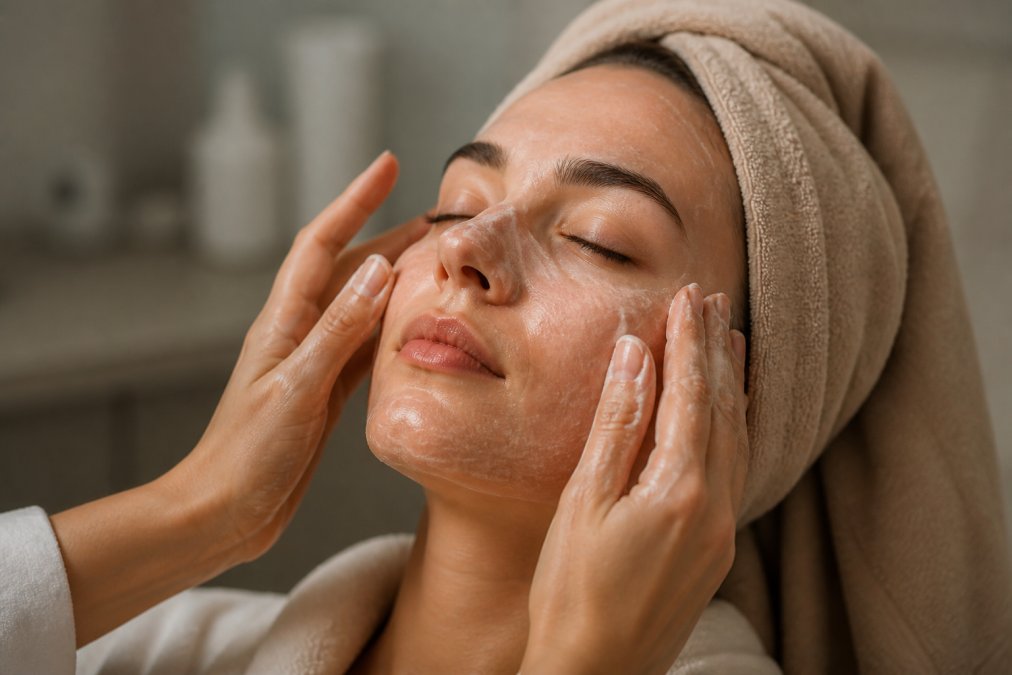
Start with lukewarm water, not hot. Hot water increases transepidermal water loss, accelerating dehydration when your barrier is already compromised. Lukewarm water (around body temperature) cleanses effectively without additional stress.
Apply cleanser to damp skin using fingertips, not washcloths or brushes. Use light, upward strokes rather than circular motions. Imagine handling delicate fabric, your fingertips should barely glide across your skin.
Spend 30-45 seconds cleansing. This removes impurities and makeup without over-stripping. Focus on areas needing cleansing: the T-zone, around the eyes, and jawline. Avoid excessive rubbing on irritated areas.
Rinse thoroughly with lukewarm water if using a rinse-off cleanser. Residual cleanser irritates skin. For no-rinse formulas, apply, let sit 10-15 seconds, and gently tissue off excess.
Pat dry with a soft towel rather than rubbing. A gentle patting motion removes water without mechanical stress. For very reactive skin, skip towel drying and apply moisturizer to damp skin to lock in hydration.
If your barrier is severely compromised, cleanse once daily (usually at night). In the morning, use micellar water or a no-rinse cleanser instead of a full wash. This reduces cumulative irritation while removing overnight sweat and sebum.
Apply moisturizer within 60 seconds of cleansing while skin is still slightly damp. This locks in hydration and supports barrier repair. Wait until your barrier has significantly recovered before reintroducing active ingredients like retinoids or vitamin C.
Common Mistakes When Cleansing Damaged Skin
Understanding what not to do is as important as knowing the right technique.
Using water that's too hot strips natural oils and increases water loss. Adjust to lukewarm water, your barrier will recover faster.
Cleansing too frequently is excessive when your barrier is compromised. Once-daily gentle cleansing with light cleansing at other times reduces cumulative irritation without sacrificing cleanliness.
Using the wrong cleanser type for your situation is common. If you have oily, acne-prone skin with barrier damage, resist foaming cleansers that "feel" cleaner. A gentle, non-foaming cleanser will improve your skin faster by allowing barrier healing. As your barrier recovers, your skin will naturally regulate oil production.
Applying active ingredients too soon extends barrier damage. During barrier repair, simplify your routine to just cleanser and moisturizer. Once your skin feels comfortable and hydrated for 2-3 weeks, cautiously reintroduce one active at a time.
Not moisturizing immediately after cleansing is critical. Your skin is most receptive to hydration when damp. Apply within 60 seconds for maximum barrier support.
Using fragrance or essential oils irritates compromised skin. Check ingredient lists, if fragrance is listed, it may hinder barrier recovery.
Scrubbing or using tools like brushes or sonic cleansers creates mechanical irritation. Stick to fingertips only.
Switching products too frequently prevents seeing real results. It takes 2-4 weeks to assess whether a cleanser supports your barrier. Commit to one gentle cleanser for at least 3-4 weeks before evaluating results.
Repairing a compromised skin barrier starts with the right gentle cleanser and proper technique. The products reviewed here, from ceramide-rich formulas like CeraVe to innovative postbiotic options like Avène, each offer legitimate pathways to barrier recovery. What matters most is consistency: choose a formula aligning with your skin type, use it correctly, and give it time to work.
Veluné's philosophy of deep hydration without heaviness and restoring barrier strength directly supports this recovery process. Whether you select one of the reviewed options or explore Veluné's own gentle cleansing formulas, the foundation remains the same: your barrier needs support, not stripping. Once you've established that foundation with the right cleanser, your skin can finally begin healing.
Frequently Asked Questions
What is the best gentle cleanser for a compromised skin barrier?
The best gentle cleanser depends on your specific needs, but look for formulas with ceramides, hyaluronic acid, and glycerin. CeraVe Hydrating Cleanser and Cetaphil Gentle Skin Cleanser are widely recommended for barrier repair. Choose a non-foaming, fragrance-free formula that maintains pH balance around 5.5. Avoid sulfates and alcohol, which strip natural oils. Test any new cleanser on a small patch first to ensure tolerance.
How do I know if my skin barrier is damaged, and how can a gentle cleanser help?
Signs of a damaged barrier include persistent redness, tightness, sensitivity to products, increased dryness, and a weakened ability to retain moisture. A gentle cleanser helps by removing impurities without stripping lipids that protect your barrier. Cleansers with ceramides and hyaluronic acid actively support barrier repair while cleansing. Avoid harsh scrubbing or hot water, which worsen damage. Consistent use of a barrier-supporting cleanser is the foundation of recovery.
What ingredients should I avoid if my skin barrier is compromised?
Avoid sulfates (SLS), alcohol denat, fragrance, essential oils, strong exfoliants (AHAs, BHAs), retinoids, and vitamin C in unstable forms. Skip foaming cleansers and physical scrubs entirely during barrier repair. Avoid products with high concentrations of active ingredients or multiple actives combined. Preservatives like parabens are generally safe, but if your skin is extremely reactive, consider preservative-free options like La Roche-Posay Toleriane. Focus on soothing, hydrating ingredients instead.
How often should I wash my face if my skin barrier is compromised?
Wash your face once daily in the evening to remove daily grime and makeup, and rinse with cool water in the morning without a cleanser if possible. Over-cleansing strips away protective oils and delays barrier repair. If you exercise or feel visibly dirty, a gentle rinse is acceptable, but avoid multiple cleansing sessions daily. Some people with very damaged barriers benefit from cleansing every other day initially. Listen to your skin and adjust frequency based on comfort and healing progress.
This article was written using GrandRanker