
Table of Contents
- What Is the Skin Barrier and Why It Matters
- Common Signs of a Compromised Skin Barrier
- Causes of Skin Barrier Damage
- How to Repair a Compromised Skin Barrier
- Skincare Routine for Damaged Skin
- How Long Does Barrier Repair Take
- When to See a Dermatologist
- Conclusion
Last Updated: August 11, 2026
What Is the Skin Barrier and Why It Matters
The skin barrier is the outermost layer of your epidermis, specifically the stratum corneum, which acts as your body's first line of defense against environmental aggressors and moisture loss. This protective layer is composed of lipid-rich structures that work alongside your skin's natural microbiome to maintain hydration, regulate pH balance, and keep irritants out.
Think of your skin barrier as a brick-and-mortar wall. The cells are the bricks, and the lipids (ceramides, cholesterol, and fatty acids) are the mortar holding everything together. When this structure stays intact, your skin feels comfortable, looks clear, and resists irritation. When it breaks down, your skin becomes reactive, sensitive, and prone to inflammation.
A damaged barrier can't retain moisture effectively, which leads to dryness and tightness. It can't filter out irritants properly, which triggers sensitivity and hypersensitivity reactions. It can't maintain proper pH balance, which disrupts your skin's microbiome and can worsen acne or dermatitis. Understanding your skin barrier and recognizing when it's compromised is the first step toward real, lasting skin improvement.
Common Signs of a Compromised Skin Barrier
A compromised skin barrier announces itself through consistent physical and sensory signals that persist even when you're not actively applying products.
Physical symptoms to watch for
Visible redness and erythema are among the first indicators of barrier distress. Your skin may appear flushed or blotchy, especially across the cheeks and forehead, even without active breakouts.
Flaking and desquamation (excessive shedding of skin cells) signal that your barrier can't retain moisture properly. You might notice dry patches that feel rough to the touch, or fine flakes that appear even after moisturizing.
Sensitivity and stinging sensations are hallmark symptoms. Products that never bothered you before, even mild cleansers or gentle moisturizers, suddenly sting or burn. This happens because damaged areas in your barrier allow irritants to penetrate deeper into the epidermis, triggering pain receptors.
Loss of skin elasticity and firmness often accompanies barrier damage. Your skin may feel tight when stretched, lack its normal bounce-back, or appear dull and lackluster.
Increased acne flare-ups or persistent breakouts are common, especially in people with acne-prone skin. When your barrier is weakened, bacteria can colonize more easily and inflammation increases.
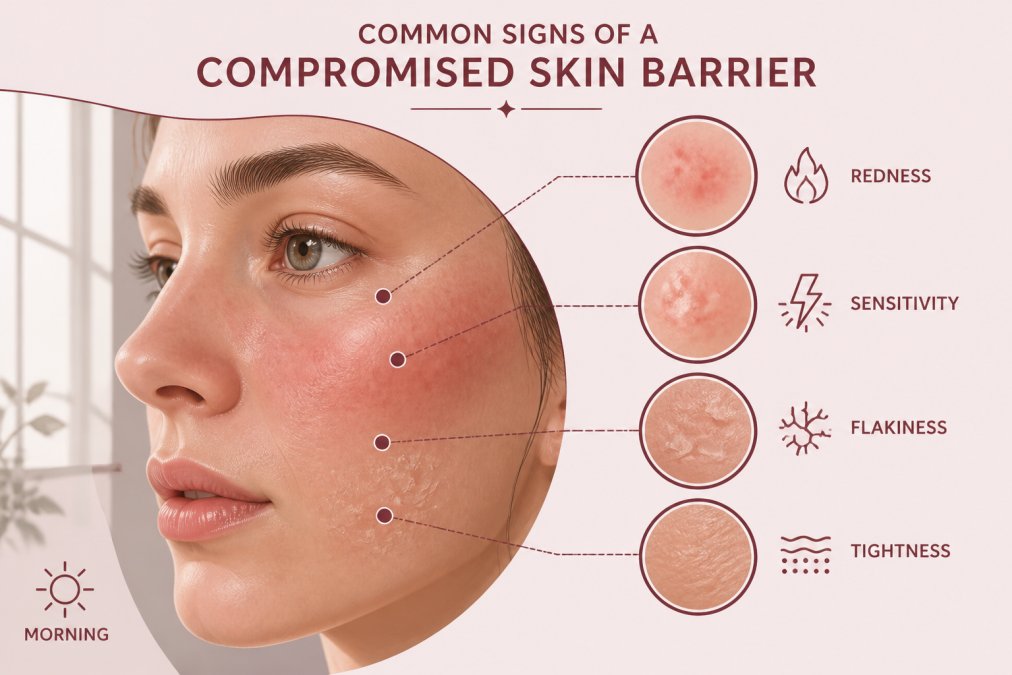
How barrier damage feels versus other skin conditions
The key distinction between a compromised skin barrier and other skin issues lies in the pattern and persistence of symptoms. Barrier damage typically affects multiple symptoms simultaneously, redness, dryness, sensitivity, and tightness all present together, whereas isolated issues like occasional breakouts or seasonal dryness are usually more localized.
Allergic reactions often involve itching as a primary symptom and may include swelling or hives. Barrier damage causes stinging and discomfort rather than intense itching. The real diagnostic clue is how your skin responds to gentle products. If you apply a simple, fragrance-free moisturizer and your skin still stings, your barrier is likely compromised.
Causes of Skin Barrier Damage
Understanding what damages your barrier helps you avoid repeating the mistake. The causes fall into two categories: what you're doing to your skin through skincare, and what your environment and lifestyle are doing to it.
Skincare practices that compromise the barrier
Over-exfoliation is the leading cause of barrier damage among people who actively use skincare products. When you exfoliate too frequently or too aggressively, you strip away the protective lipid layer faster than your skin can rebuild it.
Retinoid irritation is another common culprit. Retinoids and retinol work by accelerating cell turnover. When introduced too quickly, used at too high a concentration, or applied too frequently, they can overwhelm your barrier's ability to adapt.
Using too many active ingredients simultaneously creates cumulative stress on your barrier. Combining acids with vitamin C, then adding retinol, then using benzoyl peroxide, all in the same routine, is a recipe for barrier damage.
Harsh cleansers that strip natural oils are deceptively damaging. Many conventional face washes contain sulfates and other surfactants that dissolve the lipids holding your barrier together.
Hot water and frequent washing damage the barrier by stripping lipids and disrupting pH balance. Washing multiple times daily accelerates barrier breakdown, especially on your body.
Environmental and lifestyle triggers
Dry air and low humidity directly cause transepidermal water loss. Winter months, heated indoor environments, and arid climates all pull moisture from your skin faster than your barrier can compensate.
Sun exposure without adequate protection damages the barrier through UV-induced inflammation and lipid degradation. UV rays break down ceramides and other barrier components.
Stress and sleep deprivation impair your skin's ability to repair itself. Your skin barrier does most of its healing during sleep. When you're stressed or sleep-deprived, your body diverts resources away from skin maintenance.
Pollution and environmental irritants create constant low-level inflammation that taxes your barrier. Particulate matter, smoke, and chemical pollutants accumulate on your skin and trigger inflammatory responses.
Diet and hydration status affect barrier health from the inside. Your skin needs adequate water intake and dietary fats (especially omega-3 and omega-6 fatty acids) to maintain healthy lipid production.
How to Repair a Compromised Skin Barrier
Barrier repair requires two simultaneous approaches: stopping the damage and actively supporting reconstruction with the right ingredients and practices.
The skin fasting protocol
Skin fasting is a minimalist approach where you strip your routine down to the absolute essentials for 1-2 weeks. The goal is to remove every potential irritant so your barrier can begin healing without interference.
During a skin fasting period, your routine becomes: gentle cleanser, hydrating toner or essence (optional), and a simple moisturizer. No actives, no exfoliants, no serums with multiple ingredients, no fragrance. You're giving your skin the equivalent of a quiet recovery period.
The protocol works because it eliminates the constant low-level irritation that prevents healing. After 1-2 weeks of fasting, your skin typically shows visible improvement: less redness, reduced stinging, improved hydration. At this point, you can begin reintroducing products slowly, one at a time, waiting 3-5 days between additions.
Essential ingredients for barrier restoration
Ceramides are non-negotiable for barrier repair. These lipids are literally part of your barrier's structure, so topical ceramides help fill gaps in your compromised barrier. Look for ceramide NP, ceramide AP, and ceramide EOP in your products.
Hyaluronic acid is a humectant that draws moisture into your skin and helps maintain hydration within the barrier. A lightweight hyaluronic acid serum applied to damp skin can significantly improve how your barrier retains moisture.
Fatty acids (especially linoleic acid) support lipid barrier function. These are often found in plant oils and specialized barrier-repair moisturizers and are specifically beneficial for barrier structure.
Occlusives like petrolatum, dimethicone, or plant-based oils seal moisture into your skin by creating a protective layer over your barrier. These are especially important in your evening routine when your skin is doing most of its repair work.
Centella asiatica (cica) and panthenol reduce inflammation and support barrier healing. These soothing ingredients calm irritation without adding irritant load.
Niacinamide supports ceramide and fatty acid production within your skin, helping your barrier rebuild its own lipid structures over time.
Skincare Routine for Damaged Skin
When your barrier is compromised, your routine becomes your primary healing tool. The goal is to cleanse gently, hydrate thoroughly, and protect your barrier from further damage.
Step-by-step morning routine
Begin with a gentle, non-foaming cleanser. Use lukewarm water and avoid cleansing with a washcloth or brush. Massage the cleanser gently with your fingertips for 30-45 seconds, then rinse thoroughly. Pat your skin dry gently.
Apply a hydrating toner or essence while your skin is still slightly damp. Wait 1-2 minutes for it to absorb.
Apply your barrier-repair moisturizer to damp skin. Use enough product that your skin feels nourished but not greasy.
If you're using sunscreen, wait 2-3 minutes for your moisturizer to set, then apply a lightweight, mineral sunscreen. During barrier repair, avoid chemical sunscreens which can be irritating.
Avoid makeup if possible during the first 1-2 weeks of barrier repair.
Step-by-step evening routine
Cleanse with the same gentle cleanser as your morning routine.
Apply your hydrating toner or essence to damp skin.
Apply a richer barrier-repair moisturizer or a dedicated barrier cream. Your evening moisturizer can be slightly heavier than your morning version.
Consider a facial oil as your final step. A lightweight oil (jojoba, squalane, or rosehip) applied over your moisturizer creates an extra seal and adds additional fatty acids. Use 2-3 drops and press gently into your skin.
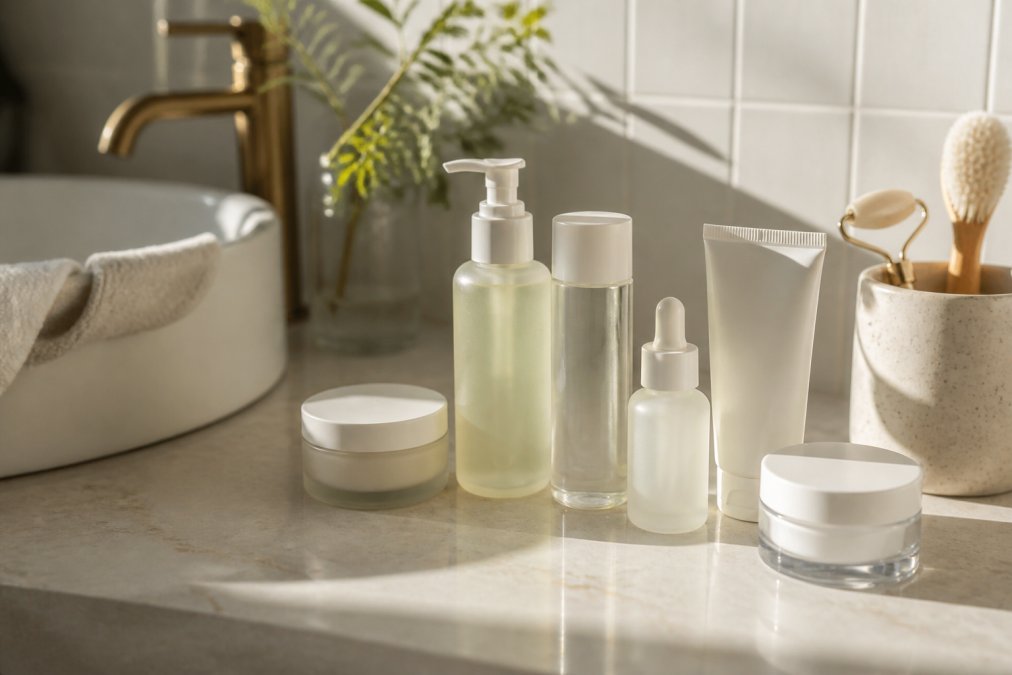
The entire routine should take 3-5 minutes in the morning and 4-6 minutes in the evening. Simplicity and consistency matter far more than complexity when your barrier is compromised.
How Long Does Barrier Repair Take
Most people see visible improvement within 2-4 weeks of consistent, appropriate care. However, complete restoration, where your barrier functions optimally and you can tolerate a full range of products, typically takes 6-12 weeks.
The timeline depends on several factors. How severely compromised your barrier is matters significantly. Minor damage from a week of over-exfoliation repairs faster than severe damage from months of misuse. Your age also affects repair speed; younger skin typically heals faster than mature skin.
During the first 2 weeks, you should notice reduced stinging, less redness, and improved hydration. By week 4-6, your skin should feel noticeably more comfortable. By week 8-12, most people can return to a more complete skincare routine, though it's wise to reintroduce products slowly and avoid the practices that caused damage in the first place.
The key is not to rush. Returning to aggressive skincare too quickly is the most common reason barrier repair fails.
When to See a Dermatologist
While most cases of barrier damage respond well to the repair strategies outlined above, certain situations warrant professional evaluation. If your symptoms don't improve after 4-6 weeks of consistent, appropriate care, dermatological assessment is appropriate.
Severe, spreading redness that covers large areas of your face or body needs professional evaluation. If you develop signs of infection, warmth, swelling, pustules, or oozing, see a dermatologist immediately. A compromised barrier can allow bacteria to colonize more easily, and infection requires professional treatment.
Persistent itching beyond normal barrier damage symptoms, especially if it's intense or keeps you awake, suggests a different underlying issue. If you're unsure whether your symptoms are barrier damage or something else, professional confirmation helps you pursue the right treatment path.
Repairing a compromised skin barrier takes intention and patience, but the results are worth the effort. When your barrier is healthy, your skin becomes resilient, clear, and genuinely comfortable. At Veluné, we offer a curated range of intentional skincare products designed to restore balance and barrier strength for long-term skin health. Our philosophy centers on providing deep hydration without heaviness, ensuring gentle renewal for a celestial glow. Shop all our essentials and experience how deep hydration without heaviness can transform your skin's long-term health.
Frequently Asked Questions
What does a compromised skin barrier actually look like?
A compromised skin barrier typically shows persistent redness, visible flaking or peeling, and a rough texture. Your skin may feel tight and uncomfortable, especially after cleansing. You might notice increased sensitivity to products that previously felt fine, along with stinging sensations or burning. Some people experience blotchy patches, while others see overall dullness. The key difference from other conditions is that these symptoms develop gradually after changes to your routine or environment, not suddenly from an allergic reaction.
How long does it take to repair a damaged skin barrier?
Most people notice improvement within 2-4 weeks of consistent, gentle care. However, full restoration typically takes 4-8 weeks, depending on the severity of damage and how well you stick to a simplified routine. During this time, your skin gradually rebuilds its lipid barrier and restores proper moisture retention. Patience is essential, rushing the process by reintroducing actives or heavy products can set back progress significantly. Track changes weekly rather than daily, as daily observation can feel discouraging.
What ingredients should I look for when my skin barrier is compromised?
Focus on ceramides, fatty acids, and hyaluronic acid, which restore the lipid barrier and improve moisture retention. Occlusives like glycerin and squalane seal in hydration. Look for products containing niacinamide, which reduces inflammation and supports barrier function. Avoid anything with fragrance, essential oils, or high concentrations of actives like retinoids or vitamin C during repair. Gentle humectants help without irritating sensitive skin. Choose products with minimal ingredients, complexity can overwhelm a weakened barrier.
Can I still use acne products if my skin barrier is damaged?
No, pause active acne treatments while repairing your barrier. Retinoids, acids, and benzoyl peroxide will worsen inflammation and delay healing. Instead, focus on gentle cleansing and barrier-strengthening moisturizers. Once your barrier is restored (typically 4-8 weeks), you can gradually reintroduce actives at lower concentrations and reduced frequency. Many acne breakouts worsen when the barrier is compromised because irritation triggers inflammation. Healing the barrier often improves acne naturally by reducing hypersensitivity and inflammation.
This article was written using GrandRanker