
Table of Contents
- Signs of Damaged Skin Barrier You Should Know
- What Causes Skin Barrier Damage
- Best Ingredients for Skin Barrier Repair
- Step-by-Step Repair Protocol: Your Daily Routine
- Ingredients to Avoid During Barrier Repair
- Skin Barrier Repair Timeline: What to Expect
- Common Mistakes to Avoid
- Conclusion
Last Updated: August 19, 2026
Signs of Damaged Skin Barrier You Should Know
A damaged skin barrier shows itself through distinct physical signals. The stratum corneum, your skin's outermost protective layer, becomes compromised, allowing transepidermal water loss and letting irritants penetrate deeper.
Common signs include persistent redness that doesn't fade within hours, tightness across your face, and stinging when applying products you've tolerated before. Micro-tears may become visible around the eyes and mouth. Your skin might feel rough, with unexpected flaking or peeling in patches. Some describe a burning sensation that intensifies with heat or certain products.
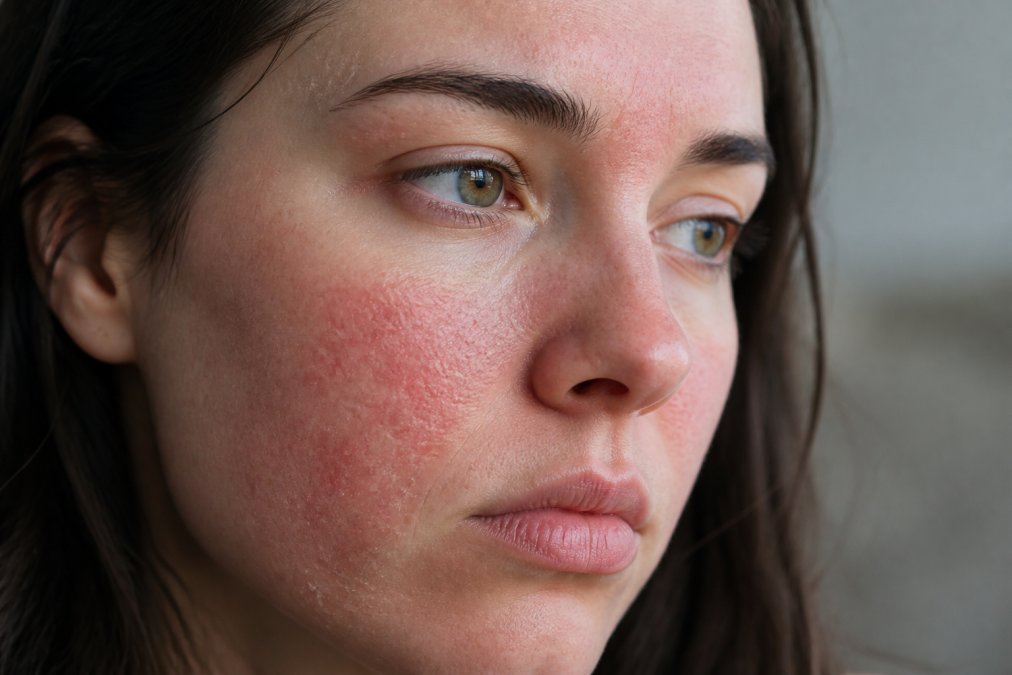
Sensitivity spikes are key indicators. If products that never bothered you suddenly sting, your lipid barrier has weakened. You might notice increased breakouts because the compromised barrier allows bacteria and irritants to trigger inflammation. Some experience itching that no amount of moisturizer relieves, pointing to barrier dysfunction rather than simple dehydration.
Recognizing these signs early is crucial because the longer your barrier remains compromised, the harder it becomes to repair.
What Causes Skin Barrier Damage
Understanding what broke your barrier is essential because you must stop the damage before repair can happen.
Over-exfoliation and harsh actives
Over-exfoliation is the most common culprit. Chemical exfoliants like AHAs and BHAs dissolve bonds between skin cells, while physical exfoliants create micro-tears when used too frequently. Retinoids accelerate cell turnover, which becomes damaging when combined with other actives or used too often.
The problem intensifies when people layer multiple actives, using an AHA one night, a BHA the next, then a retinoid within a week. This doesn't give your skin time to recover. The ceramides and fatty acids that hold your stratum corneum together get stripped away faster than your skin can rebuild them.
Even "gentle" products damage a barrier when used incorrectly. A low-concentration retinoid used nightly might be too frequent. A mild AHA used three times weekly might be excessive for someone with a compromised barrier. The issue isn't always the product itself, but the frequency and combination.
Environmental stress and temperature
Your skin barrier faces constant pressure from external factors. Cold, dry air strips moisture from your skin's surface, increasing transepidermal water loss. This is why barrier damage often worsens in winter or dry climates. Hot water opens pores and strips natural oils. Harsh wind physically damages the outer layer, and pollution particles trigger inflammation that weakens barrier function.
Temperature fluctuations create additional stress. Moving repeatedly from heated indoor spaces to cold outdoor air exhausts your barrier's ability to maintain its lipid structure. UV exposure damages both cells in your stratum corneum and the lipids binding them together, making sun protection essential during barrier repair.
Best Ingredients for Skin Barrier Repair
Repairing a damaged barrier requires ingredients that replace what's been lost or support your skin's natural repair process. The most effective protocols combine three categories: lipid replacements, hydration boosters, and anti-inflammatory agents.
Ceramides and fatty acids
Ceramides are the primary structural component of your skin barrier, making up roughly 50% of your stratum corneum. When your barrier is damaged, ceramide levels drop significantly. The most effective ceramides are ceramide NP, ceramide AP, and ceramide EOP, which mimic naturally occurring ceramides.
Fatty acids (linoleic acid, linolenic acid, and oleic acid) work alongside ceramides to rebuild your lipid barrier. Products containing plant oils like sunflower or safflower oil provide both immediate barrier support and long-term repair.
The optimal formulation uses a "3:1:1 ratio", three parts ceramides, one part cholesterol, and one part fatty acids, which mimics your skin's natural barrier composition.
Hyaluronic acid and humectants
Hyaluronic acid is a humectant that draws moisture into your stratum corneum. In a damaged barrier, humectants alone aren't enough; you must seal the moisture in with an occlusive layer. Other humectants like glycerin, sorbitol, and panthenol also support hydration. A damaged barrier loses water 10-15 times faster than a healthy one, so hydration without occlusion is largely ineffective.
Niacinamide and cholesterol
Niacinamide (vitamin B3) reduces inflammation and supports your skin's natural barrier repair mechanisms. It increases ceramide and fatty acid production while supporting the skin microbiome. Cholesterol is a critical structural component of your barrier with anti-inflammatory properties that help calm irritation associated with barrier damage.
Step-by-Step Repair Protocol: Your Daily Routine
A successful barrier repair routine is deliberately simple. This protocol takes about 5-10 minutes and should be followed consistently for at least 4-6 weeks.
Step 1: Cleanse gently with lukewarm water
Use lukewarm water, not hot. Choose a gentle, non-foaming cleanser labeled as pH-balanced or pH-neutral (ideally 4.5-5.5). Cream or oil cleansers are often gentler than gel or foam formulas because they don't contain surfactants that strip protective oils.
Cleanse for no more than 30 seconds. Pat your skin dry gently, leaving it slightly damp to help the next products absorb more effectively.
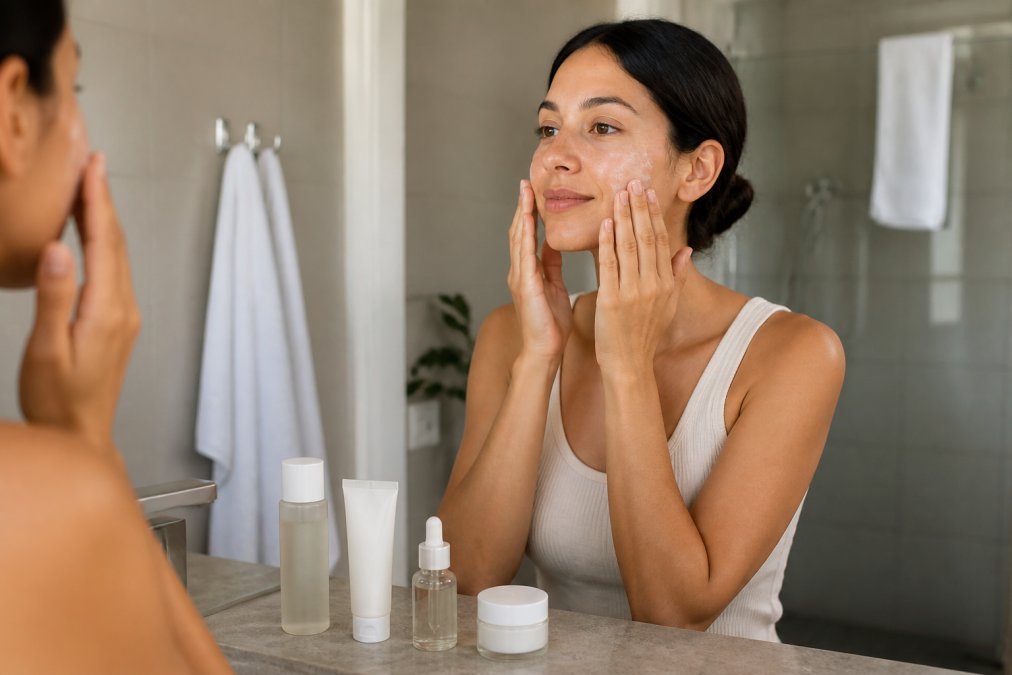
Step 2: Apply hydrating serums and humectants
While your skin is still slightly damp, apply a hydrating serum containing hyaluronic acid, glycerin, or panthenol. Apply a quarter-sized amount and gently press it into your skin. Wait 30-60 seconds for absorption.
Step 3: Lock in moisture with occlusives
An occlusive seals moisture into your skin, preventing evaporation. This is the most critical step in barrier repair. Look for moisturizers combining ceramides, fatty acids, and cholesterol. Apply your occlusive while your skin is still slightly damp from the serum, using enough to create a light protective coating. Veluné's philosophy centers on providing deep hydration without heaviness, ensuring gentle renewal for a celestial glow.
Step 4: Protect with sunscreen daily
Sun exposure damages your barrier and slows repair. Use a broad-spectrum sunscreen with at least SPF 30 (SPF 50 preferred). Mineral sunscreens with zinc oxide or titanium dioxide are often gentler on damaged barriers. Reapply every two hours if spending extended time outdoors.
Ingredients to Avoid During Barrier Repair
Avoid all exfoliants, chemical (AHAs, BHAs, enzymes) and physical, as they remove the outer layer you're trying to protect. Retinoids and retinol accelerate cell turnover, stressing your barrier. High-concentration vitamin C serums are acidic and irritating. Fragrance, both natural and synthetic, can trigger inflammation. Alcohol denat and sulfates strip protective oils.
Skin Barrier Repair Timeline: What to Expect
Weeks 1-2: Skin feels slightly less tight and less reactive. Stinging sensations often diminish. Redness may persist.
Weeks 3-4: Visible redness begins to fade. Skin feels less tight and smoother. Hydration improves noticeably.
Weeks 5-8: Significant improvement occurs. Redness largely resolves, sensitivity decreases substantially, and skin feels more resilient. Barrier-related breakouts typically clear.
Weeks 9-12: A fully repaired barrier is typically achieved by 8-12 weeks, though this varies based on damage severity and protocol consistency.
Consistency matters more than perfection. The barrier repair process relies on daily reinforcement of your lipid layer and consistent hydration.
Common Mistakes to Avoid
Using too many products simultaneously. Adding more products introduces more potential irritants. Stick with the four-step protocol.
Switching products too frequently. Give each product at least 2-3 weeks before deciding if it's effective.
Over-moisturizing. Use a quarter to half-sized amount of moisturizer, enough for a light protective layer, not a thick coating.
Continuing to use irritating products. Stop using all irritating products for the entire repair period.
Skipping sunscreen. UV exposure actively damages your barrier and slows repair.
Not addressing environmental stress. Use a humidifier, take lukewarm showers, and wear protective clothing in harsh conditions.
Expecting instant results. Barrier repair is gradual. Patience is essential.
Repairing a damaged skin barrier requires consistency, patience, and a willingness to simplify your routine temporarily. The four-step protocol, gentle cleansing, hydrating serums, occlusive moisturizers, and daily sunscreen, provides the foundation your skin needs to rebuild its protective lipid layer. Most people see meaningful improvement within 4-6 weeks and full recovery within 8-12 weeks.
The key is stopping the damage first. Once you've eliminated irritating products and committed to a gentle routine, your skin's natural repair mechanisms can work. Veluné's philosophy of deep hydration without heaviness aligns perfectly with barrier repair needs, providing the moisture and lipids your skin requires without the heavy feeling that can worsen breakouts. Shop all of Veluné's barrier-supporting products and start your repair journey with a routine designed for long-term skin health and restored balance.
Frequently Asked Questions
How do I tell if my skin barrier is damaged?
A damaged skin barrier shows visible redness, tightness, and stinging sensations, especially after cleansing. You may notice increased sensitivity to products you've used before, persistent dryness despite moisturizing, or a feeling of micro-tears on the skin. Some people experience heightened inflammation and irritation that wasn't present previously. These signs indicate that your stratum corneum and lipid barrier need repair.
How long does it take to repair a damaged skin barrier?
Most people see noticeable improvement in 2-4 weeks of consistent care with the right routine. Full barrier recovery typically takes 4-8 weeks, depending on the severity of damage and how strictly you follow a repair protocol. Factors like age, genetics, and environmental stress can extend the timeline. Patience and consistency matter more than rushing results.
What ingredients should I avoid when my skin barrier is damaged?
Stop using retinoids, AHAs, BHAs, vitamin C serums, and physical exfoliants until your barrier recovers. These actives increase transepidermal water loss and can worsen inflammation. Avoid fragmented alcohols, essential oils, and overly hot water during cleansing. Focus instead on gentle, hydrating products with ceramides, hyaluronic acid, and niacinamide to support barrier healing.
Can a skin barrier repair itself without products?
Your skin barrier can repair itself to some extent, but the process is much slower and less reliable without targeted support. Using gentle cleansing, hydrating products, and occlusives significantly accelerates recovery by replenishing ceramides, fatty acids, and cholesterol that form the lipid barrier. A structured routine with the right ingredients ensures faster, more complete healing and prevents further damage.
This article was written using GrandRanker