
Table of Contents
- What Is the Skin Barrier and Why It Matters
- Signs of Over-Exfoliated Skin You Should Know
- Immediate Steps to Repair Your Damaged Skin Barrier
- Ingredients to Avoid During Barrier Recovery
- Skincare Routine for Damaged Skin Barrier Recovery
- How Long to Heal Skin Barrier Damage
- Supporting Your Barrier Recovery From Within
- Reintroducing Products After Barrier Recovery
Last Updated: August 16, 2026
What Is the Skin Barrier and Why It Matters
Your skin barrier is a protective layer composed of lipids, proteins, and dead skin cells that shields against environmental stressors, bacteria, and irritants while locking in moisture. The lipid barrier, composed largely of ceramides, cholesterol, and fatty acids, acts like mortar between bricks, holding skin cells together and maintaining a crucial moisture seal.
A healthy skin barrier maintains transepidermal water loss (TEWL) at normal levels. When compromised, irritants penetrate deeper, your skin becomes hypersensitive to products that previously felt fine, and inflammation increases. Understanding your barrier matters because it's the foundation of long-term skin health. No amount of targeted acne care or expensive serums will work if your barrier is damaged. At Veluné, we believe that barrier repair isn't a luxury, it's the prerequisite for any skincare routine that actually delivers results.
Signs of Over-Exfoliated Skin You Should Know
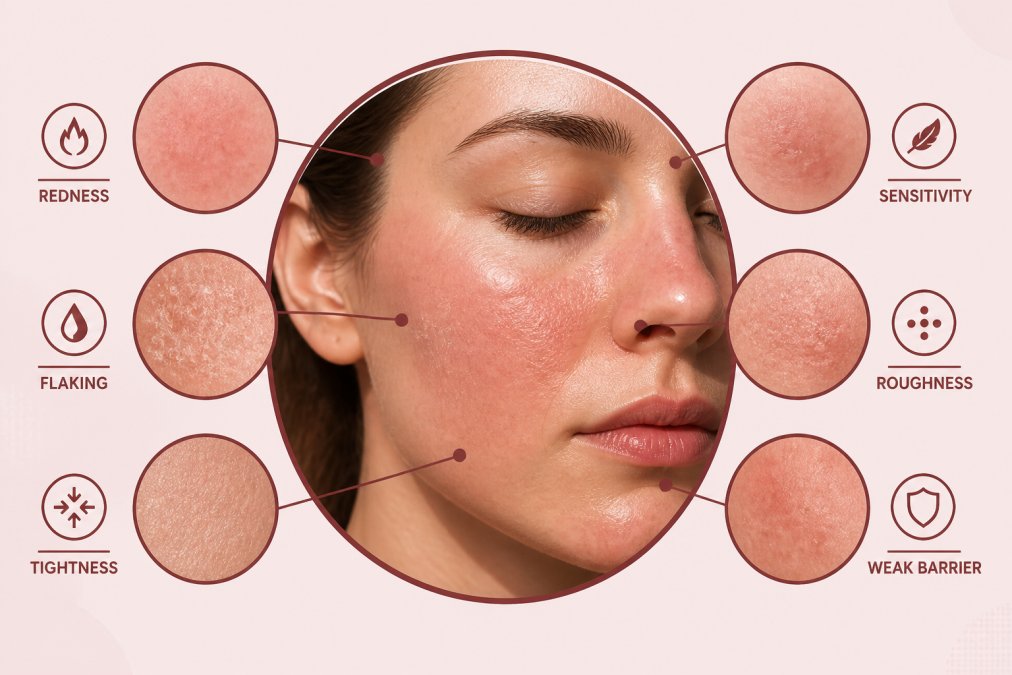
Over-exfoliated skin sends clear signals. Persistent redness that doesn't fade within an hour of cleansing indicates inflammation beneath the surface. A stinging or burning sensation when applying any product, even gentle ones, occurs because your compromised barrier allows irritants to penetrate easily.
Tightness is another hallmark, your skin feels stretched and uncomfortable because it's losing moisture rapidly through the damaged lipid barrier. Flaking and peeling are visible signs that dead skin cells are shedding in larger patches rather than gradually.
Increased sensitivity to products you've used for months is a critical red flag. If your usual moisturizer suddenly stings, your barrier is likely compromised. Some people experience micro-tears, tiny breaks that appear as small red lines, or notice increased breakouts as bacteria proliferate more easily when the barrier is weakened.
Immediate Steps to Repair Your Damaged Skin Barrier
Stop all active ingredients immediately
The first and most critical step is halting all actives: no retinoids, AHAs, BHAs, vitamin C serums, or keratolytic treatments. These ingredients accelerate cell turnover or penetrate deeply, causing additional damage when your barrier is already compromised. You're essentially asking your skin to heal while you're still wounding it.
Some worry that stopping actives will worsen acne, but barrier repair takes priority. A damaged barrier causes more inflammation and breakouts than pausing your actives. Once your barrier heals, you can reintroduce treatments at gentler strength and frequency.
Switch to a pH-balanced gentle cleanser
Your cleanser is now your most important product. A pH-balanced formula is essential, your skin's natural pH is around 4.5 to 5.5, and cleansers that are too alkaline further damage your barrier. Look for products labeled as pH-balanced or formulated for sensitive skin.
Avoid physical scrubs, microbeads, washcloths, and any mechanical exfoliation. Switch to a cream or milk cleanser that removes makeup without stripping your skin. Cleanse once in the evening with lukewarm water, not hot. In the morning, rinse with water alone or use a very gentle cleanser. Pat your skin dry gently; don't rub.
Rebuild with ceramides and humectants
Ceramides are lipids that form the structural foundation of your skin barrier. When damaged, ceramide levels drop significantly. Replenishing them is non-negotiable for recovery. Look for ceramide NP, ceramide AP, or ceramide EOP.
Humectants like glycerin and hyaluronic acid draw water into your skin and restore hydration. Hyaluronic acid can hold up to 1000 times its weight in water, making it exceptionally effective for barrier repair.
Apply your hydrating products to damp skin immediately after cleansing. Layer a ceramide-rich moisturizer over your humectant serums, then finish with an occlusive product to seal everything in place.
Ingredients to Avoid During Barrier Recovery
During recovery, avoid alcohol (especially denat alcohol), fragrance, essential oils, and sulfates, all are drying and inflammatory. Salicylic acid, AHAs like glycolic acid, vitamin C in unstable forms, high-concentration niacinamide, retinoids, benzoyl peroxide, and astringent toners are all off-limits. These ingredients either strip your skin or accelerate cell turnover, the opposite of what your barrier needs.
Skincare Routine for Damaged Skin Barrier Recovery
Morning routine for barrier repair
Start with a gentle rinse using lukewarm water only, or a very mild cream cleanser. Pat your skin dry gently.
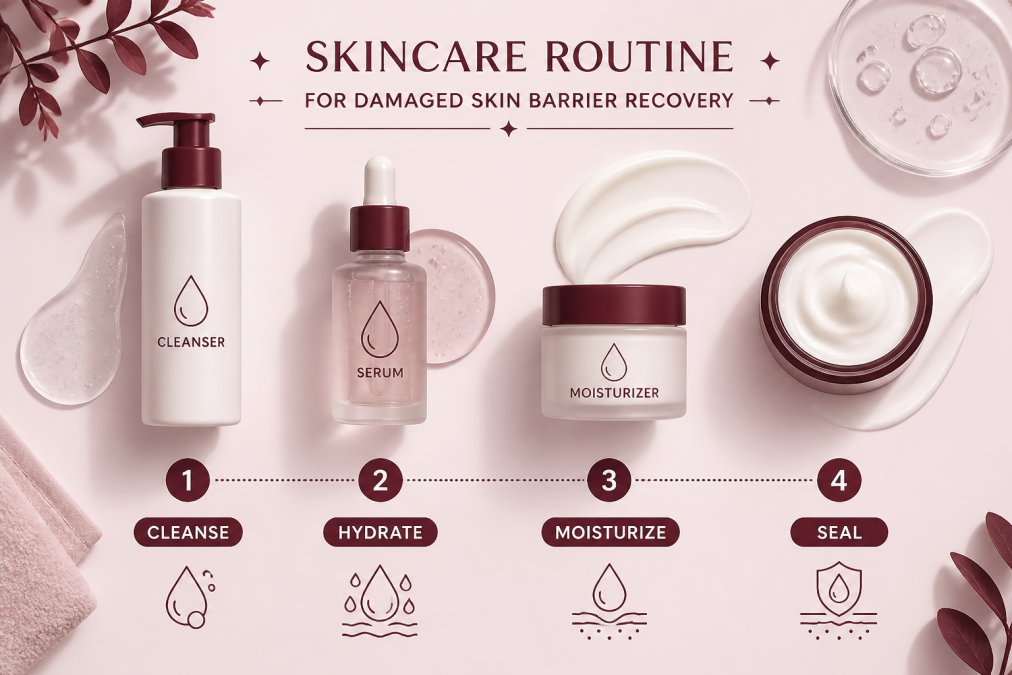
Apply your hydrating serum while your skin is still slightly damp. Use 2-3 drops and gently pat into your skin. Follow with a lightweight ceramide moisturizer applied to your entire face and neck. Finish with broad-spectrum SPF 30 or higher, sun exposure worsens inflammation and slows barrier recovery.
Evening routine for barrier repair
Cleanse with your gentle pH-balanced cleanser using lukewarm water. Pat your skin dry gently and apply your hydrating serum to damp skin. Follow with your ceramide moisturizer using a slightly more generous amount than in the morning.
Finish with an occlusive product like petrolatum, squalane, or a rich facial oil. This seals in moisture and allows your skin to repair itself overnight. If your skin feels particularly tight, apply a thin layer of pure petrolatum over your moisturizer.
Weekly care during recovery
Skip all exfoliation, physical and chemical. Once weekly, consider a hydrating mask with ceramides, hyaluronic acid, and glycerin, applied for 10-15 minutes. Avoid any treatments or products not explicitly mentioned in this routine.
How Long to Heal Skin Barrier Damage
Mild barrier damage may improve within 2-3 weeks with consistent care. Moderate damage typically requires 4-8 weeks, with gradual improvements in redness, stinging, and tightness. Severe damage may take 8-12 weeks or longer.
Consistency is key, missing days can set back your progress. You'll know your barrier is healing when redness decreases, stinging fades, and your skin feels less tight. By the end of recovery, your skin should feel calm, hydrated, and resilient again.
Supporting Your Barrier Recovery From Within
Drink plenty of water, aim for at least 2 liters daily. Include healthy fats from fatty fish, avocados, nuts, and seeds; omega-3 fatty acids are particularly important for barrier function. Aim for 7-9 hours of sleep nightly, as poor sleep increases inflammation and slows healing.
Practice stress-reduction techniques like meditation or gentle yoga. Avoid harsh environmental conditions, chlorinated pools, and hot tubs. Reduce exposure to irritants by switching to gentle, fragrance-free laundry detergent and keeping your phone clean.
Reintroducing Products After Barrier Recovery
Once your barrier has healed, when redness is gone, stinging has stopped, and your skin feels calm, gradually reintroduce other products. Start with one new product every 1-2 weeks so you can identify any irritation.
Begin with products that support barrier health like gentle toners or hydrating essences. After 2-3 weeks, introduce a gentle treatment product like low-strength retinol used once weekly. Never return to the frequency or strength of treatments you used before.
Pay attention to how your skin responds. If you notice any return of redness, stinging, or tightness, pause reintroduction and return to your basic routine. Consider working with a dermatologist during reintroduction if you have severe acne or other skin concerns.
The goal is to never damage your barrier again. This means using treatments that are effective but not excessive, and maintaining a strong barrier maintenance routine even after recovery is complete.
A damaged skin barrier requires patience and consistency, but the payoff is significant: calm, resilient skin that tolerates treatments better and looks healthier overall. Veluné's approach to barrier repair centers on deep hydration without heaviness, formulated with ceramides, hyaluronic acid, and glycerin, the core ingredients that actually rebuild your barrier.
Once you've experienced what calm, hydrated, resilient skin feels like, you'll understand why barrier health is the foundation of any skincare routine that delivers real results. Shop all Veluné products designed for barrier restoration and long-term skin health.
Frequently Asked Questions
Can a damaged skin barrier be repaired?
Yes, a damaged skin barrier can be repaired with consistent, gentle care. The stratum corneum (your skin's outermost layer) regenerates naturally, but it needs the right support. Focus on restoring lipid barrier function by using ceramides, hyaluronic acid, and occlusives. Most people see meaningful improvement within 2-4 weeks when they follow a barrier-repair routine consistently. The key is patience and avoiding further damage during recovery.
How long does it take to heal an over-exfoliated skin barrier?
Mild barrier damage typically heals in 1-2 weeks with proper care. Moderate damage usually requires 3-4 weeks of consistent barrier repair. Severe damage may take 6-8 weeks or longer. Your skin's natural cell turnover cycle is roughly 28 days, so realistic healing aligns with this timeline. Factors affecting speed include the severity of damage, your skin type, climate, and whether you continue using irritating products. Consistency matters more than speed, stick with your gentle routine even after visible improvement.
What ingredients should I avoid when my skin barrier is damaged?
Avoid all keratolytic and exfoliating ingredients during barrier recovery: AHAs, BHAs, retinoids, vitamin C, niacinamide at high concentrations, and physical scrubs. Skip fragrance, essential oils, and alcohol-based products. Avoid products with high pH or strong surfactants that strip the lipid barrier further. Also skip heavy occlusive creams that trap heat and sweat if your skin feels inflamed. Stick to fragrance-free, hypoallergenic formulas with minimal ingredients. Once your barrier shows signs of recovery (reduced redness and stinging), you can gradually reintroduce gentler actives.
What's the best way to cleanse when my skin barrier is compromised?
Use a pH-balanced gentle cleanser without sulfates or fragrance. Lukewarm water (not hot) is essential, heat increases transepidermal water loss and inflammation. Cleanse once daily or every other day if your skin feels extremely reactive. Use your fingertips, not a washcloth or brush. Avoid double cleansing during the acute phase. Rinse thoroughly and pat dry gently. Apply hydrating products to damp skin to lock in moisture. A simple, fragrance-free, hypoallergenic cleanser is your best choice during barrier repair.
This article was written using GrandRanker