
Table of Contents
- Ceramide Cream vs Hyaluronic Acid: Side-by-Side Comparison
- What Are Ceramides and How They Work for Skin Barrier Repair
- What Is Hyaluronic Acid and Its Role in Hydration
- Signs of a Compromised Skin Barrier
- How to Repair Damaged Skin Barrier: Layering Strategy
- Can You Use Ceramides and Hyaluronic Acid Together
- Which One Is Better for Your Skin Type
- Conclusion
Last Updated: August 14, 2026
Ceramide Cream vs Hyaluronic Acid: Side-by-Side Comparison
When your skin barrier is compromised, two ingredients dominate the conversation: ceramides and hyaluronic acid. Both work, but they address different problems. Ceramides are lipid molecules that form the structural foundation of your skin's protective barrier, filling gaps in the stratum corneum and preventing transepidermal water loss. Hyaluronic acid is a humectant that binds water molecules to the skin's surface, drawing moisture deeper into the dermis. The real question is whether your barrier needs structural repair or hydration support, or both.
At Veluné, we've observed that most people with compromised barriers benefit from both ingredients, applied in the right order.
| Aspect | Ceramide Cream | Hyaluronic Acid |
|---|---|---|
| Primary Function | Rebuilds lipid matrix and barrier structure | Binds and retains moisture at skin surface |
| Best For | Dry, flaky, irritated, or eczema-prone skin | Dehydrated skin, all skin types |
| Texture | Rich, occlusive, may feel heavy | Lightweight serum, absorbs quickly |
| Molecular Weight | Larger molecules; work at barrier level | Multiple forms; penetrate to different depths |
| Application Timing | Final step to seal hydration | Early step, before occlusive creams |
| Transepidermal Water Loss Reduction | Directly blocks water escape | Increases water-binding capacity |
| Suitable for Oily Skin? | Often too heavy | Yes, especially lightweight formulas |
| Speed of Results | 2-4 weeks for visible barrier repair | 1-2 weeks for hydration boost |
What Are Ceramides and How They Work for Skin Barrier Repair
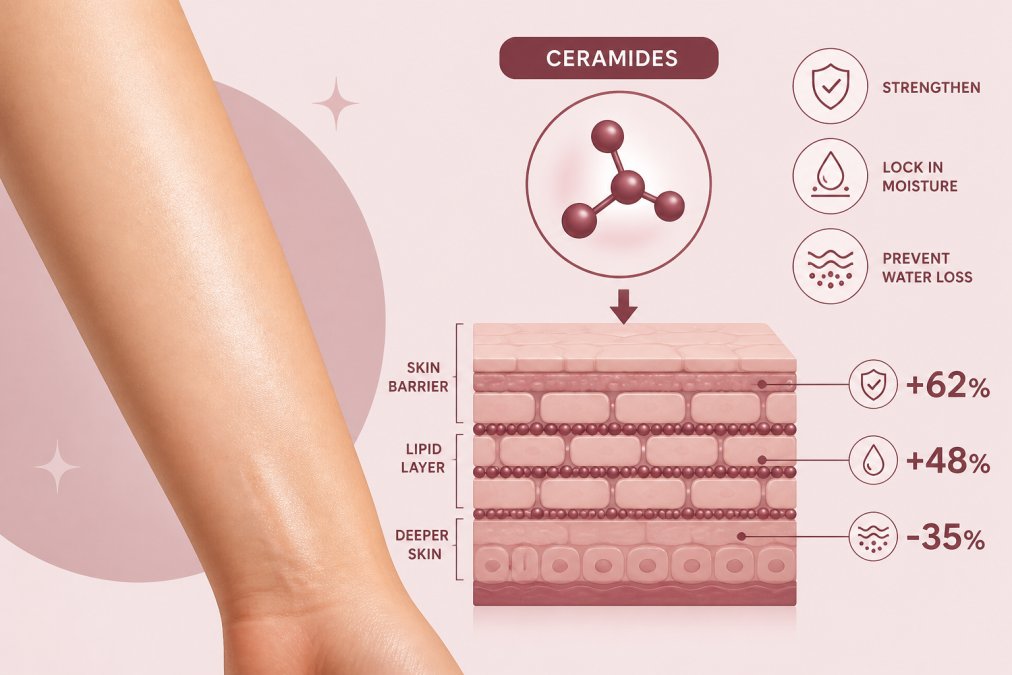
Ceramides are naturally occurring lipid molecules that make up roughly 50% of your skin's lipid matrix. When your barrier is healthy, ceramides work alongside cholesterol and fatty acids to form a protective seal that keeps moisture in and irritants out. When ceramides deplete through aging, harsh products, or environmental damage, your skin loses its ability to retain water, leading to dryness, sensitivity, and inflammation.
The lipid matrix and barrier function
Your skin barrier is a complex structure called the lipid matrix, composed of ceramides, cholesterol, and free fatty acids arranged in a brick-and-mortar pattern. Ceramides act as the mortar, filling spaces between skin cells and creating a cohesive seal. Without sufficient ceramides, this matrix crumbles and transepidermal water loss accelerates.
A ceramide cream directly addresses barrier damage by integrating into the lipid matrix and restoring structural integrity. A compromised barrier with low ceramide levels will feel tight, flaky, and reactive to nearly everything. Adding ceramides reduces that reactivity because you're literally restoring the structure that protects against irritants.
Molecular weight and penetration depth
Not all ceramides work the same way. Molecular weight determines how deeply a ceramide penetrates and where in the skin it exerts its effect. Larger ceramide molecules remain closer to the skin's surface, reinforcing the outer barrier. Smaller ceramides penetrate deeper, supporting the dermal layer and improving overall moisture retention.
A well-formulated ceramide product uses multiple ceramide types at different molecular weights to address multiple layers of barrier function. This multi-depth repair approach explains why some ceramide creams outperform others and why some people see results quickly while others don't. If your barrier damage is primarily at the surface, a surface-level ceramide cream works fast. If the damage runs deeper from chronic dehydration or aging, you need ceramides that penetrate multiple skin layers.
What Is Hyaluronic Acid and Its Role in Hydration
Hyaluronic acid is a humectant that attracts and binds water molecules to your skin. A single molecule can hold up to 1,000 times its weight in water. This is why it's so effective for dehydrated skin: it pulls moisture from the environment and deeper skin layers to the surface, plumping skin and reducing the appearance of fine lines.
The key distinction: ceramides repair structure; hyaluronic acid enhances hydration. A compromised barrier loses water rapidly because the lipid matrix is broken. Hyaluronic acid alone won't fix that structural problem, though it will hydrate temporarily. That's why dermatologists recommend using both: ceramides stop the water from leaving, and hyaluronic acid ensures the skin stays hydrated.
How hyaluronic acid binds moisture
Hyaluronic acid works through humectancy. Its molecular structure contains multiple hydroxyl groups that form hydrogen bonds with water molecules. When applied to damp skin, it binds to that surface moisture and pulls it deeper into the epidermis, creating a plumping effect that makes skin appear smoother.
However, hyaluronic acid only works effectively on hydrated skin. Apply it to completely dry skin and it may actually draw moisture from deeper layers to the surface, leaving you drier overall. This is why application order matters: apply hyaluronic acid to damp skin right after cleansing, then layer a ceramide cream on top to seal that hydration in.
Water-binding capacity and transepidermal water loss
Your skin loses water constantly through transepidermal water loss (TEWL). A healthy barrier minimizes TEWL through the lipid matrix. Hyaluronic acid addresses this by increasing the skin's water-binding capacity, making skin better at holding onto the water it has.
The most effective hyaluronic acid formulas use multiple molecular weights. Larger molecules remain at the surface, creating a hydrating film. Smaller molecules penetrate deeper, hydrating the dermis. For someone with a compromised barrier, a multi-weight formula hydrates comprehensively, which is why it pairs so effectively with ceramides in a repair routine.
Signs of a Compromised Skin Barrier
Your skin barrier is compromised when the lipid matrix is damaged and ceramide levels drop. The signs include persistent dryness that moisturizer doesn't fully resolve, sensitivity to products that never bothered you before, a tight or uncomfortable feeling after cleansing, visible flaking or rough texture, increased reactivity to environmental stressors, and a weakened ability to heal from minor irritation.
Many people confuse dehydrated skin with a compromised barrier. Dehydrated skin lacks water; a compromised barrier lacks lipids and can't retain water effectively. The distinction matters because the treatment is different. Dehydrated skin responds to hyaluronic acid and hydrating serums. A compromised barrier requires ceramides, fatty acids, and barrier-supporting ingredients.
Age accelerates barrier compromise. As you age, your skin produces fewer ceramides and cholesterol naturally. This is why people over 40 often experience increased dryness and sensitivity. Other common causes include over-exfoliation, products with high alcohol content, excessive cleansing, prolonged sun exposure, and harsh environmental conditions. If you've recently introduced strong actives like retinoids or vitamin C serums and your skin feels tight or reactive, your barrier may be temporarily compromised, your signal to pause actives and focus on barrier repair.
How to Repair Damaged Skin Barrier: Layering Strategy
Repairing a compromised barrier requires a strategic approach. You're rebuilding the lipid matrix and restoring hydration systematically. The order matters because each product sets up the next one to work more effectively.
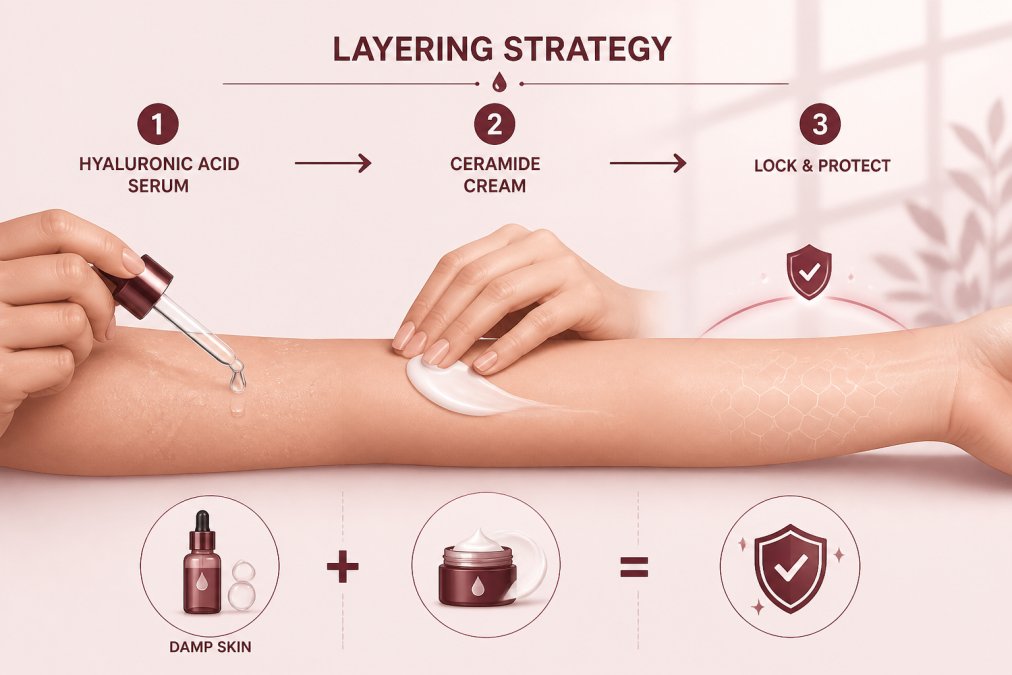
Start with a gentle cleanser that doesn't strip your skin. Pat your skin dry but leave it slightly damp, this is crucial for the next step.
Apply hyaluronic acid serum to damp skin. This is when it works best, binding to surface moisture and pulling it deeper. Wait 60-90 seconds for it to absorb slightly.
Follow with a ceramide cream or barrier-repair moisturizer. This seals the hydration from the hyaluronic acid and provides the structural lipids your barrier needs. Veluné products are designed with this layering in mind, offering deep hydration without the heaviness that can clog pores or feel uncomfortable on acne-prone skin.
Ingredient layering order and synergistic formulation
The science of layering goes beyond "thinnest first." It's about creating conditions where each ingredient works optimally and enhances the next. Hyaluronic acid works best on damp skin because moisture is its binding partner. A ceramide cream works best after hydration because it seals in that hydration rather than sitting on dry skin where it can feel heavy or greasy.
Synergistic formulation means each ingredient amplifies the others' effects. Panthenol (vitamin B5) enhances both ceramide penetration and hyaluronic acid's water-binding capacity. Cholesterol and fatty acids work with ceramides to rebuild the full lipid matrix. Niacinamide (vitamin B3) reduces inflammation while improving barrier function. When these are layered strategically, repair happens faster and more completely than any single product could achieve.
Age-related barrier decline and routine adjustments
Your barrier naturally declines with age. Ceramide production drops, the lipid matrix thins, and skin becomes more reactive. This is why people who never had sensitive skin suddenly develop it in their 40s or 50s.
Adjusting your routine for age-related decline means being more intentional about barrier support. Younger skin can often get away with a basic moisturizer. Aging skin benefits from a full barrier-repair sequence: essence, hydrating serum, ceramide moisturizer, and potentially an occlusive final layer on particularly dry areas. For people over 50 or those with severe barrier compromise, consider adding a facial oil as the final step to prevent water loss and provide additional lipids.
Can You Use Ceramides and Hyaluronic Acid Together
Yes, and in fact, you should. They work synergistically because they address different aspects of barrier function. Ceramides rebuild the structural lipid matrix; hyaluronic acid ensures that barrier is well-hydrated. Using both creates more complete repair than either alone.
The key is layering them correctly. Apply hyaluronic acid first on damp skin, then layer the ceramide cream on top. This allows the hyaluronic acid to bind moisture without being blocked by the heavier ceramide cream, while the ceramide cream seals everything in.
Many dermatologists recommend this exact combination for people with severely compromised barriers or conditions like eczema or dermatitis.
Which One Is Better for Your Skin Type
The answer depends on what your skin actually needs right now.
For dry, flaky, or eczema-prone skin: Ceramide cream is non-negotiable. Your barrier is damaged and needs structural repair. Use both ceramides and hyaluronic acid, with ceramides as your primary focus.
For dehydrated but otherwise healthy skin: Hyaluronic acid is your primary tool. Your barrier is intact; you just need more hydration. A ceramide cream is still beneficial, but a lightweight hydrating moisturizer might be sufficient.
For sensitive skin with barrier compromise: Both, in the order described above. Sensitivity usually indicates barrier damage, which requires ceramides. The added hydration from hyaluronic acid reduces irritation further.
For oily or acne-prone skin with barrier damage: Formulation matters enormously. A heavy ceramide cream will feel uncomfortable and may worsen breakouts. A lightweight, non-comedogenic ceramide serum or gel-cream provides barrier repair without heaviness. Pair it with a hydrating serum for barrier repair without sacrificing skin clarity.
For aging skin: Both, with emphasis on ceramides. Age-related barrier decline means your ceramide production is dropping naturally. Hyaluronic acid adds the hydration that plumps fine lines and improves texture.
For sensitive skin triggered by cold or environmental stress: Ceramides take priority during harsh seasons. Environmental stressors accelerate barrier compromise, and ceramides provide the protection your skin needs.
The most important principle: listen to your skin. If it feels tight and uncomfortable, ceramides are your answer. If it looks dull and dehydrated but feels comfortable, hyaluronic acid might be sufficient. If it's both tight and dull, you need both.
Repairing a compromised skin barrier takes consistency, not complexity. The combination of hyaluronic acid and ceramides, applied in the right order, addresses both the structural damage and the dehydration that comes with barrier compromise. Veluné's barrier-repair products are designed specifically for this layering approach, delivering deep hydration without the heaviness that can frustrate people with acne-prone or sensitive skin. Start with a hydrating serum, layer a ceramide cream, and give your barrier 2-4 weeks to rebuild. You'll notice the difference in how your skin feels and looks.
Frequently Asked Questions
Can I use hyaluronic acid and ceramide cream in the same routine?
Yes, using them together is highly effective for barrier repair. Hyaluronic acid works as a humectant, drawing moisture into the skin, while ceramides act as occlusives and emollients, sealing that hydration in the lipid matrix. Apply hyaluronic acid serum first to damp skin, then layer a ceramide cream on top. This synergistic approach addresses both hydration and barrier integrity, making it ideal for dehydrated or compromised skin.
What are the signs of a compromised skin barrier?
Common signs include persistent dryness, sensitivity to products, increased irritation and inflammation, redness, a tight or uncomfortable feeling, visible flaking, and heightened susceptibility to breakouts. You may also notice increased transepidermal water loss, where moisture escapes from the skin more rapidly than normal. If your skin feels reactive to gentle products or shows these symptoms, barrier repair should be your priority before introducing active ingredients.
How long does it take to repair a damaged skin barrier with ceramides or hyaluronic acid?
Most people notice visible improvement in skin texture and comfort within 2-4 weeks of consistent use. However, true barrier restoration, rebuilding the lipid matrix and restoring barrier integrity, typically takes 6-8 weeks. Results depend on the severity of damage, your routine consistency, and whether you've eliminated irritating products. Patience is essential; barrier repair is gradual but sustainable when done correctly.
Is hyaluronic acid enough on its own to repair a skin barrier?
Hyaluronic acid alone is insufficient for complete barrier repair. While it provides excellent hydration and reduces transepidermal water loss, it doesn't rebuild the lipid matrix that ceramides repair. For compromised barriers, hyaluronic acid works best as part of a layered routine that includes ceramides or other lipid-replenishing ingredients. Using both together addresses the root causes of barrier dysfunction more effectively than either ingredient alone.
This article was written using GrandRanker