
Table of Contents
- What Is a Skin Barrier and Why It Matters
- Signs of Damaged Skin Barrier
- Barrier Repair Cream Ingredients That Work
- Top Barrier Repair Creams Compared
- How Long to Repair Skin Barrier
- How to Choose the Right Barrier Repair Cream for Your Skin
- Ingredients to Avoid When Your Skin Barrier Is Compromised
- Conclusion
Last Updated: August 12, 2026
What Is a Skin Barrier and Why It Matters
Your skin barrier is the outermost layer composed of lipids, proteins, and water that protect your body from environmental damage and prevent moisture loss. Think of it as a protective brick wall, where ceramides, cholesterol, and fatty acids are the mortar holding everything together. When functioning properly, it keeps irritants out and hydration in, maintaining healthy skin tone and texture.
A compromised barrier leads to increased transepidermal water loss, causing moisture to evaporate rapidly. This creates a cascade of problems: sensitivity spikes, inflammation increases, and your skin becomes vulnerable to irritation from even gentle products. At Veluné, we recognize that barrier repair is central to long-term skin health. Our approach focuses on deep hydration without heaviness, allowing your skin to rebuild its protective layers while maintaining a comfortable, non-occlusive feel.
The barrier's microbiome also plays a crucial role. Your skin hosts beneficial bacteria that contribute to its protective function. When the barrier is damaged, this microbial balance shifts, often leading to increased sensitivity and inflammation. This is why modern barrier repair creams increasingly include prebiotics and postbiotics, ingredients that support your skin's natural microbiome.
Signs of Damaged Skin Barrier
A damaged skin barrier announces itself through several distinct signals. Persistent redness, even without active acne or rosacea, often indicates your barrier is compromised. You might notice your skin feels tight and uncomfortable after cleansing, or that it stings when you apply products that previously caused no irritation. Flaking, rough texture, and excessive dryness that moisturizer alone doesn't resolve are common.
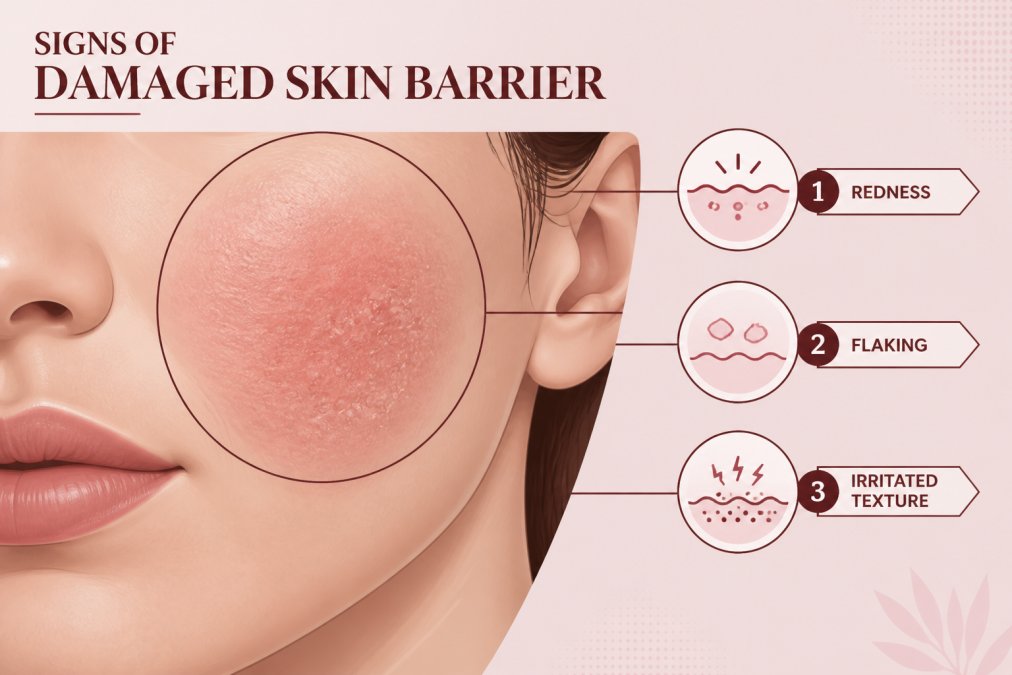
Sensitivity is perhaps the most telling sign. If your skin reacts to products it tolerated before, or if you experience stinging with cleansers and toners, your barrier function has likely declined. Some people develop a shiny or dehydrated appearance despite using moisturizer, because water escapes faster than products can replenish it.
Inflammation and visible irritation, including small bumps or a generally angry appearance, suggest your barrier can no longer filter out irritants effectively. You might also notice increased breakouts in previously unproblematic areas.
Barrier damage stems from multiple causes: overuse of active ingredients like retinoids, acids, or vitamin C; harsh cleansers and hot water; over-exfoliation; environmental factors like cold, dry air or excessive sun exposure; and natural predisposition to sensitivity.
Barrier Repair Cream Ingredients That Work
Effective barrier repair creams rely on specific ingredient categories that address the structural and functional needs of a damaged barrier.
Ceramides are non-negotiable. These lipids naturally present in your skin barrier form the mortar between skin cells. Products containing ceramides 1, 3, and 6-II directly replenish what damage has depleted, reducing transepidermal water loss and restoring skin elasticity.
Cholesterol and fatty acids work alongside ceramides to restore the lipid layer. The optimal 2:4:2 ratio (ceramides to cholesterol to fatty acids) mirrors your skin's natural composition and has shown particular efficacy in clinical settings for accelerating barrier recovery.
Hyaluronic acid functions as a humectant, drawing water into the outer layers of your skin without adding occlusive heaviness. Panthenol (Pro-Vitamin B5) soothes irritation and supports skin regeneration while reducing inflammation. Niacinamide at 4-5% concentrations strengthens barrier function by promoting ceramide and cholesterol synthesis while reducing inflammation and redness.
Soothing agents like centella asiatica (cica), allantoin, and colloidal oatmeal reduce redness and irritation, especially important early in barrier repair when skin is reactive. Prebiotics and postbiotics support your skin's microbiome, helping restore the beneficial bacterial balance that a damaged barrier has lost.
The most effective barrier repair creams combine ceramides, cholesterol, fatty acids, and humectants in formulations designed to work synergistically rather than relying on a single ingredient.
Top Barrier Repair Creams Compared
1. Veluné Barrier Renewal Cream
Veluné's approach centers on intentional formulation that delivers deep hydration without heaviness. The cream combines essential ceramides with hyaluronic acid and soothing botanicals, designed specifically for reactive and compromised skin. The texture absorbs quickly, making it suitable even for oily or acne-prone skin needing barrier support.
What sets Veluné apart is the philosophy of restoring balance rather than simply sealing moisture in. The formula supports long-term barrier strength while maintaining comfort during daily use.
Pros: Deep hydration without greasiness; supports barrier strength; suitable for acne-prone and sensitive skin; gentle enough for children's skin.
Cons: Pricing reflects the curated ingredient approach; requires consistent use for full benefits.
2. CeraVe Moisturizing Cream
CeraVe delivers three essential ceramides (1, 3, and 6-II) combined with hyaluronic acid and MVE Technology for controlled release of hydrating ingredients. At €17.02 for 340ml, it's accessible for those testing barrier repair. The non-comedogenic formulation suits acne-prone skin, though very oily skin types may find it slightly heavy.
Pros: Clinically proven to restore barrier function; affordable and widely available; fragrance-free and hypoallergenic; effective for eczema-prone skin.
Cons: May feel too heavy for oily skin; richer texture than some prefer for daily facial use.
3. La Roche-Posay Cicaplast Baume B5+
This balm combines 5% panthenol with Madecassoside (centella asiatica derivative) and Tribioma, a prebiotic complex supporting skin microbiome balance. At €8.72 for 40ml, it accelerates repair and reduces discomfort quickly, particularly valuable immediately after skin damage or procedures. However, it can leave a white cast if not fully blended.

Pros: Fast-acting soothing and repair; supports microbiome balance; suitable for the whole family; fragrance-free and hypoallergenic.
Cons: Can leave a white cast without thorough blending; balm texture less suitable for oily skin.
4. Bioderma Atoderm Intensive Baume
Bioderma's formula uses Skin Barrier Therapy patent technology to prevent bacterial adhesion. The cream combines β-sitosterol and PEA with glycerin and Lipigenium Technology to hydrate while enhancing natural lipid production. At €4.59 for 45ml, it's one of the most budget-friendly options for barrier repair.
Pros: Extremely affordable; effectively reduces itching and irritation; strengthens barrier long-term; suitable for atopic and very sensitive skin.
Cons: Larger sizes may have inconsistent availability; less well-known than some competitors.
5. Dr. Jart+ Ceramidin Skin Barrier Moisturizing Cream
Dr. Jart+ delivers a 5-Cera Complex with 2.3% ceramides alongside panthenol and glycerin. At €14.45 for 15ml or €34.42 for 50ml, it's premium-priced but offers concentrated ceramide content. The fast-absorbing, cushiony texture works well for dry, tight, and sensitive skin without leaving residue.
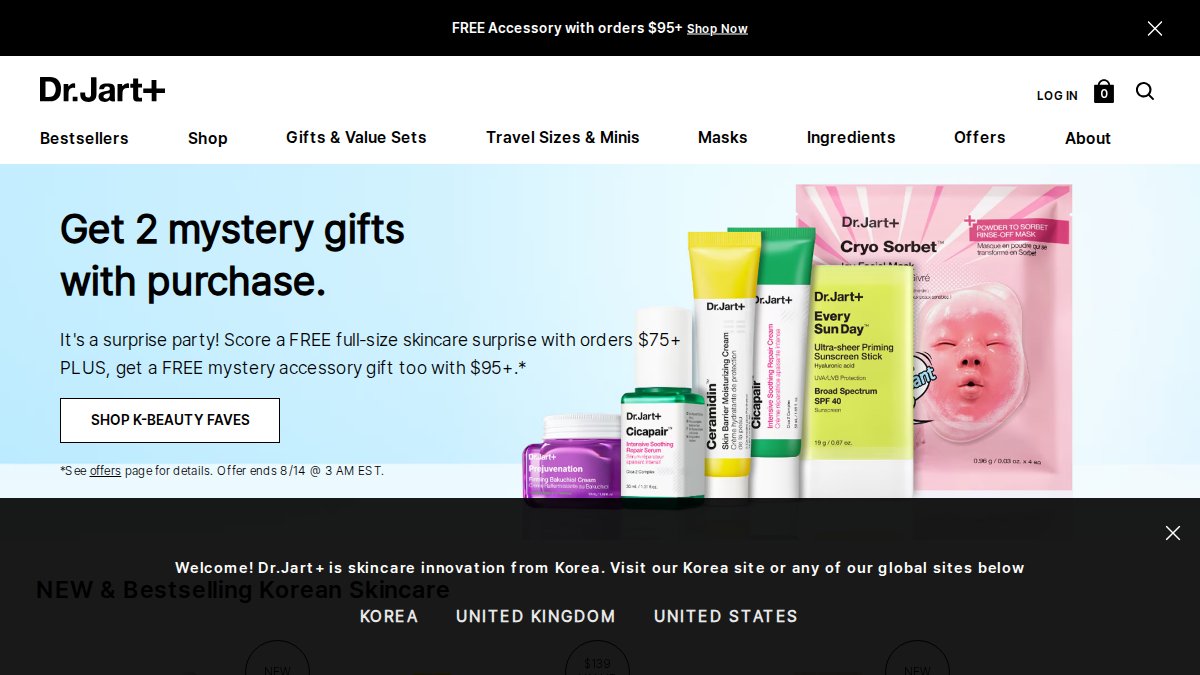
Pros: High ceramide concentration (2.3%); fast-absorbing, non-greasy texture; significantly improves skin elasticity; suitable for sensitive skin.
Cons: Higher price point than mass-market alternatives; smaller sizes mean higher cost per ounce.
6. Avène Cicalfate+ Restorative Protective Cream
Avène combines Avène Thermal Spring Water with [C+-Restore] postbiotic biotechnology and copper/zinc sulfates for antibacterial benefits. At €8.18 for 40ml, the postbiotic approach supports skin repair through biotechnological means. The cream accelerates recovery and reduces discomfort, though the thicker texture requires thorough blending.

Pros: Postbiotic technology supports epidermal repair; forms protective barrier against irritants; fragrance-free and hypoallergenic; affordable pricing.
Cons: Thicker texture requires thorough blending; less suitable for oily or combination skin.
7. Eucerin Aquaphor Soothing Skin Balm
Eucerin's water-free balm creates a semi-occlusive barrier protecting while allowing oxygen and moisture circulation. Enriched with glycerin and panthenol, it's designed for very dry, cracked, and irritated skin. At €6.49 for 7g, the small size is ideal for targeted use on hands, heels, and lips.
Pros: Intensive protection and healing; water-free formula allows oxygen circulation; accelerates regeneration; fragrance-free and preservative-free.
Cons: Can feel greasy due to occlusive nature; not suitable for open or oozing wounds; small sizes require frequent repurchasing.
8. Kiehl's Ultra Facial Cream
Kiehl's positions this as a 24-hour daily moisturizer with squalane (olive-derived emollient) and Glacial Glycoprotein for barrier strengthening. At €22 for 15ml, it's premium-priced but delivers consistent hydration across all skin types, including sensitive skin.
Pros: Delivers 24-hour hydration consistently; suitable for all skin types; improves skin texture and smoothness; lightweight despite nourishing formula.
Cons: Significantly higher price point; some formulations include scent; smaller sizes mean higher per-ounce cost.
How Long to Repair Skin Barrier
Most people notice initial improvements, reduced stinging, less redness, within 3-7 days of consistent use. This reflects reduced inflammation and the soothing effects of barrier repair ingredients.
Meaningful structural repair takes longer. The skin barrier rebuilds through cellular turnover, typically taking 2-4 weeks for noticeable strengthening. You'll see improvements in skin elasticity, reduced sensitivity to previously irritating products, and more even skin tone. By week 4, most people report their skin feels genuinely different: less reactive, more resilient, and more comfortable.
Complete barrier restoration, where your skin returns to baseline resilience, often requires 6-12 weeks of consistent care. This timeline assumes you've addressed whatever caused the damage initially. If you continue using harsh actives or over-exfoliating, repair stalls.
Several factors influence recovery: consistent product use matters more than occasional application; dry, cold climates slow barrier repair compared to temperate conditions; younger skin typically repairs faster than mature skin. The key is patience and consistency, treat barrier repair as a committed routine rather than a quick fix.
How to Choose the Right Barrier Repair Cream for Your Skin
Selecting an effective barrier repair cream requires understanding your specific skin needs and what each product delivers.
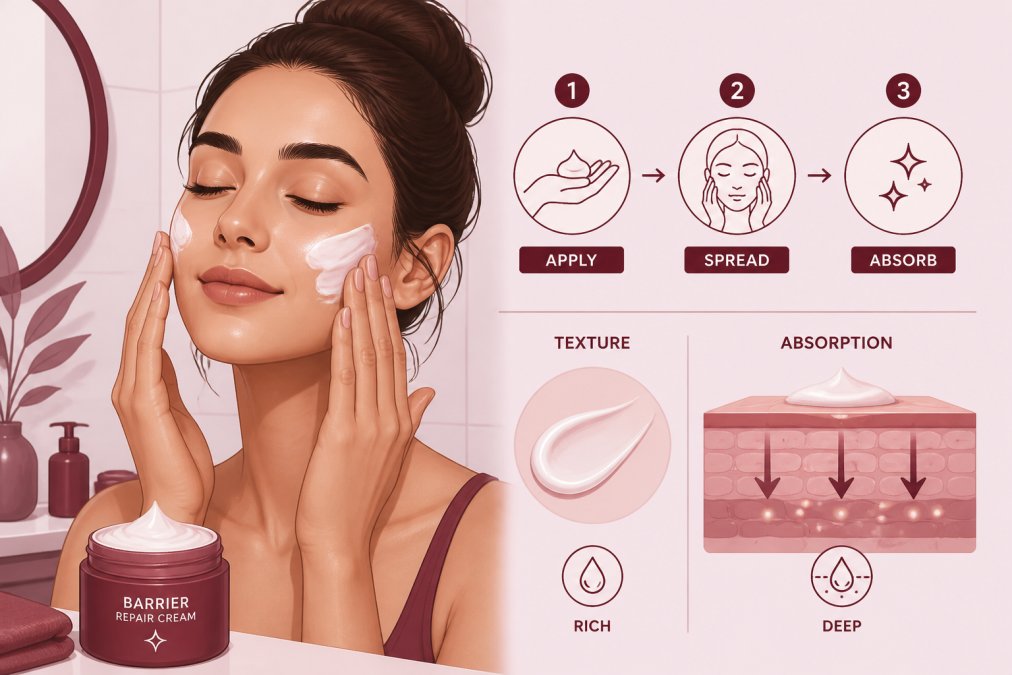
Start with your skin type and sensitivity level. Very oily skin benefits from lighter formulations with strong humectant components rather than heavy ceramide-rich creams. Dry or very dry skin needs ceramide and lipid support. Sensitive skin requires fragrance-free, hypoallergenic formulations with soothing ingredients.
Consider your barrier damage severity. Mild barrier compromise responds well to moderate formulations like CeraVe or Bioderma Atoderm. Severe damage with significant inflammation benefits from targeted balms like La Roche-Posay Cicaplast or Avène Cicalfate+, which prioritize soothing alongside repair.
Evaluate ingredient priorities. If ceramide content is your focus, Dr. Jart+ and CeraVe deliver the highest concentrations. If microbiome support matters, La Roche-Posay's Tribioma or Avène's postbiotic technology are differentiators. If you want a lightweight option that won't trigger breakouts, Veluné's approach addresses that concern.
Test texture compatibility. Balms feel different from creams, and occlusive products feel different from lighter formulations. Test a sample before committing if you've struggled with heavy moisturizers.
Factor in cost-per-ounce and longevity. Consider how long a jar lasts with your typical usage. Daily facial use depletes products faster than targeted application.
| Cream | Best For | Key Strength | Price Range | Texture |
|---|---|---|---|---|
| Veluné | Acne-prone + sensitive skin | Deep hydration without heaviness | Pricing depends on quantity, dates, and delivery. See Veluné's website for current prices. | Lightweight cream |
| CeraVe | Dry to very dry skin | Ceramide content + affordability | Budget | Rich cream |
| La Roche-Posay Cicaplast | Post-procedure + irritation | Fast soothing + microbiome support | Budget | Balm |
| Bioderma Atoderm | Atopic + very sensitive skin | Affordability + effectiveness | Budget | Nourishing balm |
| Dr. Jart+ Ceramidin | Intensive repair + elasticity | High ceramide concentration | Premium | Cushiony cream |
| Avène Cicalfate+ | Irritated + sensitive skin | Postbiotic technology | Budget | Thick cream |
| Eucerin Aquaphor | Severe dryness + targeted areas | Intensive protection | Budget | Occlusive balm |
| Kiehl's Ultra Facial | All skin types | 24-hour hydration consistency | Premium | Lightweight cream |
Ingredients to Avoid When Your Skin Barrier Is Compromised
When your barrier is damaged, certain ingredients cause more harm than good. Avoid all active exfoliants, AHAs, BHAs, and physical exfoliation accelerate water loss and irritation. Skip vitamin C serums temporarily; while beneficial long-term, they're acidic and irritating to damaged barriers.
Limit retinoids and retinol, which accelerate cell turnover and stress a struggling barrier. Reduce frequency to 1-2 times weekly at lowest concentrations, or pause entirely during active barrier repair. Avoid fragrance and essential oils, common irritants triggering inflammation in sensitive skin. Skip alcohol denat (denatured alcohol), which is drying and irritating.
Limit niacinamide concentration to 4-5% or skip it entirely until sensitivity decreases. Avoid benzoyl peroxide and sulfur temporarily, these acne-fighting ingredients are drying and irritating when your barrier is compromised. Skip clay masks and astringent products, which absorb moisture and stress a barrier already losing water too quickly.
During barrier repair, simplify your routine: cleanse gently, apply your barrier repair cream, and protect from sun damage. Everything else is secondary until your barrier has recovered.
Choosing a barrier repair cream is ultimately about matching your skin's specific needs with a product that delivers the ingredients your barrier requires to recover. Whether you prioritize affordability, ceramide concentration, texture preference, or soothing speed, the options above cover the full spectrum of effective barrier repair.
The most important decision is committing to consistent use for the full 4-6 week repair window. Barrier recovery rewards patience and consistency more than any single product feature. Start with a cream that aligns with your skin type and sensitivity level, use it twice daily, and give your skin the time it needs to rebuild its protective foundation.
At Veluné, we understand that barrier repair is foundational to long-term skin health. Our barrier repair formulas are designed to deliver deep hydration without heaviness, supporting your skin's natural recovery while maintaining comfort throughout the process. If you're struggling with sensitivity, irritation, or compromised barrier function, explore how intentional skincare rooted in calm and consistency can restore your skin's balance and strength.
Frequently Asked Questions
How do I know if my skin barrier is damaged?
A damaged skin barrier typically shows visible signs: persistent redness, tightness, flaking, stinging sensations, and heightened sensitivity to products. Your skin may feel uncomfortable even with gentle products. Excessive transepidermal water loss causes dehydration that no moisturizer seems to fix. If your skin feels reactive to most products you apply, your barrier likely needs repair. A barrier repair cream with ceramides, hyaluronic acid, and soothing agents can help restore function.
What ingredients should I look for in a barrier repair cream?
Focus on three key ingredient categories: ceramides (especially ceramides 1, 3, and 6-II) to restore the lipid layer, humectants like hyaluronic acid to attract moisture, and soothing agents like panthenol or madecassoside to reduce inflammation. Occlusives such as glycerin and fatty acids lock in hydration. Avoid actives like retinol or acids while your barrier repairs. Look for fragrance-free, hypoallergenic formulas. Products with prebiotic or postbiotic ingredients support your skin's microbiome recovery.
How long does it take to repair a damaged skin barrier?
Barrier recovery typically takes 2-4 weeks with consistent use of a quality repair cream, though visible improvement may appear within 7-10 days. Complete restoration of skin elasticity and resilience can take 6-8 weeks. Individual timelines vary based on barrier damage severity, your skin type, and product ingredients. Consistency matters more than speed, use your barrier repair cream twice daily. If irritation, stinging, or tightness persists beyond four weeks, consult a dermatologist.
Can I use a barrier repair cream if I have oily, acne-prone skin?
Yes, but choose lightweight, non-comedogenic formulas. Many people with acne-prone skin fear moisturizers will worsen breakouts, but a compromised barrier actually increases inflammation and oil production. Look for gel-cream or serum-based barrier repair products rather than heavy balms. Products with ceramides and hyaluronic acid won't clog pores. Avoid occlusive ingredients like petrolatum. A lightweight barrier repair cream can actually help calm acne-related inflammation and reduce irritation from active treatments.
Do barrier repair creams actually work?
Yes, when formulated with proven ingredients like ceramides, hyaluronic acid, and soothing agents. Clinical studies show ceramide-rich creams improve skin barrier function measurably within weeks. Results depend on product quality, consistency of use, and avoiding irritants during recovery. Barrier repair creams work best when paired with a simplified routine, stop using actives temporarily and use only gentle, fragrance-free products. Individual results vary, but most people notice reduced sensitivity and improved hydration within 2-3 weeks of daily use.
This article was written using GrandRanker