
Table of Contents
- Understanding Dehydrated Skin vs. Dry Skin
- Signs of Dehydrated Skin You Shouldn't Ignore
- Why Your Skin Becomes Dehydrated
- Best Ingredients for Dehydrated Skin
- How to Layer Skincare for Hydration
- Your Complete Dehydrated Skin Recovery Protocol
- Addressing Dehydration in Sensitive and Acne-Prone Skin
- Conclusion
Last Updated: August 21, 2026
Understanding Dehydrated Skin vs. Dry Skin
Dehydrated skin is skin that lacks water, not oil. While dry skin is a skin type determined by genetics and sebum production, dehydrated skin is a temporary condition caused by insufficient water content in the skin's outer layers. You can have oily, combination, or naturally dry skin that's also dehydrated.
Treatment approaches differ sharply. Dry skin needs occlusive oils and rich emollients to compensate for naturally low sebum production. Dehydrated skin needs humectants and water-based hydration to restore transepidermal water loss, the process where moisture evaporates from your skin's surface. Treating dehydrated skin like dry skin by layering heavy oils traps heat and worsens the problem. Treating dry skin like it's dehydrated leaves it without the barrier support it actually needs.
Understanding this distinction is the foundation of any effective dehydrated skin recovery protocol. Once you recognize what you're dealing with, the solutions become straightforward.
Signs of Dehydrated Skin You Shouldn't Ignore
Dehydrated skin sends clear signals. The most common sign is tightness, a feeling of pulling or tension, especially after cleansing or in the morning. This happens because the skin's outer layer lacks sufficient water to maintain elasticity and plumpness.
Fine lines appear more pronounced on dehydrated skin because it loses volume temporarily. The skin looks dull because the water-depleted outer layer scatters light differently than hydrated skin. Sensitivity intensifies dramatically with dehydration; a compromised barrier can't protect against environmental stressors or irritants you normally tolerate.
Additional signs include flaking or rough texture, persistent itching, makeup sitting poorly, increased sensitivity to temperature changes, and a papery appearance. The key differentiator: these signs improve rapidly once you restore hydration. Dry skin symptoms persist because the underlying skin type doesn't change.
Why Your Skin Becomes Dehydrated
Dehydration develops when your skin barrier weakens and loses its ability to retain water. The skin barrier, or stratum corneum, is made up of dead skin cells held together by lipids, including ceramides and cholesterol (peer-reviewed research). When compromised, water evaporates faster than your body can replenish it.
Over-exfoliation, particularly with chemical exfoliants like AHAs and BHAs used daily or multiple times weekly, strips away the protective lipid barrier. Environmental stressors accelerate water loss significantly, cold, dry air and indoor heating systems create humidity levels around 20-30%, compared to the 40-60% your skin prefers (peer-reviewed research).
Harsh cleansers containing sulfates strip natural oils and disrupt pH balance. Hot water opens the skin barrier and increases transepidermal water loss. Overcleansing compounds the problem. Certain medications like retinoids and vitamin C serums can cause temporary dehydration during adjustment. Conditions like eczema or rosacea make the barrier inherently weaker. Dehydration also worsens with age as the skin produces less natural oils.
Best Ingredients for Dehydrated Skin
Restoring dehydrated skin requires specific ingredients that work through different mechanisms: humectants (which draw water into the skin), occlusives (which seal that water in), and skin-restoring ingredients that repair the barrier.
Humectants: Drawing Water Into Your Skin
Humectants are water-loving molecules that pull moisture from the air and deeper skin layers into the epidermis. Hyaluronic acid can hold up to 1000 times its weight in water (peer-reviewed research). Glycerin performs similarly, pulling moisture from both the air and the dermis into the stratum corneum.
These ingredients work best in humid environments or when applied to damp skin. Applying a hyaluronic acid serum to completely dry skin in a dry climate can actually pull water from deeper layers to the surface, then lose it to the air. The solution is simple: apply humectants to damp skin immediately after cleansing.
Sorbitol, propylene glycol, amino acids, and urea also function as humectants. The mistake most people make is using humectants alone. Without an occlusive layer on top, water evaporates within hours, leaving skin more dehydrated than before.
Occlusives and Emollients: Sealing Hydration In
Occlusives form a physical barrier on the skin's surface that prevents water evaporation. Ceramides are the gold standard because they're actually part of your skin's natural barrier. Cholesterol and fatty acids work alongside ceramides to restore the barrier's lipid matrix.
Oils and butters function as occlusives, jojoba oil, squalane, and shea butter create a protective layer. Choose the right weight for your skin type: heavy oils work for very dehydrated skin but can feel suffocating on acne-prone skin.
Emollients soften and smooth the skin while providing hydration. Glycerin acts as both humectant and emollient. Panthenol (provitamin B5) hydrates while supporting barrier repair. Layering strategy matters more than individual ingredients: apply humectants to damp skin, then seal with occlusives and emollients on top.
How to Layer Skincare for Hydration
Layering is where most dehydrated skin routines fail. The result is a greasy, uncomfortable layer that doesn't deliver actual hydration.
Step 1: Cleanse Gently Without Stripping
Use a creamy, milk-based cleanser or oil cleanser that removes dirt without damaging your barrier. Avoid foaming cleansers or sulfates. Use lukewarm water, not hot. Cleanse once in the evening and minimally in the morning, many benefit from just rinsing with water in the morning. Pat skin dry gently and leave it slightly damp.
Step 2: Apply Water-Based Serums First
While your skin is still damp, apply a hydrating serum containing humectants. Apply in thin layers, allowing each to absorb before adding the next. Wait 30-60 seconds between layers. Follow with a hydrating essence or toner if you use one. Water-based products should go on before oils or creams.
Step 3: Lock In Moisture With a Humidifier Boost
Apply a moisturizer with ceramides and occlusives while your skin is still slightly damp. Choose a formula appropriate for your skin type, lightweight gel-creams for oily skin, richer creams for very dehydrated skin. Using a humidifier in your bedroom significantly improves results by reducing the moisture gradient between your skin and the air. Run it for at least 6-8 hours while you sleep.
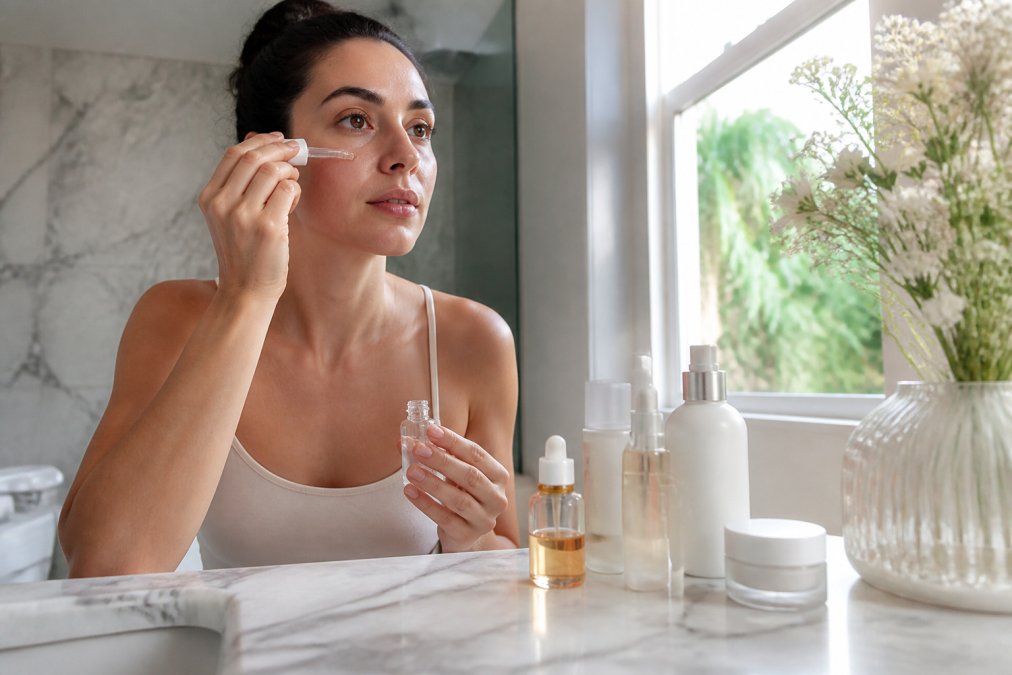
For morning routines, use a hydrating serum and lightweight moisturizer. If using actives like retinoids or vitamin C, apply them after hydrating serums but before moisturizer to reduce irritation.
Your Complete Dehydrated Skin Recovery Protocol
A complete recovery protocol addresses hydration morning and evening while supporting barrier repair. Most people see noticeable improvement within 7-10 days and significant results within 3-4 weeks.
Building Your Morning Routine
Morning routine (5-7 minutes):
- Rinse with lukewarm water or use a gentle cleanser
- Pat skin nearly dry, leaving it slightly damp
- Apply hydrating serum
- Wait 30 seconds for absorption
- Apply lightweight hydrating moisturizer
- Wait 1-2 minutes before applying sunscreen
- Apply SPF 30 or higher
The morning routine prioritizes protection and light hydration. Keep it simple and quick.
Building Your Evening Routine
Evening routine (10-15 minutes):
- Cleanse with a gentle, creamy cleanser
- Pat skin nearly dry, leaving it damp
- Apply hydrating essence or toner (optional)
- Apply hydrating serum while skin is still damp
- Wait 60 seconds for absorption
- Apply ceramide-rich moisturizer
- Consider a facial oil if skin is very dehydrated
- Run a humidifier while you sleep
The evening routine is where barrier repair happens. If using retinoids or other actives, apply them after your hydrating serum but before moisturizer.
Dos and Don'ts for Skin Recovery
Do:
- Apply products to damp skin to maximize hydration absorption
- Use a humidifier every night during recovery
- Drink adequate water, aim for 2-3 liters daily
- Avoid hot showers; use lukewarm water
- Patch test new products before full application
- Give your routine at least 3-4 weeks before evaluating results
- Use sunscreen daily
Don't:
- Exfoliate while your barrier is compromised
- Use active ingredients like retinoids or vitamin C daily during recovery
- Apply multiple actives in the same routine
- Use foaming or sulfate-based cleansers
- Skip moisturizer
- Change your entire routine at once
- Expect overnight results
Addressing Dehydration in Sensitive and Acne-Prone Skin
Dehydration in sensitive skin creates a vicious cycle. The compromised barrier becomes more sensitive, triggering inflammation that further damages the barrier. Breaking this cycle requires extreme gentleness and barrier-focused care.
For sensitive skin, avoid all actives during recovery. Skip retinoids, vitamin C, AHAs, BHAs, and high-concentration niacinamide. Focus entirely on hydration and barrier repair. Once recovered (typically 3-4 weeks), slowly reintroduce actives at much lower frequencies.
Choose products specifically formulated for sensitive skin with short ingredient lists. Patch test everything, even products labeled "hypoallergenic."
Acne-prone skin presents a different challenge. Many avoid moisturizers thinking hydration causes breakouts, perpetuating dehydration that worsens acne. Use lightweight, oil-free hydration that doesn't clog pores. Hyaluronic acid, glycerin, and amino acid serums work beautifully on acne-prone skin. Follow with a lightweight gel-cream or hydrating lotion.
A humidifier is particularly valuable for acne-prone skin, reducing the need for heavy moisturizers while preventing transepidermal water loss.
Dehydrated skin doesn't have to be chronic. Most people see dramatic improvement within 3-4 weeks of consistent, barrier-focused care. By layering hydrating serums with ceramide-rich moisturizers and supporting your routine with a humidifier, you address the actual problem: insufficient water content in your skin's outer layers. Veluné's curated skincare products are designed specifically for this recovery process, providing deep hydration without heaviness while restoring the balance and barrier strength your skin needs.
Frequently Asked Questions
Q: How can I hydrate my dehydrated skin if moisturizer alone isn't working?
A: Dehydrated skin needs more than one product. Layer a water-based serum containing humectants like hyaluronic acid or glycerin first, then apply a lightweight moisturizer to seal hydration in. Add an occlusive layer at night to prevent transepidermal water loss. Also check your cleansing routine, harsh products strip the skin barrier, making hydration harder to retain. Lukewarm water and a gentle cleanser preserve your skin's natural oils.
Q: What are the best ingredients for dehydrated skin?
A: Humectants pull water into the skin: hyaluronic acid, glycerin, and antioxidants work best. Ceramides and lipids restore the skin barrier, reducing moisture evaporation. Occlusives like plant oils seal everything in. Avoid heavy products that feel greasy; instead, choose oil-free hydration formulas that provide plumpness without weight. Ingredients that focus on moisture retention and skin-restoring properties are often recommended rather than active treatments.
Q: Why is my skin still dehydrated even when I moisturize every day?
A: Dehydration persists when your skin barrier is compromised. A damaged lipid barrier allows moisture to escape faster than you can replace it. Environmental stressors, over-exfoliation, and harsh actives accelerate this loss. You may also be using the wrong moisturizer texture for your skin type, oil-free hydration works better for acne-prone skin, while sensitive skin benefits from barrier-restoring ceramides. Give your routine 4-6 weeks of consistent, gentle care before expecting visible improvement in skin elasticity and texture.
Q: What's the difference between dry and dehydrated skin?
A: Dry skin lacks natural oils and is a skin type; dehydrated skin lacks water and is a temporary condition. Dry skin feels rough and tight year-round. Dehydrated skin can affect any skin type, even oily skin becomes dehydrated when the barrier is damaged. Signs of dehydration include dullness, fine lines, and tightness that improve with hydration, not oils. Both need moisture, but dehydrated skin responds faster to water-based serums and humectants, while dry skin benefits from emollients and occlusives.
This article was written using GrandRanker