
Table of Contents
- What Is a Compromised Skin Barrier and Why It Matters
- Signs of Damaged Skin Barrier You Should Recognize
- The 5 Essential Ingredients for Compromised Skin Barrier Repair
- How to Repair Skin Barrier Fast with a Targeted Routine
- Building Your Skin Barrier Repair Routine for Long-Term Health
- Ingredients to Avoid When Your Barrier Is Compromised
- Conclusion
Last Updated: August 17, 2026
What Is a Compromised Skin Barrier and Why It Matters
A compromised skin barrier occurs when the stratum corneum loses its ability to retain moisture and protect against irritants. The lipid bilayer holding skin cells together becomes damaged or depleted, causing transepidermal water loss, dehydration, inflammation, and vulnerability to infection.
Your skin barrier is your body's first line of defense. When it fails, products penetrate deeper than intended, causing irritation, redness, sensitivity, and persistent dryness. Barrier damage doesn't repair itself quickly without intentional support.
Most people worsen the problem by using more actives or heavier creams. The real solution is understanding which ingredients rebuild the lipid bilayer and how to layer them correctly. The top 5 ingredients for barrier repair work by restoring ceramides, increasing hydration, and calming inflammation. Below, we'll show you exactly which ingredients matter most and how to build a routine that actually heals your skin.
Signs of Damaged Skin Barrier You Should Recognize
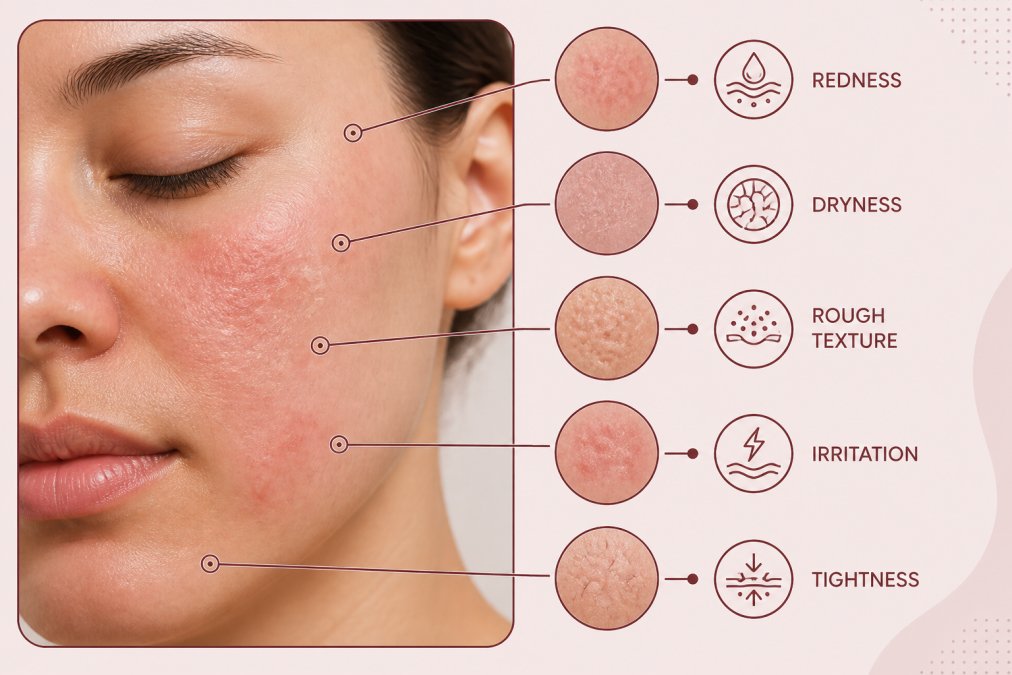
Your skin sends clear signals when the barrier is compromised. Persistent redness that doesn't fade indicates inflammation from losing your protective layer. Tightness and dryness follow, with skin pulling especially after cleansing, a "shrink wrap" sensation that regular moisturizer alone won't fix because the barrier itself is broken.
Increased sensitivity is another hallmark. Products that never bothered you now sting or burn because irritants penetrate deeper without the lipid barrier to stop them. You might also notice flaking, rough texture, or itching, especially at night.
Breakouts can paradoxically increase when your barrier is damaged, as bacteria colonize more easily on compromised skin. If you've been using retinoids, vitamin C, or AHAs and suddenly your skin feels raw and reactive, your barrier is likely damaged. Barrier damage typically shows up within days to weeks of aggressive treatment.
The 5 Essential Ingredients for Compromised Skin Barrier Repair
The best approach to barrier repair focuses on three mechanisms: restoring lipids, increasing hydration, and reducing inflammation. The five ingredients below address all three and work synergistically.
1. Ceramides: The Lipid Barrier Restorer
Ceramides are lipid molecules that make up roughly 50% of your skin's barrier. When your barrier is compromised, ceramides are depleted first. Applying ceramides directly addresses the root cause of barrier failure by filling gaps between skin cells and reinforcing the lipid bilayer.
The most effective ceramides are ceramide NP, ceramide AP, and ceramide EOP. Look for products listing these specifically rather than vague "ceramide complex" claims. Research shows ceramide-rich products can visibly improve skin texture within two weeks of consistent use, especially when combined with cholesterol and fatty acids, sometimes called the "3-lipid complex."
Anua's 3 Ceramide Panthenol Moisture Barrier Cream combines ceramides with panthenol and squalane. Veluné's approach focuses on delivering ceramides in lightweight textures that don't feel occlusive or suffocating, a key consideration for acne-prone or oily skin types.
2. Panthenol: The Hydration and Soothing Agent
Panthenol, also called provitamin B5, is a humectant that draws moisture into the skin while calming inflammation. When applied topically, it converts to pantothenic acid, which strengthens skin's natural moisturizing factor and reduces water loss. It also has documented anti-inflammatory effects, making it particularly valuable when your barrier is damaged and inflamed.
The typical effective concentration is 2-5% in creams and serums. For barrier repair, consistency matters more than concentration, daily application of 3-5% beats sporadic use of 10%. Panthenol pairs exceptionally well with ceramides because it hydrates while ceramides seal, addressing both moisture loss and structural damage simultaneously.
SOME BY MI's Beta Panthenol Repair Cream includes 10% panthenol alongside peptides and hyaluronic acid, providing immediate relief from tightness and irritation while supporting longer-term barrier function.
3. Hyaluronic Acid: The Moisture Magnet
Hyaluronic acid is a humectant that can hold up to 1000 times its weight in water. Apply it to damp skin (after cleansing but before your skin fully dries), then seal with an occlusive like squalane or ceramide cream. If applied to completely dry skin without sealing, it can actually draw moisture from deeper skin layers, worsening dehydration.
Low molecular weight hyaluronic acid penetrates the stratum corneum more effectively than high molecular weight versions. Most barrier repair serums use a blend of both weights to hydrate at multiple skin depths. Hyaluronic acid doesn't repair the barrier structure itself, it addresses dehydration while other ingredients fix the underlying damage.
Evoluderm's Hyaluronic Acid Serum provides lightweight hydration without heaviness. Apply it while your skin is still slightly damp from cleansing, then follow with a ceramide cream to seal the hydration in.
4. Squalane: The Lightweight Occlusive
Squalane is a plant-derived oil that mimics squalene, an oil naturally produced by your skin. Unlike heavier oils, squalane is lightweight, non-comedogenic, and absorbs quickly without leaving a greasy residue. As an occlusive, it prevents water loss from your skin by creating a barrier that stops transepidermal water loss.
Squalane is particularly valuable for acne-prone or oily skin that needs barrier support but fears heavy creams. Apply 2-3 drops after your hydrating serums and creams as one of the last steps in your routine. Some people use it as a final sealing layer, others mix it into their moisturizer.
Immortella's 100% Squalane Oil offers a pure, versatile option. For barrier repair specifically, apply it as the final step in your evening routine after ceramide and panthenol products have been absorbed.
5. Niacinamide: The Inflammation Fighter
Niacinamide, also called vitamin B3, reduces inflammation, regulates sebum production, and strengthens the skin barrier. When your barrier is damaged, niacinamide directly reduces inflammation by inhibiting inflammatory cytokines and promoting skin healing. Studies show it decreases redness and irritation within days of use.
Niacinamide also supports barrier function by stimulating ceramide production and improving skin's natural moisturizing factor. The effective concentration is 4-5% in serums and creams. It's compatible with almost every other ingredient, making it a safe addition to any barrier repair routine.
Pelart Laboratory's Cream-Fluid with Niacinamide SPF25 combines niacinamide with zinc and tea tree extract, creating a formula for oily, acne-prone skin with barrier compromise.
How to Repair Skin Barrier Fast with a Targeted Routine
A targeted routine focuses on essentials without actives or potentially irritating ingredients. Your immediate barrier repair routine should have three steps: cleanse gently, hydrate with barrier-supporting ingredients, and seal with an occlusive.
Cleanse with a gentle, non-stripping cleanser. Avoid sulfates and physical exfoliants. Cream cleansers or micellar water are ideal. Cleanse once daily (preferably at night) with lukewarm water, as hot water strips lipids faster.
Apply hyaluronic acid serum to damp skin. Wait 30 seconds after cleansing, then apply 2-3 drops while your skin is still slightly wet to maximize hydration absorption.
Follow with a ceramide-rich cream. Apply while the hyaluronic acid is still damp. This "hydration sandwiching" is more effective than applying products to completely dry skin.
Seal with squalane or a lightweight occlusive. Use 2-3 drops as your final step to prevent hydration from escaping overnight.
Morning routine: Gentle cleanser, hyaluronic acid serum, lightweight moisturizer with niacinamide, SPF.
Evening routine: Gentle cleanser, hyaluronic acid serum, ceramide cream, squalane oil.
Most people see noticeable improvement within 7-10 days. Significant barrier repair typically takes 3-4 weeks of consistent use.
Building Your Skin Barrier Repair Routine for Long-Term Health
Once your barrier has healed, shift from repair to maintenance. A long-term barrier health routine prevents future damage and keeps your skin resilient. The foundation remains the same: ceramides, hydration, and occlusives. Now you can reintroduce other ingredients strategically, following the 80/20 rule: 80% barrier-supporting ingredients, 20% actives.
| Step | Product Type | Frequency | Purpose |
|---|---|---|---|
| Cleanse | Gentle cream or milk cleanser | Twice daily | Remove impurities without stripping lipids |
| Hydrate | Hyaluronic acid serum or essence | Twice daily | Maintain moisture levels |
| Barrier support | Ceramide or peptide cream | Twice daily | Sustain lipid barrier strength |
| Occlusive | Squalane, facial oil, or rich cream | Evening | Prevent transepidermal water loss |
| Active (optional) | Vitamin C, retinol, or AHA | 2-3x weekly | Address specific concerns without damaging barrier |
| Sun protection | Broad-spectrum SPF 30+ | Daily morning | Prevent UV damage to barrier |
Veluné's philosophy of deep hydration without heaviness aligns with long-term barrier health. Consistency matters more than any single product, barrier health is built through daily repetition. Consider rotating your ceramide cream seasonally: richer formulas in winter, lighter serums in summer.
Ingredients to Avoid When Your Barrier Is Compromised
Avoid all active ingredients. Vitamin C, retinoids, AHAs, BHAs, and benzoyl peroxide penetrate too deeply and cause irritation rather than benefit. Wait until your barrier has fully healed (3-4 weeks minimum) before reintroducing actives.
Avoid physical exfoliants. Scrubs, brushes, and textured cloths remove the already-fragile outer layer of damaged skin, delaying healing and increasing inflammation.
Avoid essential oils and fragrance. These are common irritants that penetrate damaged skin more easily. Use fragrance-free products during barrier repair.
Avoid high concentrations of humectants without sealing. Excessive humectant use without proper occlusion can actually dehydrate your skin further.
Avoid high alcohol content. Check ingredient lists for alcohol denat or SD alcohol high in the list. Alcohol-based toners or serums are problematic during barrier repair.
Avoid switching products frequently. Your skin needs time to stabilize. Stick with your barrier repair routine for at least 3-4 weeks before making changes.
Avoid over-cleansing. Twice daily is sufficient. Each cleanse removes lipids, even gentle ones. Minimize cleansing frequency during active barrier repair.
Barrier repair requires patience and consistency. The five ingredients covered here address the actual mechanisms of barrier damage. The real challenge is resisting the urge to "do more" while your barrier heals. Simplicity and consistency win. With Veluné's focus on intentional formulation and deep hydration without heaviness, you can support your barrier repair with products designed for long-term skin health. Start with the routine outlined above, commit to 4 weeks, and you'll see your skin transform. Shop all
Frequently Asked Questions
What are the main signs that my skin barrier is compromised?
A compromised skin barrier typically shows persistent redness, irritation, and a tight or uncomfortable feeling. You may experience excessive dryness, peeling, or flaking that doesn't improve with regular moisturizers. Increased sensitivity to products you've used before, a burning or stinging sensation, and heightened reactivity to environmental factors are also common indicators. If your skin feels reactive to almost everything, your barrier likely needs repair.
How long does it take to repair a damaged skin barrier?
Barrier repair timelines vary depending on severity. Mild damage may improve within 2-4 weeks of consistent use of barrier-supporting ingredients like ceramides and panthenol. More significant compromise typically requires 4-8 weeks of dedicated care. Recovery depends on avoiding further irritants, maintaining a simple routine, and consistently using ingredients that support the lipid bilayer and reduce transepidermal water loss. Patience and consistency matter more than quick fixes.
Can I use active ingredients like retinoids or acids while repairing my skin barrier?
No, avoid all active ingredients while your barrier is compromised. Retinoids, AHAs, BHAs, and vitamin C can increase irritation and delay healing. Focus exclusively on gentle, barrier-supporting ingredients like ceramides, panthenol, hyaluronic acid, squalane, and niacinamide. Once your barrier has recovered (typically after 4-8 weeks), you can gradually reintroduce actives, but only after confirming your skin feels stable and non-reactive.
Which ingredient is most important for a compromised skin barrier?
Ceramides are foundational because they directly repair the lipid bilayer, the structural foundation of your barrier. However, the most effective approach combines ceramides with panthenol for soothing and hydration, hyaluronic acid for moisture retention, and squalane for occlusive protection. No single ingredient works alone; barrier repair requires a synergistic blend that addresses hydration, lipid restoration, and inflammation simultaneously.
This article was written using GrandRanker