
Table of Contents
- What Makes a Hydrating Moisturizer Right for Sensitive Skin
- Ingredients to Avoid for Sensitive Skin
- How to Repair Damaged Skin Barrier
- Hydrating vs Moisturizing for Sensitive Skin
- Top Hydrating Moisturizers for Sensitive Skin Types
- How to Patch Test and Layer Your Moisturizer Safely
- Common Mistakes That Damage Sensitive Skin Further
- Conclusion
Last Updated: August 22, 2026
What Makes a Hydrating Moisturizer Right for Sensitive Skin
A hydrating moisturizer for sensitive skin must restore the skin barrier while delivering deep hydration without triggering inflammation. Sensitive skin needs three things simultaneously: hydration to plump dehydrated cells, barrier repair to strengthen natural defenses, and soothing agents to calm inflammation. Most products fail because they prioritize one at the expense of the others.
The skin barrier functions as your body's first line of defense against environmental stressors and transepidermal water loss. When compromised, moisture escapes and irritants penetrate more easily. That's why barrier repair is foundational. Products containing ceramides, hyaluronic acid, and lipid replenishment ingredients address this directly.
At Veluné, we've designed our formulations around this principle: deep hydration without heaviness. The best hydrating moisturizer for sensitive skin also avoids common irritants like fragrance, essential oils, alcohol, and certain preservatives. Dermatologist-tested formulas that are paraben-free and sulfate-free provide a safer foundation.
Ingredients to Avoid for Sensitive Skin
Certain ingredients consistently trigger reactions in sensitive skin, and avoiding them is non-negotiable.
Fragrance and essential oils top the list. Even natural fragrances can cause contact dermatitis (the American Academy of Dermatology). True fragrance-free formulas list no fragrance ingredients on the label.
Alcohols, particularly denatured alcohol, strip the skin of natural oils and compromise the barrier. Ethanol and isopropyl alcohol should be avoided entirely, though cetyl alcohol and cetearyl alcohol are fatty alcohols that don't have this drying effect (peer-reviewed research).
Sulfates (sodium lauryl sulfate and sodium laureth sulfate) are harsh detergents that disrupt the skin barrier. Check labels carefully.
Parabens trigger reactions in some individuals. For reactive skin, paraben-free options reduce risk.
Phenoxyethanol is a preservative that causes irritation in sensitive individuals.
Synthetic dyes and colorants add no functional benefit and increase irritation risk. Avoid products with FD&C or D&C color codes.
Strong actives like retinoids, high-concentration vitamin C, and glycolic acid should be introduced slowly or avoided if your barrier is compromised.
Mineral oil and petrolatum can feel heavy and may trap bacteria. Plant-derived emollients like squalane or jojoba oil work better for sensitive skin seeking lightweight hydration.
Start with products that are fragrance-free, paraben-free, and sulfate-free, then examine active hydrating ingredients to ensure meaningful concentrations.
How to Repair Damaged Skin Barrier
Barrier repair takes time, but the right moisturizer accelerates the process significantly. A damaged barrier shows signs like persistent redness, tightness, increased sensitivity, and flaking.
Ceramides are essential. These lipids make up 50% of your skin barrier. Ceramides 1, 3, and 6-II are most effective. Products listing ceramides in the first five ingredients deliver meaningful amounts. CeraVe Moisturizing Cream contains all three essential ceramides and uses MVE technology to release them gradually for sustained barrier repair.
Hyaluronic acid pulls water into the skin. A humectant, it draws moisture from the environment and deeper skin layers into the epidermis. For maximum effect, apply it to damp skin, then seal it with an occlusive moisturizer.
Niacinamide (vitamin B3) reduces inflammation and strengthens barrier function. It increases ceramide and lipid production within the skin itself. Concentrations of 4-5% are most effective.
Glycerin acts as both humectant and emollient. It's gentle, non-irritating, and effective at all concentrations.
Centella asiatica (cica) soothes and supports healing. This plant extract reduces redness and strengthens the barrier, particularly useful when inflamed.
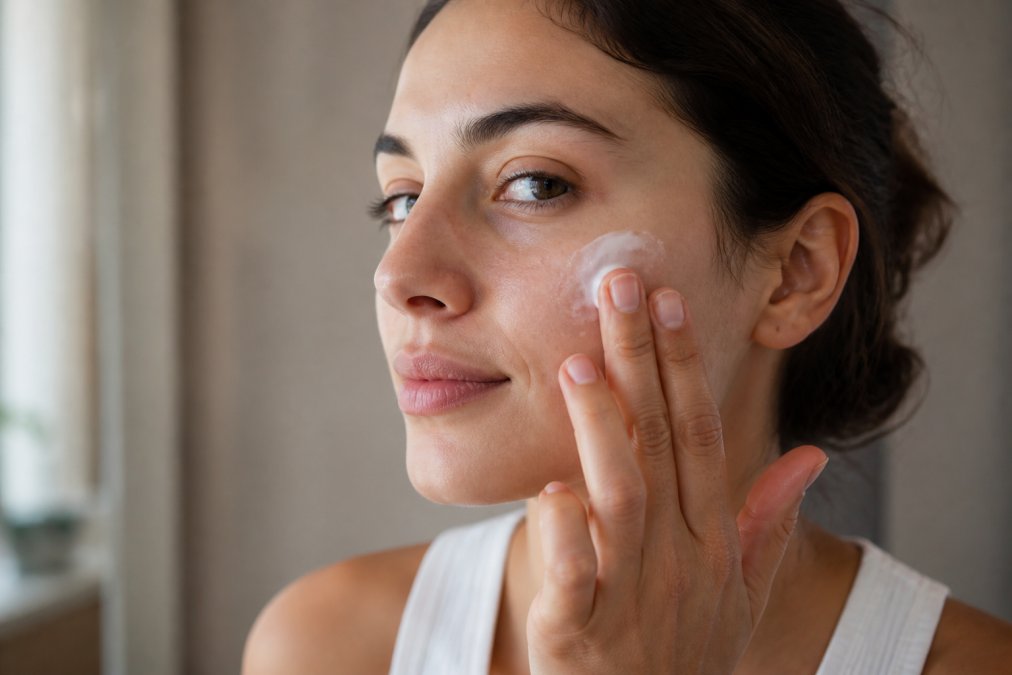
Avoid over-washing. Use a gentle, non-stripping cleanser once daily (evening is ideal), and rinse with lukewarm water. Layer strategically. Apply moisturizer to damp skin to trap hydration. If your barrier is severely compromised, add an occlusive layer over your hydrating moisturizer.
Barrier repair typically shows visible improvement within 2-4 weeks of consistent use, though full restoration can take 6-8 weeks (peer-reviewed research).
Hydrating vs Moisturizing for Sensitive Skin
These terms serve different functions. Hydration means adding water to the skin using humectants like hyaluronic acid, glycerin, and panthenol. Moisturizing means sealing in that water and preventing transepidermal water loss using emollients and occlusives.
For sensitive skin, you need both. A hydrating serum delivers water, then a moisturizer seals it in. This layering approach prevents dehydration while avoiding heaviness that can suffocate acne-prone skin.
Lightweight hydrating moisturizers combine humectants with light emollients and work best for oily or acne-prone sensitive skin. Rich moisturizers prioritize emollients and occlusives and are essential for severely dry or compromised barriers. The best hydrating moisturizer for sensitive skin balances both functions. Bioderma Sensibio Defensive Rich delivers this balance with ceramides and a rich texture that still absorbs reasonably quickly.
Top Hydrating Moisturizers for Sensitive Skin Types
Lightweight Options for Acne-Prone Sensitive Skin
Dermalogica UltraCalming Calm Water Gel uses dual hyaluronic acid technology to deliver intense hydration in a weightless texture. Apple fruit extract and glycerin soothe while hyaluronic acid hydrates. It's fragrance-free and paraben-free, making it safe for reactive skin.
Cetaphil PRO Redness Prone Skin Daily Facial Moisturizer SPF 30 combines hydration with sun protection and redness correction. Allantoin and glycerin soothe and hydrate. It's non-comedogenic, fragrance-free, and includes mineral SPF 30 protection.
La Roche-Posay Toleriane Double Repair Face Moisturizer repairs the barrier in one hour while providing 48 hours of hydration. It contains ceramide-3, niacinamide, glycerin, and prebiotic thermal water. The oil-free formula absorbs quickly and is fragrance-free and paraben-free.
Rich Formulas for Severely Compromised Barriers
Bioderma Sensibio Defensive Rich reinforces the skin barrier while reducing redness in 30 seconds. The rich texture provides 12 hours of hydration and protects against environmental stressors. It's fragrance-free and non-comedogenic.
CeraVe Moisturizing Cream contains all three essential ceramides plus hyaluronic acid and glycerin. The MVE delivery system releases ingredients gradually. It's suitable for atopic dermatitis and psoriasis and is fragrance-free and non-comedogenic.
Eucerin AtopiControl Face Cream is enriched with licochalcone A and ceramides. It strengthens the barrier while relieving tightness and itchiness. The fragrance-free formula is suitable for children as young as four weeks old.
Avène Tolerance Control Soothing Skin Recovery Cream uses D-Sensinose™ to calm skin in 30 seconds while restoring the barrier in 48 hours. The fragrance-free, preservative-free formula comes in a sterile cosmetics tube. It works well for post-procedure care.
Kiehl's Ultra Facial Cream provides 24-hour hydration with squalane and glacial glycoprotein. The lightweight yet nourishing formula absorbs quickly without feeling greasy and is fragrance-free.
How to Patch Test and Layer Your Moisturizer Safely
Introducing a new product to sensitive skin requires caution. Patch testing prevents full-face reactions and identifies incompatibilities.
Patch test on a small area first. Apply a small amount to your inner arm or behind your ear. Wait 24-48 hours. If no redness, itching, or irritation appears, the product is likely safe for your face.
Start with a minimal amount. Use a pea-sized amount on your face the first few applications. Increase to your normal amount after 3-5 days if no reaction occurs.
Introduce one product at a time. If revamping your routine, add the new moisturizer while keeping everything else constant.
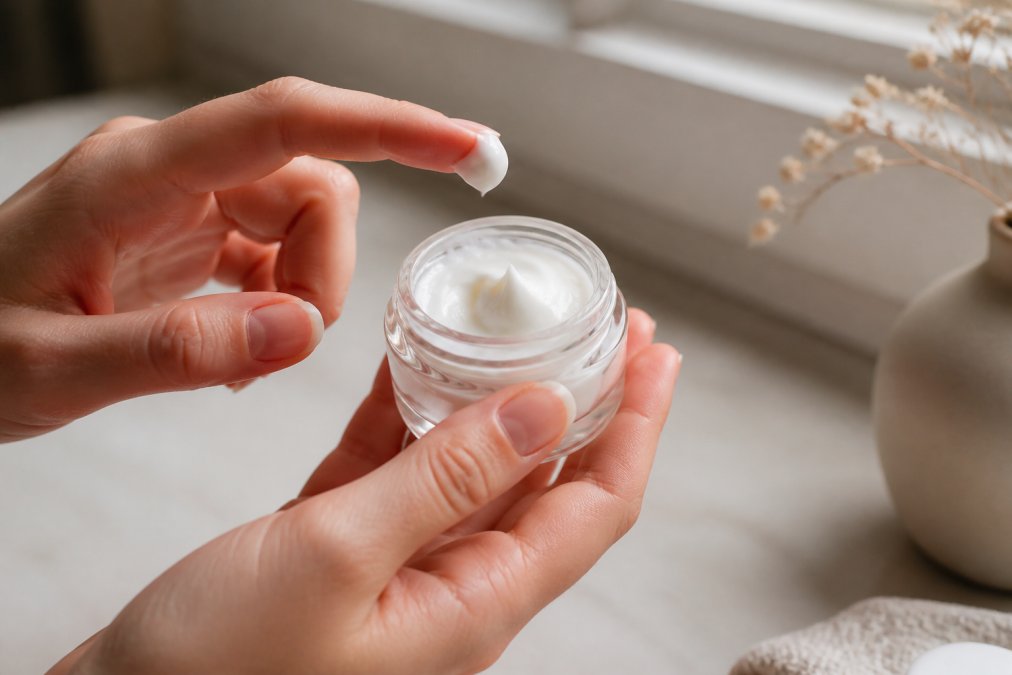
Layer correctly for maximum benefit. Apply products in order of thinnest to thickest consistency:
- Cleanser
- Toner or essence
- Serum
- Hydrating moisturizer
- Occlusive layer if needed
Apply to damp skin. Moisturizer works best when applied to slightly damp skin. This traps water and enhances hydration.
Use the right amount. A pea-sized amount is sufficient for the face. Wait between layers. Allow each product to absorb (30 seconds to 1 minute) before applying the next. Avoid mixing incompatible ingredients. Don't layer actives like retinoids with your barrier-repair moisturizer. Use actives in the evening, then follow with a soothing moisturizer.
Common Mistakes That Damage Sensitive Skin Further
Over-washing strips the barrier. Washing more than twice daily removes natural oils. Once daily (evening) is ideal.
Using water that's too hot opens pores excessively and strips oils. Lukewarm water is gentler.
Switching products too frequently prevents your skin from adapting. New products need 2-4 weeks to show results.
Layering too many actives overwhelms a compromised barrier. If your barrier is damaged, pause actives entirely until it recovers.
Applying moisturizer to completely dry skin reduces efficacy.
Using products with fragrance or essential oils, even if labeled "natural." Natural doesn't mean non-irritating.
Ignoring sunscreen. UV damage weakens the barrier and triggers inflammation. Daily SPF 30 minimum is essential.
Expecting overnight results. Barrier repair takes weeks. Most people see meaningful improvement within 4 weeks of consistent use.
Not addressing environmental triggers. A humidifier supports skin hydration in dry homes. Product alone can't overcome environmental stress.
Sensitive skin requires intentional care, but the right hydrating moisturizer makes a measurable difference. The products covered all share one quality: they prioritize barrier repair and sustained hydration without unnecessary irritants.
Veluné's approach centers on this philosophy: deep hydration without heaviness, restoring balance and barrier strength for long-term skin health. Whether you're dealing with acne-prone sensitivity, post-procedure irritation, or chronic dryness, the foundation is the same, a moisturizer that hydrates, soothes, and repairs simultaneously. Shop all Veluné products and discover formulations designed specifically for your sensitive skin's needs.
Frequently Asked Questions
What is the most hydrating moisturizer for sensitive skin?
The best hydrating moisturizer for sensitive skin combines ceramides, hyaluronic acid, and soothing agents like allantoin or centella asiatica. Look for fragrance-free, paraben-free formulas that strengthen the skin barrier rather than just adding surface moisture. Products like Bioderma Sensibio Defensive Rich and CeraVe Moisturizing Cream are options that provide hydration without irritation.
How do I know if a moisturizer is safe for my sensitive skin?
Check for hypoallergenic, non-comedogenic, and fragrance-free labels. Avoid products with alcohol, sulfates, and synthetic fragrances. Perform a patch test on a small area first, waiting 24-48 hours before full application. Read ingredient lists carefully, ceramides, glycerin, and niacinamide are safe bets, while essential oils and dyes are common triggers. When in doubt, consult the product's dermatological testing claims.
Can I use a hydrating moisturizer if I have acne-prone sensitive skin?
Yes, but choose lightweight, oil-free formulas labeled non-comedogenic. Acne-prone skin still needs hydration, skipping moisturizer often makes acne worse by forcing the skin to overproduce oil. Look for gel-cream textures with hyaluronic acid and glycerin that hydrate without clogging pores. Avoid heavy occlusives and rich creams; instead, layer a lightweight hydrating moisturizer over a hydrating toner for better absorption.
How long does it take to see results from a hydrating moisturizer?
Immediate relief from tightness and dryness often appears within hours, but true barrier repair takes 48 hours to 2 weeks. Visible reduction in redness and texture improvement typically shows after 2-4 weeks of consistent use. If your skin barrier is severely damaged, allow at least 4-6 weeks before switching products. Consistency matters more than speed, using the same gentle moisturizer daily yields better long-term results than frequent product changes.
This article was written using GrandRanker