
Table of Contents
- Why Moisturizer Before Sunscreen Strengthens Your Skin Barrier
- How Moisturizer Prevents SPF Dilution and Reduces UV Exposure Risk
- Understanding Skincare Layering Order for Maximum Protection
- How Long to Wait Between Skincare Steps for Best Results
- Choosing the Right Moisturizer for Your Skin Type
- Common Mistakes That Reduce Sunscreen Effectiveness
- Conclusion
Last Updated: August 23, 2026
Why Moisturizer Before Sunscreen Strengthens Your Skin Barrier
Your skin barrier is your first line of defense against environmental damage, UV radiation, and moisture loss. When you apply moisturizer before sunscreen, you're not just layering products, you're creating a protective foundation that allows both products to work as intended.
The skin barrier functions as a selective filter, controlling what enters and exits your skin while maintaining hydration. A compromised barrier leads to transepidermal water loss, which accelerates visible aging and increases sensitivity to active ingredients (peer-reviewed research). Many people skip moisturizer or apply it incorrectly, assuming sunscreen alone provides complete protection. This approach often backfires, leaving skin dehydrated and more vulnerable to UV damage.
According to dermatological research on skin barrier function, a healthy barrier requires proper hydration before applying occlusive or active ingredients. When you apply moisturizer first, you're restoring the skin's ability to retain water and maintain its natural pH balance. The moisturizer acts as a humectant and emollient, drawing moisture into the skin and sealing it in with protective oils or silicones.
This matters because sunscreen, whether chemical or physical, works best on well-hydrated skin. A dehydrated skin barrier absorbs sunscreen unevenly, creating gaps in UV protection. Additionally, applying sunscreen to dry skin can cause pilling, where products ball up and leave exposed patches. The proper sequence ensures even distribution and maximum efficacy of your SPF protection.
How Moisturizer Prevents SPF Dilution and Reduces UV Exposure Risk
SPF dilution is one of the most misunderstood aspects of sunscreen application. Many people believe that layering products automatically reduces sunscreen effectiveness. The reality is more nuanced: proper moisturization actually prevents dilution by creating a stable base for sunscreen application.
When sunscreen is applied to dry or flaky skin, it doesn't spread evenly. The product concentrates in some areas while leaving others exposed. This uneven distribution means some patches of skin receive inadequate SPF coverage. Chemical sunscreens require direct contact with skin to absorb and activate, so poor distribution directly reduces their protective capability. Physical sunscreens need a smooth surface to form an even protective film.
Applying moisturizer before sunscreen solves this problem. The moisturized skin surface is smooth and uniform, allowing sunscreen to spread evenly and maintain its stated SPF level across your entire face. This is particularly important for broad-spectrum protection, which requires consistent coverage to block both UVA and UVB rays effectively.
The concern about "dilution" often stems from using too much moisturizer or applying it in a way that leaves a wet, slick surface. The solution isn't to skip moisturizer, it's to apply the right amount and allow adequate wait time. A lightweight moisturizer absorbs quickly and won't interfere with sunscreen efficacy. In fact, research on product layering shows that a thin, well-absorbed moisturizer layer improves sunscreen performance compared to applying sunscreen directly to dry skin.
Understanding Skincare Layering Order for Maximum Protection
The order in which you apply skincare products determines how effectively each one works. This isn't arbitrary, it's based on product consistency, molecular size, and how ingredients interact with your skin and with each other.
The Foundation: Cleanser to Moisturizer
Start with a clean canvas. After cleansing, your skin is at its most receptive to hydration. This is the ideal time to apply toner or essence if you use them, these lightweight products should always precede heavier moisturizers. The general rule is to apply products from thinnest to thickest consistency, allowing each to absorb before moving to the next.
Apply your moisturizer to damp skin immediately after cleansing or toning. This timing is crucial because damp skin allows the humectant ingredients in your moisturizer to draw moisture from the environment and deeper skin layers. A typical lightweight moisturizer for acne-prone or oily skin absorbs within 2-3 minutes (the American Academy of Dermatology). Allow this full absorption time, don't rush to the next step.
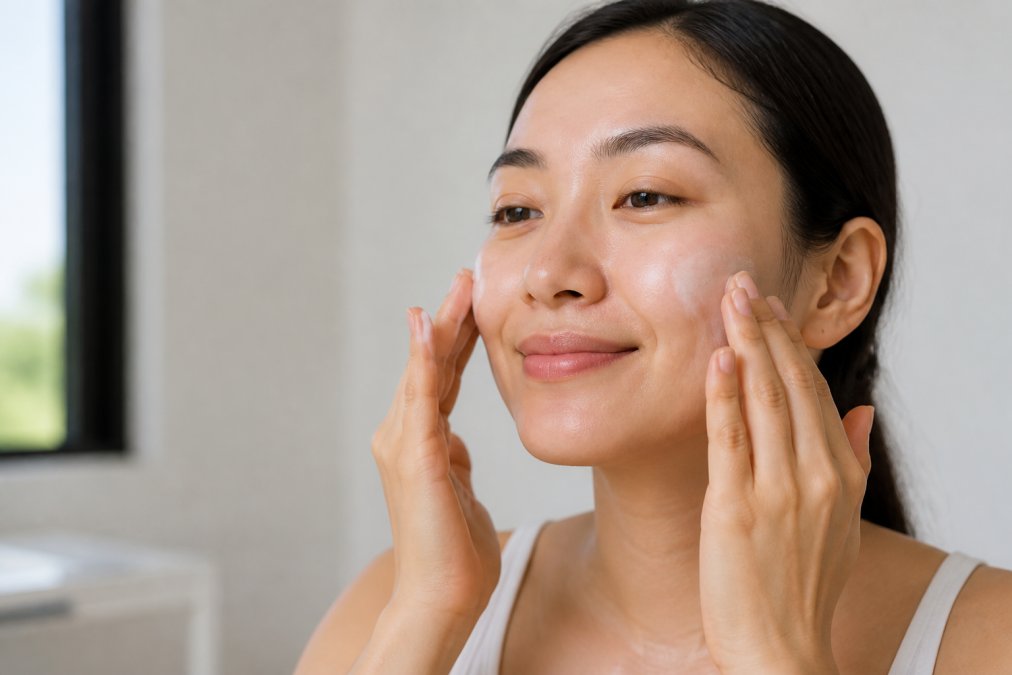
For those with compromised or sensitive skin barriers, this step is non-negotiable. The moisturizer's role is to restore balance and strengthen the barrier, making it less reactive to subsequent products. Veluné's approach to barrier repair emphasizes this foundation layer, recognizing that deep hydration without heaviness allows sensitive skin to tolerate other skincare steps more comfortably.
The Final Step: Adding Sunscreen Last
Sunscreen always goes last in your morning routine. This is because sunscreen needs to sit on the surface of your skin to form a protective film, whether it's a physical blocker or a chemical absorber. Applying other products after sunscreen disrupts this protective layer and reduces its effectiveness.
The typical wait time between moisturizer and sunscreen is 2-3 minutes, depending on your moisturizer's absorption rate. Lightweight hydrating products absorb faster than rich creams. If you're using a heavier barrier repair cream, you may need 5 minutes before applying sunscreen. The key is ensuring your moisturizer feels fully absorbed, your skin should feel comfortable and not slick or tacky.
Physical sunscreens (containing zinc oxide or titanium dioxide) require a smooth, dry surface to avoid streaking and ensure even coverage. Chemical sunscreens need to absorb into the skin, which happens more effectively when the moisturizer layer is fully set. Applying sunscreen too quickly over wet or incompletely absorbed moisturizer creates a barrier that prevents proper absorption, reducing the sunscreen's efficacy.
How Long to Wait Between Skincare Steps for Best Results
Timing between application steps directly affects how well each product performs. Many people rush through their skincare routine, unaware that this habit undermines the effectiveness of their entire regimen.
After cleansing, allow 1-2 minutes for your skin to reach an optimal state of dampness. Your skin should feel clean but not dripping wet. This is the ideal time to apply toner or essence if you use them. These lightweight products typically absorb within 1-2 minutes.
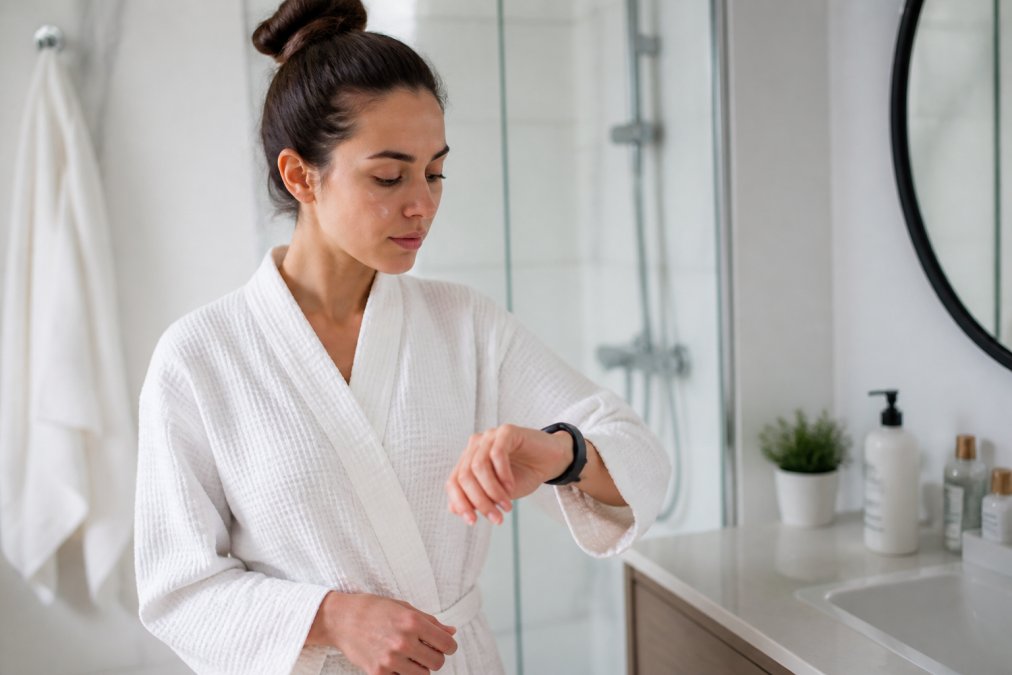
Once you've applied your moisturizer, wait 2-3 minutes before moving to sunscreen. During this time, the moisturizer's humectant ingredients bind water to your skin cells, and any occlusive or emollient components create a protective film. A common mistake is applying sunscreen while the moisturizer still feels slightly wet. This creates a slippery surface that causes sunscreen to slide around rather than adhere evenly.
For those using targeted treatments like serums or spot treatments for acne, these should go on clean skin before moisturizer. Allow serums 1-2 minutes to absorb before applying your moisturizer. If you're layering multiple active ingredients, spacing becomes even more critical, each product needs time to absorb and begin working before the next one is applied.
The wait time also depends on your specific products. A gel moisturizer designed for oily skin absorbs faster than a cream formulation. Lightweight hydrating serums absorb almost immediately, while richer barrier repair products take longer. Pay attention to how your skin feels, not just the clock. Your skin should feel comfortable and dry to the touch before you apply the next product.
Choosing the Right Moisturizer for Your Skin Type
Not all moisturizers are created equal, and choosing the wrong one for your skin type can sabotage your entire skincare routine. The goal is deep hydration without heaviness, a principle that applies across all skin types, though the formula structure differs.
Lightweight Hydration for Oily and Acne-Prone Skin
If you have oily or acne-prone skin, the idea of applying moisturizer before sunscreen may feel counterintuitive. You've likely been told that moisturizer causes breakouts or makes oiliness worse. This belief persists because many people use the wrong moisturizer formula for their skin type.
Oily and acne-prone skin still needs hydration. In fact, dehydrated skin often produces excess sebum as a compensatory mechanism. Skipping moisturizer or using one that's too heavy triggers this response, worsening breakouts and oiliness. The solution is a lightweight, non-comedogenic moisturizer that hydrates without clogging pores.
Look for gel-based or water-based moisturizers containing humectants like glycerin or hyaluronic acid. These draw moisture into the skin without adding heaviness. Avoid thick creams, oils, or products with high silicone content if you're prone to congestion. A lightweight moisturizer absorbs quickly and leaves skin feeling smooth rather than greasy.
Veluné's philosophy of deep hydration without heaviness directly addresses this need. For acne-prone skin, a properly formulated lightweight moisturizer strengthens the barrier, making skin less reactive to acne treatments and less likely to overproduce oil. This creates a stable foundation for sunscreen application without compromising your acne management routine.
Barrier Repair for Sensitive and Compromised Skin
Sensitive skin or a compromised skin barrier requires a different approach. These skin conditions benefit from richer, more occlusive moisturizers that actively repair the barrier rather than simply hydrating it.
Look for moisturizers containing ceramides, niacinamide, or centella asiatica, ingredients specifically chosen for their barrier-strengthening properties. These formulas are designed to restore the skin's natural lipid barrier and reduce transepidermal water loss. They're typically richer than lightweight hydrating moisturizers, but they absorb completely and don't leave skin feeling slick.
The wait time between a barrier repair moisturizer and sunscreen may be slightly longer, 4-5 minutes rather than 2-3, because these products are more occlusive. However, the extra time is worthwhile. A properly repaired barrier is less reactive to sunscreen and other skincare products, reducing the risk of irritation or sensitivity.
For those with severely compromised barriers from overuse of actives or environmental damage, barrier repair should be the priority before introducing or continuing other treatments. This is where the distinction between hydration and barrier repair becomes important. A hydrating moisturizer adds water to your skin; a barrier repair moisturizer restores the structure that allows your skin to retain that water.
Common Mistakes That Reduce Sunscreen Effectiveness
Understanding what not to do is just as important as knowing the right approach. Several habits undermine the benefits of applying moisturizer before sunscreen.
Applying sunscreen too quickly: The most common mistake is rushing from moisturizer to sunscreen without allowing adequate absorption time. This creates a slippery surface that causes sunscreen to bead up or slide around, leaving gaps in coverage. The result is uneven UV protection and increased risk of sun damage.
Using the wrong moisturizer consistency: Applying a heavy cream when you need a lightweight gel, or vice versa, disrupts the layering process. A moisturizer that's too heavy for your skin type won't absorb properly, while one that's too light may not provide adequate barrier support. Matching the moisturizer to your skin type and the season ensures proper absorption and effectiveness.
Skipping moisturizer altogether: Some people believe that sunscreen alone provides complete hydration and protection. This approach leaves skin dehydrated and vulnerable. Sunscreen is a protective barrier, not a hydrating treatment. It works best on well-hydrated skin and doesn't replace the need for a moisturizer in your routine.
Applying too much product: More isn't always better. Excess moisturizer creates a barrier that prevents sunscreen from adhering properly. Similarly, using too much sunscreen can cause pilling and uneven coverage. The goal is enough product to provide coverage and protection without creating a heavy, uncomfortable layer.
Not allowing adequate wait time between steps: Impatience is the enemy of effective skincare. Each product needs time to absorb and begin working before the next one is applied. Rushing through your routine reduces the efficacy of every product in your regimen.
Mixing incompatible products: Some moisturizers and sunscreens don't work well together, particularly if one is silicone-based and the other is water-based. This incompatibility can cause pilling or uneven application. Testing your combination of products before committing to daily use helps identify potential issues.
Proper skincare layering isn't complicated, but it does require intention and patience. When you apply moisturizer before sunscreen, you're investing in your skin's long-term health. A strengthened barrier, proper hydration, and even sunscreen distribution work together to provide genuine UV protection and reduce premature aging.
The key is choosing the right moisturizer for your skin type and allowing adequate absorption time before adding sunscreen. This approach works for all skin types, whether you're managing acne, sensitivity, or simply prioritizing long-term skin health. Veluné's commitment to deep hydration without heaviness aligns with this principle, offering moisturizers designed to strengthen your barrier while maintaining comfort throughout your day. Shop all Veluné moisturizers to find the right formula for your routine.
Frequently Asked Questions
Are you supposed to moisturize before sunscreen?
Yes. Applying moisturizer before sunscreen is essential for protecting your skin barrier and ensuring SPF efficacy. Moisturizer creates a hydrated base that prevents the sunscreen from diluting and sitting unevenly on your skin. A healthy skin barrier also supports long-term protection against UV rays and premature aging. This order is especially important for anyone with sensitive skin, compromised barriers, or acne-prone skin.
How long should you wait between applying moisturizer and SPF?
Wait 1-3 minutes after applying moisturizer before adding sunscreen. This allows the moisturizer to set and absorb slightly, creating a stable base for the sunscreen. The exact timing depends on your moisturizer's formula, lightweight hydrating products may need just 1 minute, while richer creams may benefit from a full 3 minutes. Applying sunscreen too quickly can cause pilling and uneven coverage, reducing UV protection.
Can I skip sunscreen if my moisturizer has SPF?
Moisturizers with SPF can provide some protection, but they rarely offer the full broad-spectrum coverage needed for daily use. Most people apply too little moisturizer to achieve the SPF stated on the label, leaving gaps in UV protection. For reliable photo-protection, use a dedicated sunscreen after your moisturizer, or choose a sunscreen-moisturizer hybrid product designed to deliver both hydration and full SPF efficacy without pilling or heaviness.
Does moisturizer interfere with the effectiveness of sunscreen?
When applied correctly, moisturizer enhances sunscreen effectiveness rather than interfering with it. A hydrated skin barrier allows sunscreen to spread evenly and adhere properly, creating a protective film without dilution. The risk comes only when you apply sunscreen immediately after a very heavy or occlusive moisturizer without waiting, or when you use incompatible formulas that cause pilling. Choosing lightweight, non-comedogenic moisturizers and following proper timing prevents this issue entirely.
This article was written using GrandRanker