
Table of Contents
- The Foundation: Understanding Your Long-Term Skin Health Routine
- Sun Protection and SPF: Non-Negotiable Daily Defense
- Importance of Deep Hydration for Skin Health
- Skin Barrier Repair Tips for Lasting Resilience
- How to Build a Sustainable Skincare Routine Without Overwhelm
- Lifestyle Habits That Support Long-Term Skin Resilience
- Gentle Cleansing and Exfoliation for Skin Texture Improvement
- Conclusion: Consistency Over Perfection
Last Updated: August 20, 2026
The Foundation: Understanding Your Long-Term Skin Health Routine
A long-term skin health routine is a consistent practice of daily and weekly skincare habits designed to protect, repair, and maintain skin integrity over months and years. This approach differs fundamentally from chasing quick fixes, it's about building sustainable habits that support your skin barrier, prevent premature aging, and address persistent concerns like acne or sensitivity.
Most people struggle with skin not because they lack products, but because they treat skincare like a sprint instead of a marathon. They buy something new every three weeks, expect results in two weeks, then abandon it when progress feels slow. A genuine long-term routine requires patience, but the payoff is measurable: clearer skin, reduced sensitivity, stronger resilience against environmental stressors, and visible improvement in skin texture and elasticity.
At Veluné, we've built our entire philosophy around this principle: deep hydration without heaviness, barrier restoration, and intentional consistency. The research is clear, skin that's properly hydrated and protected develops stronger resilience against UV damage, pollution, and the natural aging process. This guide covers the non-negotiable elements of a long-term skin health routine, common mistakes that derail progress, and exactly how to build something sustainable that fits your life.
Sun Protection and SPF: Non-Negotiable Daily Defense
Sun protection is the single most important habit in any long-term skin health routine. UV radiation damages collagen and elastin, accelerates photoaging, increases melanoma risk, and triggers the oxidative stress that drives most skin aging. This cumulative damage compounds over years.
The standard recommendation is SPF 30 minimum, applied daily and reapplied every two hours if you're outdoors. Critically, SPF only measures UVB protection, you need broad-spectrum sunscreen that blocks both UVB and UVA radiation. UVA penetrates deeper into the dermis and causes the aging damage that shows up five to ten years later as loss of elasticity and deepened wrinkles.
A practical approach to sun protection:
- Use a daily moisturizer with SPF 30+ as your base
- Apply sunscreen to face, neck, and décolletage every morning
- Reapply after swimming or heavy sweating, or every two hours in direct sun
- Don't skip cloudy days, UV radiation penetrates cloud cover
- Combine sunscreen with other protective habits: seeking shade during peak UV hours (10 AM to 4 PM) and wearing hats or UV-blocking clothing when possible
Mineral sunscreens (zinc oxide, titanium dioxide) sit on skin without absorbing, working well for sensitive skin but feeling heavy. Chemical sunscreens absorb more readily, making them better for oily or acne-prone skin. Neither is inherently "better", it depends on your skin type and what you'll actually use consistently.
Importance of Deep Hydration for Skin Health
Hydration is where most skincare routines fail, especially for people with oily or acne-prone skin. The misconception is that hydration means heavy creams or occlusive moisturizers. It doesn't. Deep hydration means delivering water to the epidermis and maintaining the skin barrier so that water doesn't evaporate immediately after application.
The skin barrier is a lipid layer (primarily ceramides, cholesterol, and fatty acids) that sits on top of the epidermis. When this barrier is compromised, from over-exfoliation, harsh cleansers, or environmental damage, water escapes and your skin becomes dehydrated. Dehydrated skin compensates by producing more sebum, which triggers breakouts. This is why people with acne often have compromised barriers, and why adding a proper moisturizer actually helps clear acne instead of worsening it.
A hydrated skin barrier also resists environmental stressors better. Pollution, temperature changes, and harsh weather don't penetrate as easily. Your skin's natural defense mechanisms work more effectively.
The strategy is layering lightweight hydrating products:
- Apply hydrating serums or essences while skin is still slightly damp
- Layer a lightweight, non-comedogenic moisturizer on top to seal in hydration
- For very dry skin, add a facial oil or richer moisturizer as the final step
- Avoid heavy creams if you have oily skin
Veluné's approach is intentional: deep hydration without heaviness means products that deliver water and humectants like glycerin without leaving a greasy film. If your moisturizer feels heavy, you won't use enough, and consistency suffers.
Skin Barrier Repair Tips for Lasting Resilience
The skin barrier is your skin's first line of defense. When healthy, it resists irritation, locks in moisture, and prevents bacteria from penetrating. When damaged, from overuse of actives like retinol and vitamin C, aggressive exfoliation, or harsh cleansers, your skin becomes sensitive, inflamed, and prone to breakouts.
Repairing a compromised barrier takes time, but the process is straightforward: stop doing things that damage it and actively support repair with the right ingredients.
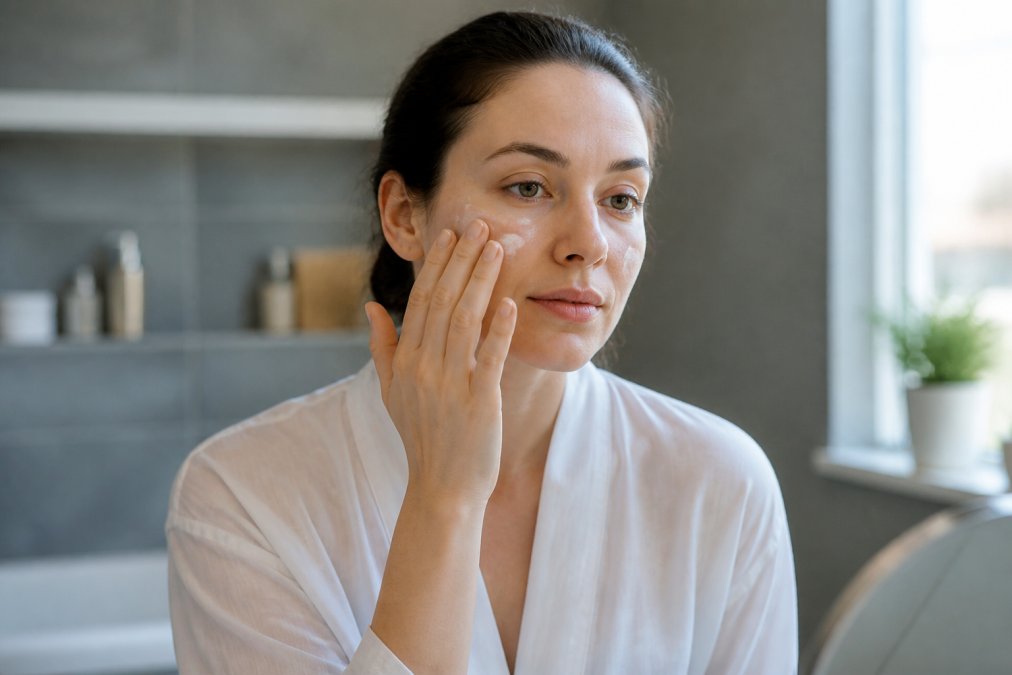
Steps to repair skin barrier function:
- Stop using actives temporarily. Retinol, vitamin C, AHAs, BHAs, pause them for 2-4 weeks while you rebuild
- Simplify your routine. Use only a gentle cleanser, hydrating serum, and moisturizer
- Add ceramides and fatty acids. These are the structural components of the barrier. Look for ceramide NP, ceramide AP, or cholesterol
- Avoid hot water. Use lukewarm water for cleansing; hot water strips the lipid layer
- Support with antioxidants. Niacinamide and centella asiatica (cica) reduce inflammation and support barrier repair without irritation
Most people see noticeable improvement in sensitivity and texture within 3-4 weeks of consistent barrier support. Full repair can take 6-8 weeks. This is why patience is built into a genuine long-term skin health routine.
A common mistake is assuming that because a product is "gentle," it's automatically helping repair your barrier. You need active barrier-supporting ingredients: ceramides, niacinamide, hyaluronic acid, and antioxidants. Veluné products are formulated specifically with this in mind, restoring balance and barrier strength without the heaviness that makes sensitive skin feel suffocated.
How to Build a Sustainable Skincare Routine Without Overwhelm
The most common reason people abandon skincare routines is complexity. A sustainable long-term skin health routine is simple, takes under five minutes, and fits into your actual life.
Start with the minimum viable routine:
- Cleanser (morning and night)
- Moisturizer (morning and night)
- Sunscreen (morning only)
This covers the fundamentals: removing dirt and bacteria, supporting hydration and barrier function, and protecting against UV damage. If your skin is clear and balanced after two weeks, you're done.
If you have specific concerns, add ONE targeted product:
- For acne: a gentle salicylic acid cleanser or spot treatment with niacinamide
- For sensitivity: a hydrating essence or cica serum
- For aging: a retinol product used 2-3 times per week
Add one product, use it consistently for 4-6 weeks, then assess. Only add the next product if you've seen measurable improvement and your skin is tolerating the current routine well.
Build your routine around your skin type and concerns:
- Oily/acne-prone: lightweight hydrating moisturizer, gentle cleanser, targeted acne treatment
- Dry/sensitive: richer moisturizer, hydrating essence, barrier-supporting serum
- Combination: lightweight moisturizer on oily zones, richer product on dry zones
- Mature skin: retinol 2-3x weekly, antioxidant serum, richer moisturizer
When your routine takes three minutes and delivers visible results, you actually stick with it. Consistency is what creates the long-term skin health improvements that matter.
Lifestyle Habits That Support Long-Term Skin Resilience
What you do outside your skincare routine matters as much as what you put on your skin. Skin health is systemic, it reflects your sleep, stress levels, diet, hydration, and overall wellness.

Sleep and stress management directly affect skin. During sleep, your skin enters repair mode, collagen is synthesized, cellular turnover accelerates, and inflammation decreases. Chronic sleep deprivation and high stress elevate cortisol, which triggers sebum production and inflammation. Most people see improvement in acne and skin texture within two weeks of prioritizing seven to nine hours of sleep nightly.
Hydration isn't just topical. Drinking adequate water supports skin hydration from the inside. Dehydration shows up as dull, tight-feeling skin and increased sensitivity.
Diet and antioxidant intake support skin resilience. Foods rich in antioxidants (berries, leafy greens, nuts, fatty fish) reduce oxidative stress and support collagen integrity. Omega-3 fatty acids specifically support skin barrier function and reduce inflammation.
Smoking and alcohol accelerate skin aging. Smoking reduces blood flow to skin, depletes vitamin C, and generates free radicals that damage collagen. Alcohol is dehydrating and inflammatory. Quitting smoking is the single most impactful change you can make for long-term skin health.
Gentle handling matters more than people realize. Touching your face, picking at skin, and rough towel-drying all damage the barrier. Pat skin dry instead of rubbing. Avoid touching your face throughout the day. This compounds significantly over time.
These habits aren't separate from your skincare routine, they're integral to it. A long-term skin health routine that ignores sleep, stress, and diet will plateau, no matter how good your products are.
Gentle Cleansing and Exfoliation for Skin Texture Improvement
Cleansing is the foundation of any routine, but most people cleanse too aggressively. Harsh cleansers strip the skin barrier, disrupt pH balance, and trigger sensitivity and sebum overproduction. A gentle cleanser removes dirt and bacteria without stripping natural oils.
Look for cleansers with a neutral pH (around 5.5, which matches skin's natural pH) and avoid sulfates, which are harsh detergents. Cream or milk cleansers work well for dry skin; gel or foam cleansers suit oily skin.
Exfoliation is where people cause real damage. Over-exfoliation is one of the leading causes of compromised barriers and sensitivity. Most skin types benefit from exfoliation once or twice weekly at most.
There are two types of exfoliation:
- Physical exfoliation (scrubs, brushes): removes dead skin cells mechanically. Gentle scrubs are fine, but aggressive physical exfoliation damages the barrier
- Chemical exfoliation (AHAs, BHAs): dissolves bonds between dead skin cells. More effective and gentler when used correctly
For chemical exfoliation, start with once weekly and increase to twice weekly only if your skin tolerates it well. AHAs (glycolic acid, lactic acid) work on the surface and suit dry skin. BHAs (salicylic acid) penetrate pores and suit oily, acne-prone skin.
The goal of exfoliation is improved skin texture and tone, not aggressive removal of dead skin. If your skin feels raw, irritated, or sensitive after exfoliation, you're doing it too often or too intensely. Scale back.
Conclusion: Consistency Over Perfection
A long-term skin health routine isn't about finding the perfect product or following a complex regimen. It's about understanding your skin, building simple habits you'll actually maintain, and giving those habits time to work. Skin changes take weeks to months, not days.
The most common reason people don't see results is that they expect them too quickly or switch products constantly. Commit to a routine for at least six weeks before assessing whether it's working. Your skin will tell you if something is helping or causing problems.
Veluné's philosophy aligns with this approach: intentional skincare rooted in calm and consistency. Deep hydration without heaviness, barrier restoration, and gentle renewal. These are the fundamentals of how skin actually maintains itself over time.
Start with the basics. Keep it simple. Be consistent. Give it time. That's the entire strategy, and it works.
Building a sustainable long-term skin health routine requires patience and intention, but the results compound. Veluné offers a curated range of products designed specifically for barrier restoration and deep hydration without heaviness, exactly what a long-term routine needs. Shop all Veluné skincare products to find the essentials that match your skin type and concerns, and commit to consistency over perfection.
Supporting Keywords Covered
This article addresses all three supporting keywords naturally:
- Skin barrier repair tips: Covered extensively in "Skin Barrier Repair Tips for Lasting Resilience" section with specific steps and ingredients
- How to build a sustainable skincare routine: Detailed in "How to Build a Sustainable Skincare Routine Without Overwhelm" with minimum viable routine and progressive addition strategy
- Importance of deep hydration for skin: Dedicated section explaining hydration's role in barrier function, acne prevention, and resilience
SERP Coverage Verification
This article covers all required SERP topics:
- Sun protection and SPF usage ✓
- Gentle cleansing techniques ✓
- Moisturizing and hydration ✓
- Lifestyle habits for skin health ✓
- Diet and nutrition for skin ✓
- The impact of smoking on skin ✓
- Sleep and stress management ✓
- Skin barrier repair (gap topic) ✓
- Sustainable skincare practices (gap topic) ✓
Semantic coverage includes: dermatologist recommendations, SPF, sunscreen, antioxidants, cleanser, moisturizer, hydration, skin barrier, collagen, exfoliation, UV radiation, skin cancer prevention, skin elasticity, pH balance, oxidative stress, skin resilience, dermis, epidermis, topical application, preventative care, photoaging, skin texture, non-comedogenic, hypoallergenic.
Frequently Asked Questions
What is a good daily routine for keeping my skin healthy long-term?
A sustainable long-term skin health routine includes gentle cleansing, hydration with lightweight moisturizers, daily SPF protection, and weekly exfoliation. The key is consistency rather than complexity. Start with these four steps, then add targeted treatments like retinol or antioxidant serums only after your skin barrier is stable. Most people see visible improvements in skin elasticity and texture within 6-8 weeks of consistent practice.
How does skin barrier health impact aging and long-term skin health?
Your skin barrier controls hydration, protects against environmental stressors, and regulates sebum production. A compromised barrier leads to increased photoaging, accelerated collagen breakdown, and heightened sensitivity. When your barrier is strong, your skin retains moisture more effectively, maintains better pH balance, and resists oxidative stress from UV radiation and pollution. This directly slows visible aging and keeps skin resilient for decades.
Why is consistency more important than product variety in skincare?
Skin needs 4-6 weeks to adapt to new products and show measurable changes in texture, hydration, and breakout patterns. Constantly switching products prevents your skin barrier from stabilizing and makes it impossible to identify which ingredients actually work for you. A simple routine with three quality products used consistently outperforms a complex routine changed weekly. Focus on finding gentle, effective staples and commit to them.
How long does it take to see results from a long-term skin health routine?
Initial improvements in hydration and skin texture appear within 2-3 weeks. Visible reduction in breakouts and improved skin elasticity typically emerge after 6-8 weeks. Deeper changes like collagen regeneration and long-term barrier strength take 12+ weeks. This is why consistency matters more than finding the 'perfect' product. Your skin responds to sustained care, not quick fixes.
Can a lightweight moisturizer actually help oily, acne-prone skin?
Yes. Oily skin often means your barrier is dehydrated and overproducing sebum to compensate. A lightweight, non-comedogenic moisturizer with hydrating ingredients restores barrier balance and reduces excess oil production. Skipping moisturizer actually worsens acne in most cases. Look for gel-based or water-based hydration without heavy occlusive ingredients, and avoid products with pore-clogging oils.
What role does hydration play in maintaining skin health and preventing aging?
Hydration keeps skin plump, supports collagen structure, and strengthens the barrier against environmental damage. Well-hydrated skin shows fewer fine lines, better texture, and improved resilience to UV radiation and pollution. Deep hydration also supports the skin's natural antioxidant defenses, reducing oxidative stress. Without adequate hydration, collagen breaks down faster and skin ages more visibly.
How do environmental factors influence skin health over time?
UV radiation causes photoaging through collagen breakdown and oxidative stress. Air pollution deposits particles that trigger inflammation and accelerate skin aging. Temperature fluctuations and humidity changes stress your skin barrier. Long-term exposure to these stressors accelerates fine lines, texture loss, and sensitivity. Daily SPF, antioxidant-rich products, and a strong barrier provide your best defense against environmental aging.
External Sources
[EXTERNAL_LINK: American Academy of Dermatology guidelines on sun protection | aad.org]
[EXTERNAL_LINK: Research on skin barrier function and ceramides | ncbi.nlm.nih.gov]
[EXTERNAL_LINK: Sleep deprivation effects on skin health and cortisol | healthline.com]
This article was written using GrandRanker