
Table of Contents
- Natural vs Synthetic Ingredients: The Core Differences
- Skin Barrier Repair Ingredients and How They Work
- Formulation Stability, Shelf-Life, and Preservation
- Synthetic vs Natural Preservatives in Cosmetics
- How to Read Skincare Labels and Spot What Actually Works
- Performance, Penetration, and Dermatological Efficacy
- Safety, Sensitivity, and the Natural Myth
- Conclusion
Last Updated: August 24, 2026
Natural vs Synthetic Ingredients: The Core Differences
The choice between natural and synthetic ingredients in face moisturizers isn't about choosing good over bad, it's about understanding what each category actually does and when it works best for your skin. At Veluné, the most effective moisturizers often combine both types strategically, rather than adhering to an ideology that excludes one entirely.
Natural ingredients are derived directly from plants, minerals, or animal sources without chemical modification. Synthetic ingredients are created through chemical synthesis in laboratories, designed to replicate natural compounds or create entirely new molecules that don't exist in nature. The distinction matters because origin doesn't determine efficacy, molecular structure does.
A synthetic humectant like glycerin pulls moisture into the skin with predictable, measurable results. A natural plant oil provides emollient benefits and may contain antioxidants, but its composition varies batch to batch depending on growing conditions and extraction methods. Neither is inherently superior; they solve different problems. The real divide comes down to formulation stability, preservation requirements, and how ingredients interact with your skin barrier.
Skin Barrier Repair Ingredients and How They Work
The skin barrier is a lipid-rich layer that regulates hydration and protects against external irritants. Repairing it requires ingredients that restore this lipid matrix, and both natural and synthetic options can accomplish this through different mechanisms.
Ceramides are waxy lipids that form the structural foundation of your skin barrier. Synthetic ceramides are chemically identical to those your skin produces naturally, making them highly effective at barrier repair (peer-reviewed research). Natural ceramides derived from plant sources contain ceramide-like compounds, but their concentration and bioavailability vary. For barrier restoration, the synthetic version often delivers faster, more measurable results.
Hyaluronic acid is a humectant that holds water in the skin. Whether synthetic or naturally derived, the molecule is identical. What matters is molecular weight: low-molecular-weight penetrates deeper; high-molecular-weight sits on the surface. This specification matters far more than whether the source was a lab or a fermented plant.
Peptides and amino acids signal your skin to produce more collagen and strengthen the barrier. Synthetic peptides are engineered for specific signaling pathways and deliver consistent results. Natural plant peptides are less studied and less predictable in their effects.
Plant oils like jojoba, rosehip, and sea buckthorn contain natural emollients and antioxidants that support barrier health through secondary compounds like flavonoids and vitamins. However, their composition is variable, and some people find them too occlusive for acne-prone skin.
Veluné's approach focuses on barrier restoration through deep hydration without heaviness, combining ingredients that work synergistically. The most effective moisturizers for barrier repair use each ingredient type where it performs best.
Formulation Stability, Shelf-Life, and Preservation
Natural ingredients present a fundamental challenge: they're biologically active, which means they degrade over time and are vulnerable to microbial contamination. A moisturizer containing high levels of botanical extracts requires strong preservation systems to remain stable and safe.
Oxidation occurs when natural oils and plant compounds are exposed to air and light. A natural moisturizer with high levels of unstable ingredients may lose efficacy within months. Synthetic antioxidants like tocopherol acetate slow this process reliably, while natural antioxidants like vitamin E provide limited protection in water-based formulas.
Microbial growth is the primary concern. Water-based moisturizers create an environment where bacteria and fungi thrive unless prevented. Natural preservatives like essential oils have antimicrobial properties but are weaker than synthetic preservatives like phenoxyethanol. A moisturizer preserved only with natural compounds may develop contamination within weeks of opening, especially if it contains water and botanical extracts.
Synthetic preservatives allow formulas to remain stable for 12-36 months without degradation. Natural preservatives typically extend shelf-life to 6-12 months. The trade-off: synthetic preservatives sometimes trigger sensitivity in people with fragrance allergies, while natural preservatives are generally gentler but less reliable.
A natural moisturizer that separates, changes color, or develops an off smell within months has lost efficacy and may harbor contamination. A synthetic formula that remains stable for three years delivers consistent results every time you use it. Formulation stability directly impacts whether a product actually works when you need it.
Synthetic vs Natural Preservatives in Cosmetics
Preservation is where the natural-versus-synthetic debate becomes genuinely complex, because the stakes are health and safety.
Natural preservatives include essential oils, plant extracts, salt, and fermented ingredients. They appeal to consumers seeking "clean" products, and many are genuinely antimicrobial. However, their efficacy is variable and dose-dependent. Additionally, natural preservatives can trigger allergic reactions; essential oils and plant extracts are common allergens, sometimes more problematic than synthetic alternatives.
Synthetic preservatives like phenoxyethanol and parabens are engineered for predictable antimicrobial action at specific concentrations. They're regulated, tested, and their safety profiles are documented. They work reliably across varying storage conditions and allow formulas to remain safe for extended periods. Some synthetic preservatives can cause contact dermatitis in sensitive individuals.
Cosmetics regulations specify which preservatives are permitted and at what concentrations. Both natural and synthetic preservatives must meet these standards. A preservative system that's "natural" but unregulated is riskier than a synthetic one that's approved and monitored.
For acne-prone skin, some natural preservatives like essential oils can be irritating and counterproductive. For sensitive skin, a formula with hypoallergenic synthetic preservatives often performs better than one relying on botanical antimicrobials. The choice depends on your skin's specific sensitivities, not on ideology.
How to Read Skincare Labels and Spot What Actually Works
The ingredient list on a moisturizer tells you what's in the formula, but it doesn't tell you whether those ingredients are present in meaningful concentrations or whether they'll actually benefit your skin.
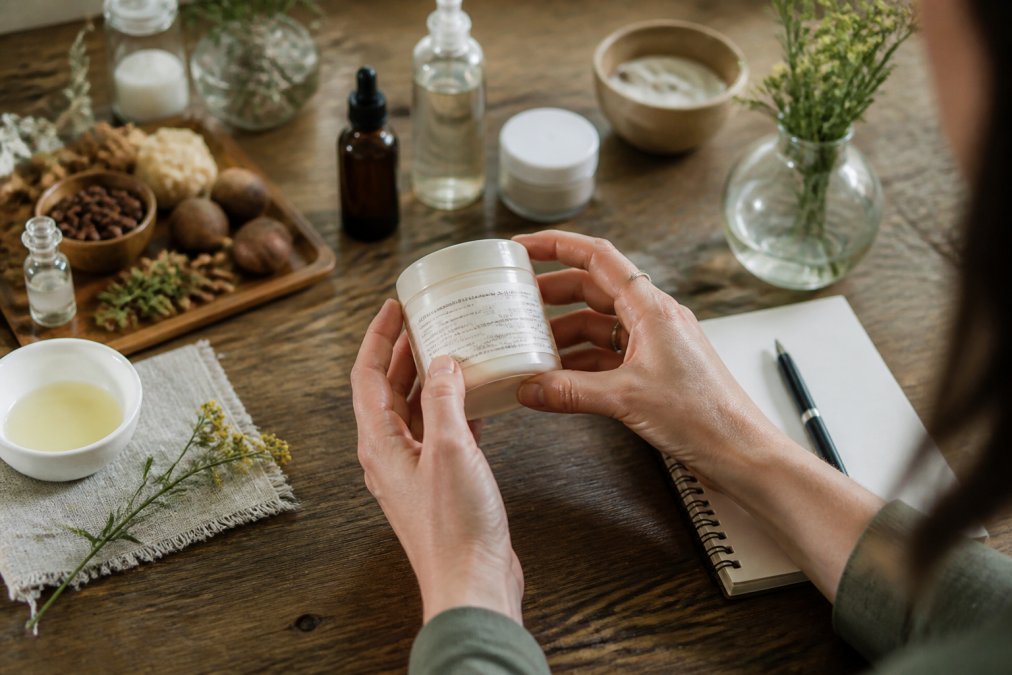
Ingredient order matters. Cosmetics regulations require ingredients to be listed in descending order by concentration. The first five ingredients comprise the bulk of the formula. If a beneficial ingredient appears near the end of the list, it's present in trace amounts, enough to claim it on the label, not enough to deliver results.
Look for concentrations. High-quality moisturizers often specify concentrations for key actives: "Contains 5% hyaluronic acid" or "10% glycerin." This transparency indicates the brand is confident in its formula and understands what concentrations actually work.
Understand INCI names. The International Nomenclature of Cosmetic Ingredients system uses standardized names that can obscure what's actually in a product. "Hydrolyzed Collagen" is broken-down collagen that cannot penetrate the skin barrier to rebuild collagen; it's a humectant, not a structural repair ingredient. Learning INCI names helps you decode marketing claims.
Recognize active versus inactive ingredients. A moisturizer might contain ceramides, peptides, and hyaluronic acid, but if they're listed near the end, the formula is primarily emollients and preservatives. The most effective moisturizers concentrate on a few actives at meaningful doses rather than listing dozens of minor ingredients.
Watch for fragrance and essential oils. "Fragrance" or "Parfum" means synthetic fragrance compounds. "Essential oil" means concentrated plant volatiles, which can irritate sensitive skin despite being natural. If you have reactive skin, prioritize fragrance-free formulas.
Check for third-party certifications. Certifications like COSMOS Natural or dermatologically tested indicate the product has undergone independent verification. These don't guarantee efficacy, but they confirm the brand has invested in verification beyond marketing claims.
Veluné's formulas emphasize transparency in ingredient selection, focusing on actives that deliver measurable barrier repair and hydration without unnecessary additives.
Performance, Penetration, and Dermatological Efficacy
The ultimate test of any moisturizer, natural or synthetic, is whether it actually improves your skin when used consistently.
Bioavailability is the degree to which an ingredient can be absorbed and used by your skin. Many natural ingredients are too large or hydrophobic to penetrate effectively; they sit on the surface providing occlusion but not dermal absorption. Synthetic ingredients are often engineered for optimal molecular size and structure to maximize bioavailability.
Clinical testing provides evidence of efficacy. A moisturizer that claims to reduce wrinkles should have clinical data showing measurable improvement in skin texture, hydration, or elasticity. Natural ingredient formulas are less frequently clinically tested because variable composition makes standardized testing difficult. Synthetic formulas are more commonly tested because their consistency allows for reproducible results.
Skin concern targeting depends on formula design. An acne-prone skin barrier needs lightweight hydration without comedogenic ingredients. Natural oils like coconut oil rank high on the comedogenic scale; jojoba ranks lower. Synthetic humectants like glycerin are non-comedogenic. For sensitive skin, both natural and synthetic ingredients can cause reactions depending on individual sensitivities.
Efficacy requires consistent use for at least 4-6 weeks before you can accurately assess whether a product is working for your skin. Marketing claims about "instant results" are misleading; genuine barrier repair and skin improvement take time.
Safety, Sensitivity, and the Natural Myth
The assumption that natural ingredients are inherently safer than synthetic ones is one of the most persistent myths in skincare, and one of the most misleading.
Allergenicity doesn't correlate with origin. Natural ingredients like essential oils, botanical extracts, and plant proteins are among the most common allergens in skincare. A person with a lavender allergy will react to natural lavender oil. A person with no fragrance sensitivity can tolerate synthetic fragrance compounds fine. Natural doesn't mean hypoallergenic.
Toxicology is where science diverges sharply from marketing. Every substance, natural or synthetic, is toxic at some concentration. The dose and context determine safety, not the origin. Synthetic ingredients in cosmetics are tested for safety at intended concentrations; many natural ingredients have never undergone rigorous safety testing at the concentrations used in formulas.
Skin barrier compromise can happen with both categories. An aggressive natural essential oil can irritate and inflame the barrier. An improperly formulated synthetic moisturizer can leave the barrier dehydrated. The formula design matters infinitely more than whether ingredients are natural or synthetic.
Contamination risk is higher with natural ingredients because they're biologically active and harder to preserve. A natural moisturizer that develops bacterial growth is objectively less safe than a synthetic one that remains sterile for years. Safety is about the finished product being free from contamination and stable throughout its shelf-life.
Synthetic ingredients have been more thoroughly tested for safety because they're standardized and easier to study. Natural ingredients are often assumed safe because they come from nature, but this assumption isn't scientifically sound. Both require proper formulation, preservation, and testing to ensure safety. For compromised or sensitive skin, the safest choice is a formula that's been dermatologically tested and proven not to trigger reactions, regardless of whether it contains natural or synthetic actives.
Choosing between natural and synthetic ingredients in face moisturizers comes down to understanding what your skin actually needs. If your barrier is compromised, you need ingredients proven to restore lipid function and hydration; whether they're synthetic ceramides or natural plant oils matters less than whether they work for your skin. Veluné's formulas prioritize deep hydration without heaviness and barrier restoration through intentional ingredient selection. The best moisturizer isn't the one with the most natural ingredients or the most advanced synthetics, it's the one that addresses your specific skin concerns consistently, without irritation or sensitivity. Shop all to find the formula that restores balance to your skin.
Frequently Asked Questions
Are synthetic ingredients always harmful to the skin barrier?
No. Many synthetic ingredients are specifically designed to strengthen and repair the skin barrier. Ingredients like dimethicone create a protective layer that locks in moisture, while synthetic humectants like glycerin draw water into the skin. The key is formulation quality and concentration. Some natural ingredients can irritate sensitive skin, while well-researched synthetics undergo rigorous dermatological testing. What matters is whether the ingredient serves your skin's needs, not its origin.
What are some effective natural ingredients for moisturizers?
Natural moisturizers like hyaluronic acid (derived from fermentation), plant oils such as jojoba and argan, and botanical extracts including sea buckthorn and birch juice offer genuine hydration and antioxidant benefits. Shea butter, aloe vera, and panthenol (provitamin B5) support barrier function and soothe irritation. However, natural doesn't always mean better, these ingredients work best when stabilized properly and combined with effective preservative systems to prevent microbial contamination and maintain shelf-life.
How long does it take to see results from a moisturizer?
Most people notice improved hydration and skin feel within 3-7 days of consistent use. However, visible changes to skin texture, barrier strength, and reduced sensitivity typically appear after 2-4 weeks. If you have compromised skin barrier function, allow 4-6 weeks before assessing whether the formula is working. Consistency matters more than the ingredient source, applying moisturizer twice daily will show results faster than sporadic use, regardless of whether it contains natural or synthetic actives.
Can synthetic ingredients provide better hydration than natural ones?
Yes, in many cases. Synthetic humectants like glycerin and hyaluronic acid have been extensively studied and deliver predictable hydration through dermal absorption. Synthetic polymers create occlusive barriers that lock moisture in place for hours. Natural oils hydrate but can feel heavy or comedogenic on acne-prone skin. The most effective moisturizers combine both: natural botanical extracts for bioavailability and antioxidant benefits, paired with synthetic stabilizers and humectants that ensure consistent performance and long shelf-life without microbial growth.
This article was written using GrandRanker